USS Tarpon (SS-175), ULTRA Intelligence, and the Hunt for a Japanese Aircraft Carrier, October 20, 1943
In October 1943, the waters off the Japanese home islands were becoming increasingly dangerous for ships of the Imperial Japanese Navy. American submarines were pressing into the approaches to Honshu, threatening both merchant traffic and the major combatants of the Combined Fleet. Among them was USS Tarpon (SS-175), an older fleet submarine whose early reputation for operational misfortune had begun to give way to a record of aggressive patrols.
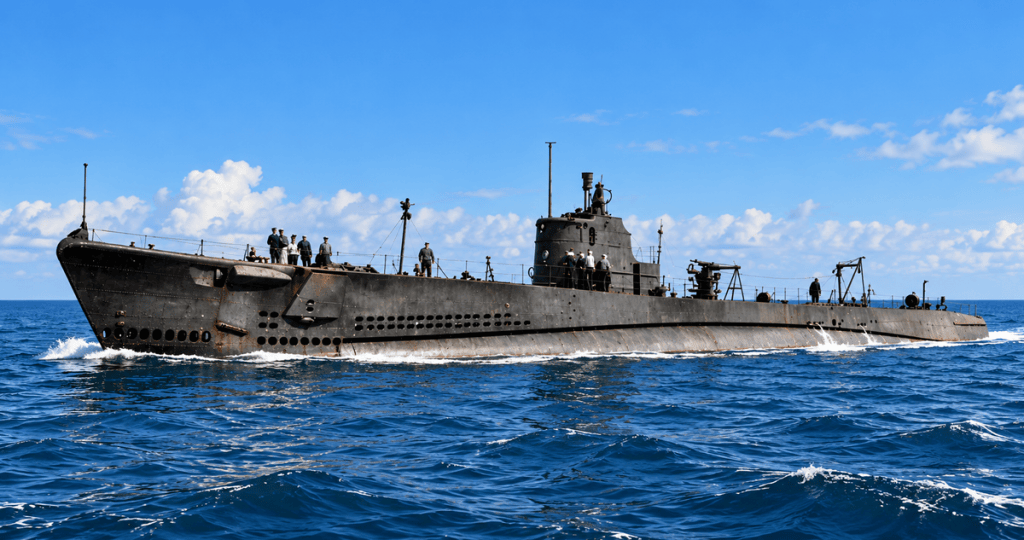
Under Commander Thomas Lincoln Wogan, Tarpon was learning to exploit an advantage that Japanese lookouts could neither see nor hear: information derived from intercepted naval communications. On October 20, that intelligence placed the submarine in the path of a Japanese aircraft carrier. The encounter would demonstrate both the promise of intelligence-directed submarine warfare and the stubborn difficulty of turning a favorable interception into a successful torpedo attack.
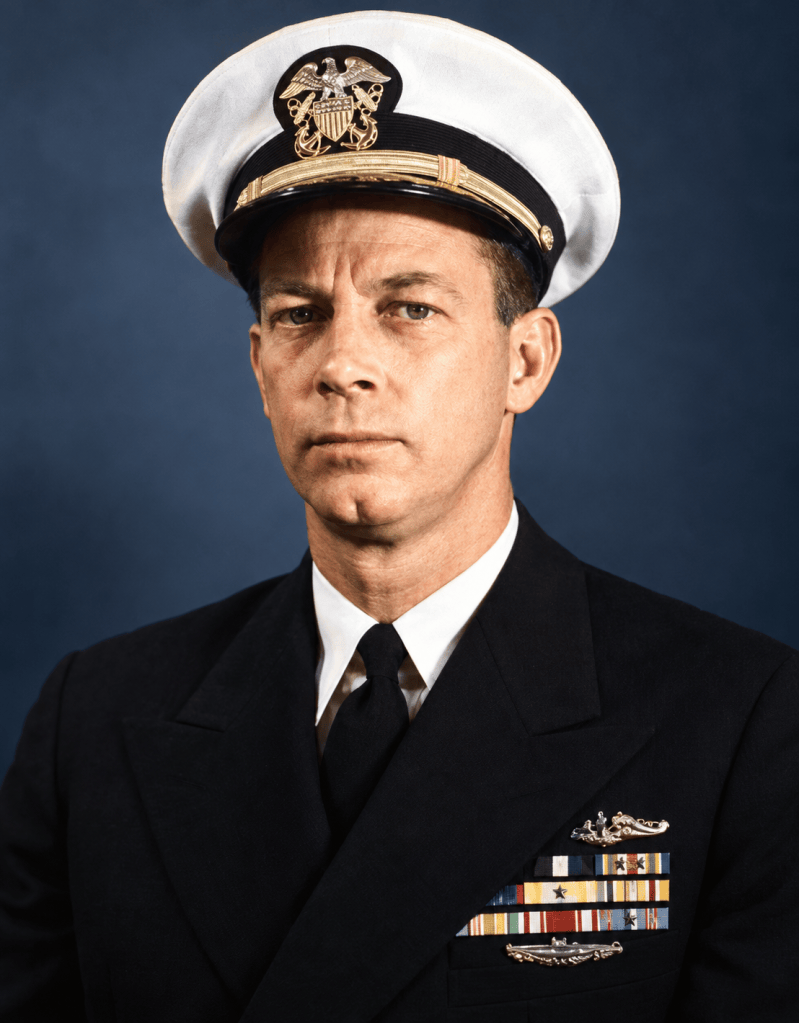
Tarpon had entered the war with a history of groundings and other mishaps that contributed to her reputation as a hard-luck boat. Wogan, a 1930 graduate of the United States Naval Academy and former S-boat commanding officer, was determined to change that record. His initial patrol had disappointed him, but subsequent operations revealed a commander willing to seek difficult targets in dangerous waters.
The approaches to Japan presented unusual risks. Merchant traffic and naval movements offered opportunities, but coastal patrols, aircraft, escorts, and the speed of major warships made attack positions difficult to obtain. Success required more than finding a target. A submarine had to anticipate its course, maneuver without being detected, and fire accurately before the opportunity disappeared.
The Fleet Radio Unit Pacific, known as FRUPAC, and the Pacific submarine command were developing an increasingly useful picture of Japanese movements from intercepted communications and associated intelligence work. This information could direct submarines toward likely transit routes, reducing the dependence on chance encounters across immense stretches of ocean.
Aboard Tarpon, Ensign William Robert Anderson, a 1943 Naval Academy graduate who would later command the nuclear-powered USS Nautilus (SSN-571), played an important role in handling sensitive communications. The source account describes a punishing routine: eight hours of regular watch followed by four more hours working on messages in the yeoman’s shack. Among the dispatches were those associated with Commander Richard “Dick” Voge.
Security restrictions meant that the source of such information was not to be identified openly in patrol reports. The resulting patrol records could record an encounter without fully explaining how a submarine had arrived in the right place at the right time. For Wogan, the intelligence offered a practical advantage, but it did not relieve him of the final tactical problem of making an attack.
On October 20, 1943, Tarpon received intelligence directing her toward a Japanese aircraft carrier moving through waters off Honshu. The vessel may have been the carrier previously attacked by Commander Glynn R. “Donc” Donaho in USS Flying Fish, although the identification is not established in the supplied account.
Wogan maneuvered into position and gained contact. A carrier was an exceptionally valuable target, but also a difficult one: speed, course changes, and escorts could upset a firing solution in moments. When Tarpon reached attack position, Wogan fired all four bow torpedo tubes. Every torpedo missed. The carrier escaped without damage.
It was the second time in as many patrols that Wogan had encountered an enemy carrier off Honshu without scoring a hit. Intelligence had done its part by bringing the submarine to the target. The final result still depended on the uncertain geometry of an attack and the performance of the weapons. The supplied account identifies evasive maneuvering and torpedo defects as general limitations of this period, but does not establish which factor caused these four particular misses.
During this period, Tarpon also fought a ferocious night engagement off Honshu with a large, fast-moving, unescorted vessel. Its precise date relative to the carrier interception and its identity are not established in the supplied manuscript, so the action should not be treated as having occurred on October 20 without further documentation.
Wogan attacked with four torpedoes and scored two hits. The damaged ship then turned toward Tarpon in an apparent attempt to ram her, forcing an emergency dive. After returning to periscope depth, Wogan fired two separate stern shots, both of which missed. The enemy spotted the periscope and opened fire with six-inch guns.
Wogan persisted. Another torpedo struck the ship’s stern and silenced the guns. Tarpon maneuvered around the target and fired a final torpedo, sinking the vessel. The engagement demanded repeated repositioning under threat of ramming and gunfire, and it illustrated the determination that had come to characterize Wogan’s command.
Tarpon’s experiences off Honshu captured an important transition in the Pacific submarine war. Communications intelligence increasingly allowed American boats to seek specific enemy movements rather than patrol blindly. Yet the information was only the beginning of an engagement. A commander still had to close the target, obtain a solution, fire, and survive the response.
Wogan’s broader record, including the sinkings of Fushimi Maru and Tatsuta Maru, helped replace Tarpon’s early reputation with that of a capable fighting submarine. The October 20 carrier attack itself produced no sinking, but it showed how intelligence officers far from the scene could shape a submarine’s movements in combat waters.
The Japanese carrier escaped. The significance of the encounter lies in the process that brought Tarpon into contact with it: intercepted information translated into operational orders, followed by the judgment and skill of a submarine crew. In the evolving Pacific campaign, that combination would become increasingly consequential.


Leave a Reply