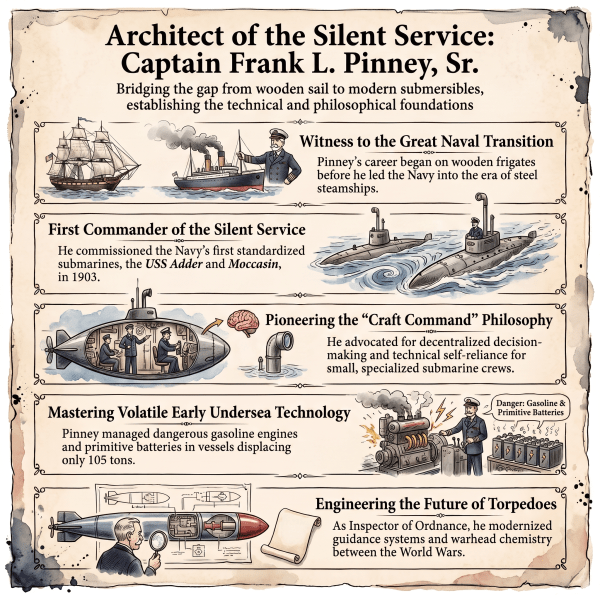
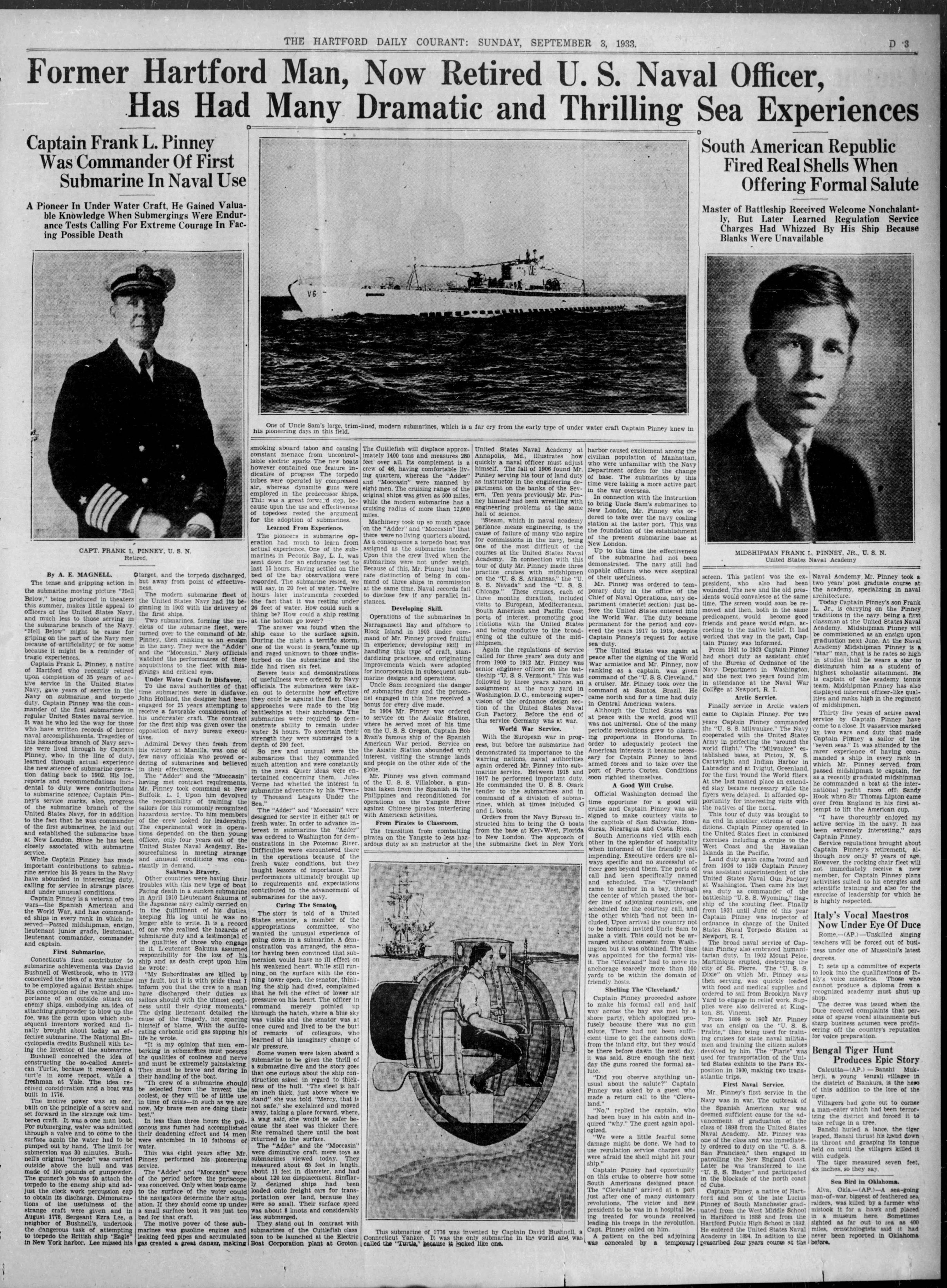
Pioneer of the Silent Service: Captain Frank L. Pinney, Sr. and the Birth of Undersea Command

Introduction: From Sail to Steel

Frank Lucius Pinney, Sr. began his distinguished naval career during a period of massive transition, witnessing the United States Navy systematically replace its wooden sail-powered vessels with armored steel steamships. He first entered the national spotlight for his extraordinary bravery during the Apia cyclone in Samoa on March 15–16, 1889, where the wooden steam-frigate USS Trenton was destroyed. For his conspicuous gallantry in saving lives and assisting in the preservation of his shipmates during the wreck of the Trenton, a special Act of Congress appointed him to the rank of Ensign.

Continue reading “Pioneer of the Silent Service: Captain Frank L. Pinney, Sr. and the Birth of Undersea Command”
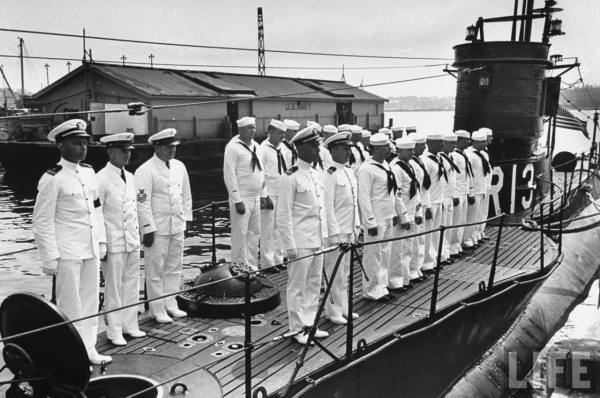
The Silent Foundation: The Legacy of USS R-13 (SS-90)

Introduction: The Bridge to Modernity

In the annals of naval history, the most celebrated vessels are often those with the longest lists of enemy ships sunk. However, the true strength of a naval force frequently rests upon the less decorated workhorses that provide the essential foundation for victory. The USS R-13 (SS-90) was exactly such a vessel. An R-1-class coastal defense submarine, she served as the critical “bridge” between the experimental, often unreliable underwater designs of the earlier O-class and the sophisticated fleet boats that dominated the Pacific in World War II.

Over a career spanning 26 years, the R-13 functioned not as a primary combatant, but as a vital laboratory for tactical development and a premier classroom for the men who would eventually lead the “Silent Service.” Her service can be defined by three primary phases:

  • Pacific Tactical Testing: A decade-long deployment in the Hawaiian Territory developing submarine doctrine and fleet integration.
  • Atlantic Training: A tenure at the Submarine School in New London, Connecticut, forging the skills of future wartime commanders.
  • World War II Coastal Defense: Active wartime service protecting vital shipping lanes and perfecting American Anti-Submarine Warfare (ASW) tactics.
Continue reading “The Silent Foundation: The Legacy of USS R-13 (SS-90)”

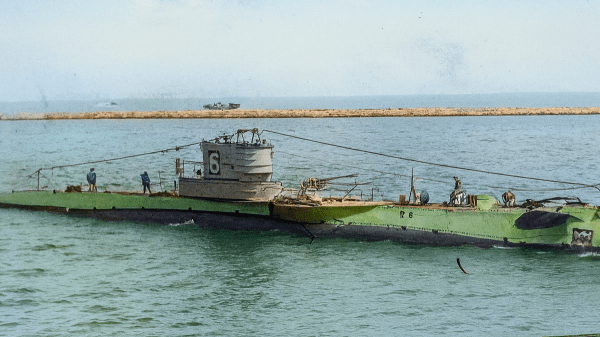
From Harbor Tragedy to a Resilient Legacy: The USS R-6 (SS-83)

San Pedro Harbor, late September 1921. The Pacific Fleet’s new base was a place alive with the restless energy of a Navy in transition. Battleships and destroyers filled the anchorage, while a cluster of small, dark-hulled submarines rocked gently in their moorings beside the big tender USS Camden. The sun had set, but the harbor was far from quiet. Ashore, the city of Los Angeles was swelling into one of the nation’s fastest growing metropolises, and the Navy’s presence was both a symbol of American reach and a reminder of unfinished business after the First World War. For the sailors aboard USS R-6, the night of September 26 began as another routine round of preparations for training exercises. Within hours, however, it would end with their boat lying on the harbor bottom and two of their shipmates dead.

Continue reading “From Harbor Tragedy to a Resilient Legacy: The USS R-6 (SS-83)”

Blog at WordPress.com.

Up ↑