USS Sealion: The Hunters and the Hunted – September 1944

On the morning of September 7, 1944, USS Sealion slipped away from Saipan and headed west.

She had come into Tanapag Harbor only two days earlier. The pause had been brief. Fuel tanks were topped off, minor repairs completed, and fresh torpedoes brought aboard. Fifteen Mark 14-3A torpedoes came from the submarine tender Holland, while Billfish supplied another eight Mark 18-1 electric torpedoes. By the morning of the seventh, Sealion was ready to return to the war.

At 0650 she got underway.

Continue reading “USS Sealion: The Hunters and the Hunted – September 1944”

The Combat Evolution and Cold War Legacy of USS Dace (SS-247)

The USS Dace (SS-247) represents one of the most storied combat records in the history of the United States Navy’s “Silent Service.” A Gato-class fleet submarine, the Dace distinguished herself as a premier instrument of undersea denial during World War II, earning seven battle stars and the prestigious Navy Unit Commendation. Her operational history is characterized by a high degree of tactical versatility, ranging from aggressive surface gun actions and the destruction of heavy cruisers to specialized commando insertions in enemy territory.

The vessel’s career serves as a historical microcosm for the evolution of American submarine warfare. Her journey reflects the broader transition of the U.S. Submarine Force: originating as a raw, mass-produced WWII fleet combatant and evolving into a specialized Cold War training and anti-submarine warfare (ASW) platform. Through technical modernization and international cooperation, the Dace helped bridge the gap between the era of unrestricted undersea commerce raiding and the sophisticated sonar-driven environment of the NATO alliance.

Continue reading “The Combat Evolution and Cold War Legacy of USS Dace (SS-247)”

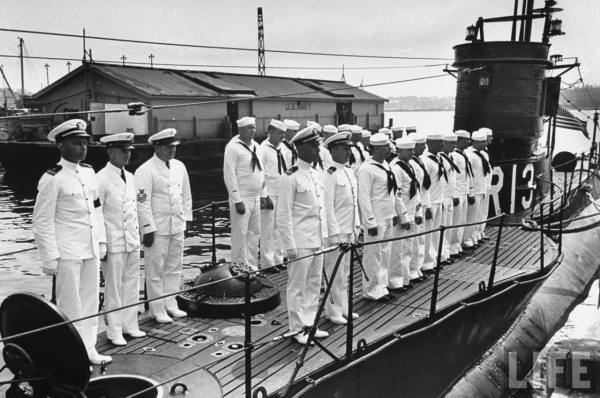
The Silent Foundation: The Legacy of USS R-13 (SS-90)

Introduction: The Bridge to Modernity

In the annals of naval history, the most celebrated vessels are often those with the longest lists of enemy ships sunk. However, the true strength of a naval force frequently rests upon the less decorated workhorses that provide the essential foundation for victory. The USS R-13 (SS-90) was exactly such a vessel. An R-1-class coastal defense submarine, she served as the critical “bridge” between the experimental, often unreliable underwater designs of the earlier O-class and the sophisticated fleet boats that dominated the Pacific in World War II.

Over a career spanning 26 years, the R-13 functioned not as a primary combatant, but as a vital laboratory for tactical development and a premier classroom for the men who would eventually lead the “Silent Service.” Her service can be defined by three primary phases:

  • Pacific Tactical Testing: A decade-long deployment in the Hawaiian Territory developing submarine doctrine and fleet integration.
  • Atlantic Training: A tenure at the Submarine School in New London, Connecticut, forging the skills of future wartime commanders.
  • World War II Coastal Defense: Active wartime service protecting vital shipping lanes and perfecting American Anti-Submarine Warfare (ASW) tactics.
Continue reading “The Silent Foundation: The Legacy of USS R-13 (SS-90)”

Blog at WordPress.com.

Up ↑