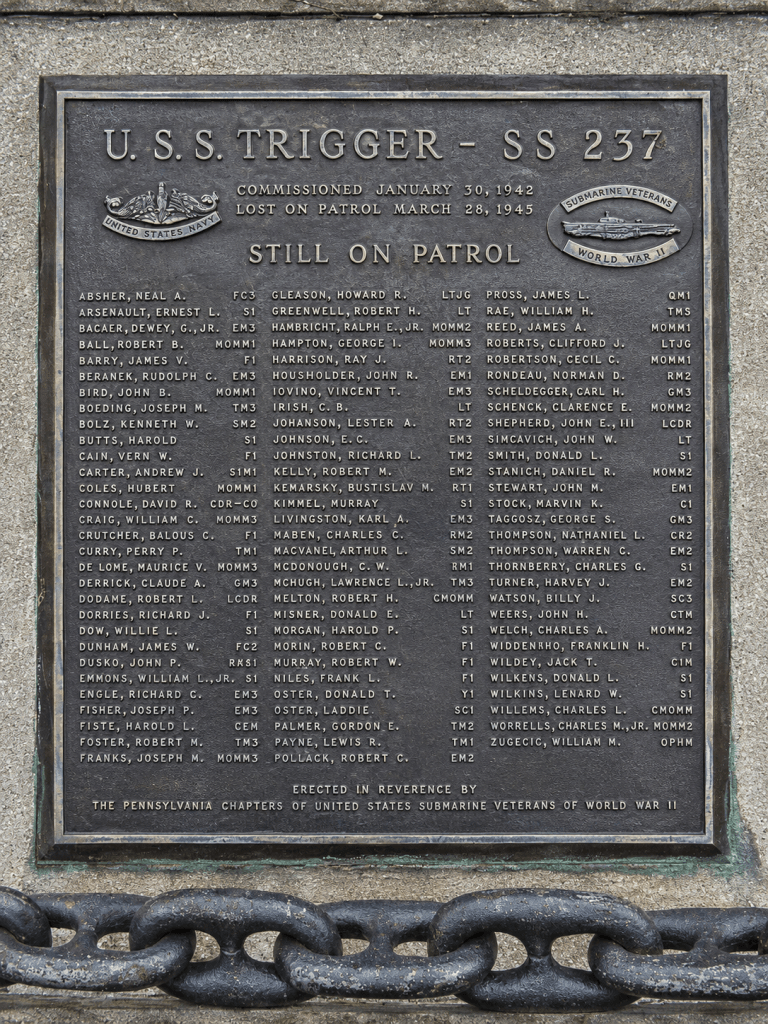
USS Trigger’s attack on November 13, 1943
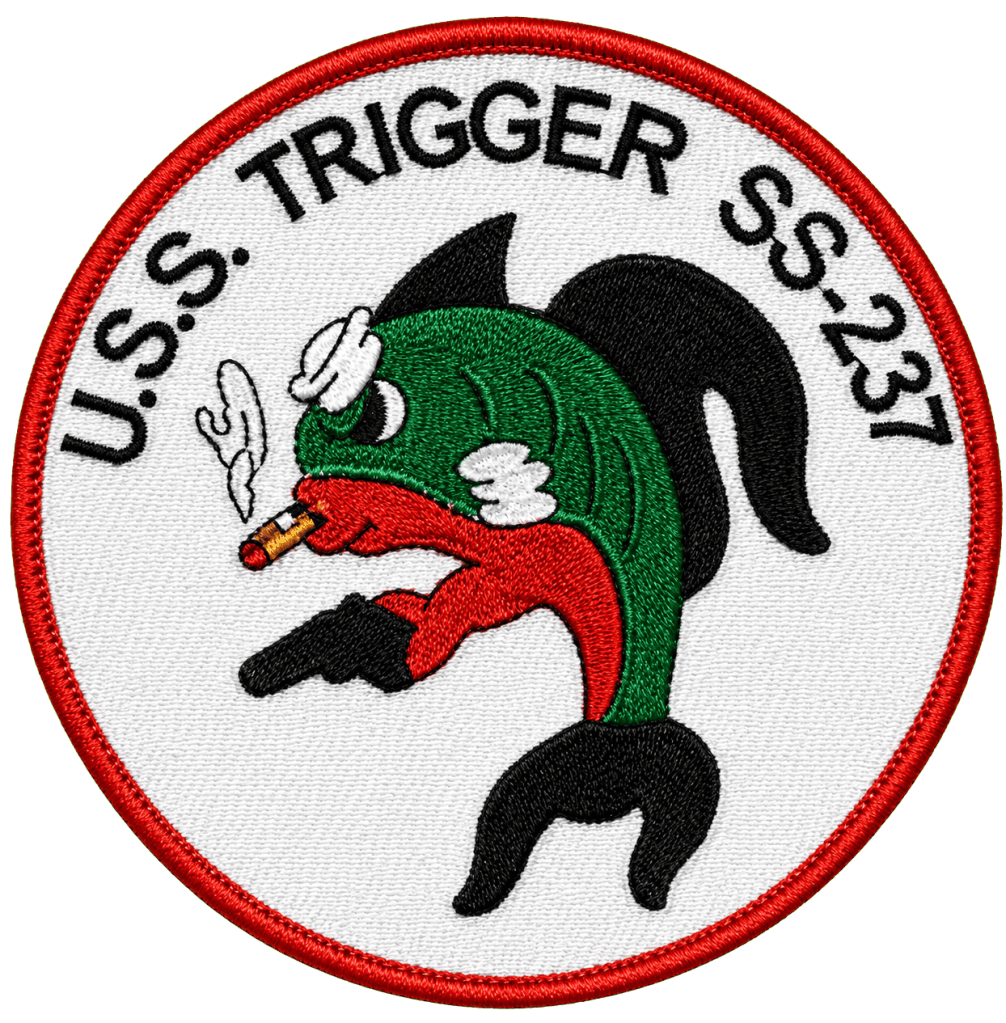
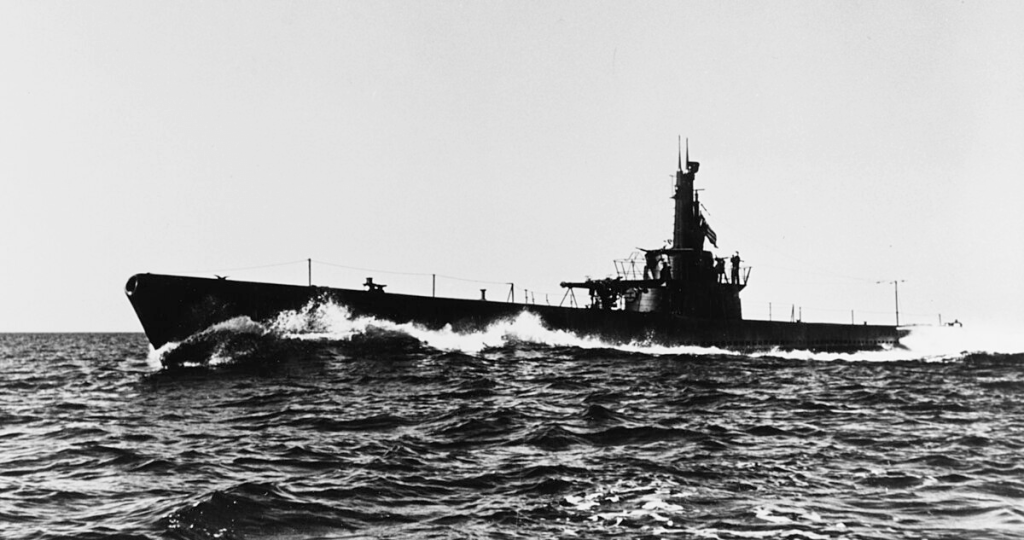
The convoy offered USS Trigger (SS-237) almost everything a submarine commander could want. Merchant ships overlapped in the periscope, close enough that several targets presented themselves at once. Three passed only 700 yards ahead. There was, however, a practical limitation: Trigger had no torpedoes left forward.
“Had there been any torpedoes left forward,” her patrol report observed, “we would have had a field day in this convoy.”
It was November 13, 1943, during Trigger’s seventh war patrol. Before the morning was over, her crew would sink a Japanese passenger-cargo vessel, endure a close depth-charge attack, and discover damage that would make their machinery increasingly troublesome beneath the surface.
The approach had begun under unusually bright moonlight. At 0300, Trigger sighted smoke from several ships, but the visibility prevented her from closing sufficiently to obtain radar ranges without risking discovery. Instead, the tracking party worked from bearings taken through the target bearing transmitter, supplemented by estimates of distance and the ships’ angles on the bow.
By 0415, the convoy’s movement was becoming clear. Its base course was approximately 250 degrees, with zigzags between 210 and 290 degrees, at about eight knots. The report described roughly twelve ships altogether, including three or four escorts.
At 0459, Trigger reached a position ahead of the convoy and submerged. The estimated range was 11,000 yards. Radar ranges remained unavailable, but the ships were visible through the periscope. At 0515, the submarine began her submerged approach toward the convoy’s center.
The escorts were actively searching. At 0535, Trigger passed through a screen of destroyers identified by her observers as MOMI-class ships. Three were approximately 1,000 yards away, patrolling their stations and echo-ranging. One turned only 700 yards from the submarine.
The report’s assessment was candid: the destroyer apparently had detected them. Yet it continued on its way. Trigger pressed the attack.
Ten minutes later, the convoy zigzagged toward her, placing the submarine between two columns of ships. Three overlapping targets crossed ahead, presenting the bow-tube opportunity that her empty forward tubes could not exploit. The last and largest vessel offered another possibility. At about 2,000 yards, it presented a zero angle on the bow, appearing nearly head-on.
Trigger selected that ship and swung left at full speed to bring her stern tubes into position.
At 0555, she fired four torpedoes aft from a range of 800 yards. Two hits were observed, one beneath the stack and another farther aft. The rear escort was already heading toward the submarine, also at approximately 800 yards.
The water was only 240 feet deep. Trigger descended to 200 feet, leaving little vertical room beneath her keel.
Seven minutes after firing, the counterattack arrived.
“Received 5 very excellent depth charges,” the patrol report recorded.
The understated wording concealed a serious encounter. Trigger found a density layer, a change in the water’s properties that could interfere with the escort’s underwater sound detection. The escort lost contact but remained nearby, alternating between listening and echo-ranging. The submarine had escaped immediate detection, although she could not yet move freely.
At 0840, Trigger returned to periscope depth. A destroyer and another vessel were picking up survivors, while an unidentified aircraft patrolled overhead. The rescue ship had boats in the water and booms rigged out. It maneuvered repeatedly as the destroyer slowly circled the area.
Trigger headed back toward the sinking position. About an hour before she reached it, the rescue vessels and aircraft departed.
At 1520, the submarine entered an extensive field of wreckage. The report listed a streak of coal dust, barrels, oil drums, five lifeboats, several rafts, shattered hatch covers, life belts, and what appeared to be part of the sunken vessel’s bridge. The crew took photographs. An hour later, they photographed a red flag attached to a bamboo pole, lashed to a can and floating upright.
The wreckage provided evidence beyond the two observed torpedo hits. It also helped explain the target’s appearance. The attack report described a coal-burning transport with a single raked stack, a cruiser stern, and substantial deck cargo. The crew believed it might have been carrying troops, citing both that cargo and the approximately five hours spent recovering survivors. That remained an inference rather than a confirmed identification.
The wartime report estimated the vessel at 10,000 tons. JANAC’s postwar assessment credited Trigger with sinking the 4,433-ton passenger-cargo ship Nichisan Maru on November 13, at the position recorded in the attack report. The later assessment revised the target’s identity and tonnage while confirming the sinking.
Inside Trigger, the depth charges had left consequences that photographs of the wreckage could not show.
Noise and vibration developed in Number Two Main Motor. Inspection revealed that a commutator segment had loosened and risen, presumably because of the depth-charge attack. The motor continued to operate, but its brushes jumped each time the raised segment passed beneath them.
A problem in the port reduction gear also became more pronounced. An intermittent throb had first appeared during a deep dive on November 1. After the November 13 counterattack, a steady thump accompanied each shaft revolution at depth. It became audible below 150 feet, or whenever the submarine carried a down angle. The report suspected damage to the port main thrust bearing had aggravated the existing condition.
Trigger continued her patrol with a confirmed sinking behind her and machinery defects her crew would have to manage. Her November 13 report preserves both parts of that experience: the careful approach that brought four stern torpedoes to bear, and the mechanical cost of surviving the escort’s reply.
Sources
USS Trigger, Report of Seventh War Patrol, Enclosure (A), printed pages 7–8, 19, and 21–22; supplied PDF SS-237_TRIGGER_Part1.pdf, pages 201–202, 213, and 215–216. Joint Army-Navy Assessment Committee, Japanese Naval and Merchant Shipping Losses During World War II, app


Leave a Reply