The attack of 30 October 1944 and the fight to bring SS-182 home
At 2030 on 30 October 1944, USS Salmon (SS-182) surfaced with her decks awash and a fifteen-degree list to starboard. Below, seawater had been entering the engine rooms faster than her crew could remove it. Her steering had failed, her stern planes were jammed, and repeated efforts to regain depth control had ended in another descent. Above waited four Japanese escorts. Commander Harley K. Nauman brought his submarine up because remaining submerged offered no prospect of survival. His crew would have to keep her afloat and fight their way clear.
The ordeal began with an attack on the Japanese tanker Takane Maru, but it became a demonstration of what submarine crews could accomplish after their boat had lost the protection of the sea. Over the following hours, Salmon’s men restored machinery, improvised communications, and fought a surface action at ranges that eventually closed to about fifty yards. Other American submarines then abandoned the pursuit of targets to help bring their damaged shipmate home.
The tanker and the hunters
Salmon was on her eleventh war patrol. She had left Saipan on 4 October with USS Silversides (SS-236) and USS Trigger (SS-237), operating as a coordinated attack group under Commander John S. Coye Jr. of Silversides. Their hunting grounds lay along the eastern side of the Ryukyu chain, which extends southwest from Kyushu toward Taiwan. Shipping approaching Japan through these waters was within reach of American submarines, but also close to Japanese aircraft and antisubmarine forces.
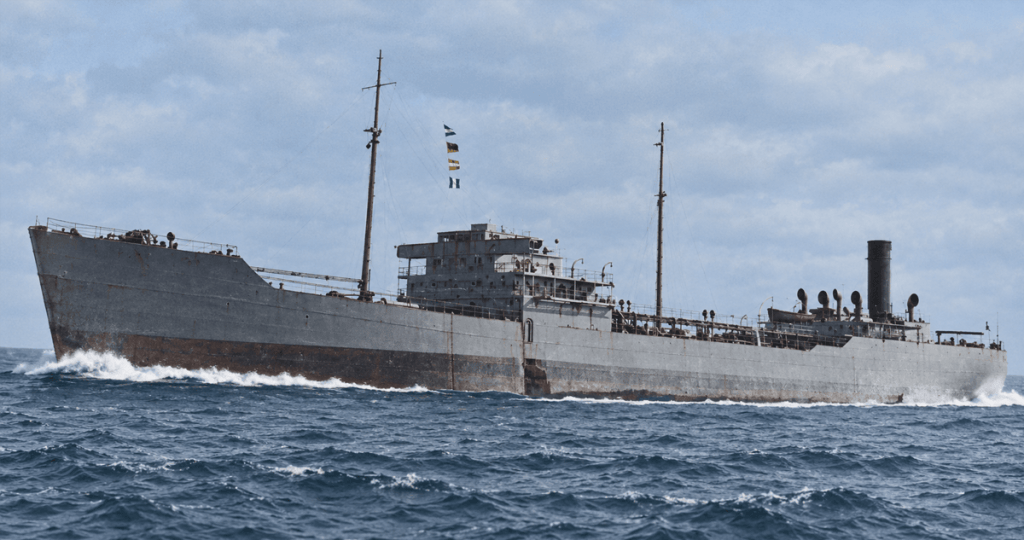
At 0401 on 30 October, Salmon’s radar found a large tanker with four escorts. Nauman transmitted the contact and began a long surface chase. Rain squalls interrupted visibility, and the tanker’s speed and frequent changes of course complicated the pursuit. Takane Maru, a 10,021-ton tanker, was a valuable target, but reaching a firing position meant penetrating a screen whose purpose was to make precisely that approach dangerous.
Trigger’s commanding officer, Commander Frederick J. Harlfinger II, obtained his opportunity that afternoon. His first four torpedoes, fired from the bow, missed. The tanker turned toward the submarine, and Harlfinger brought his stern tubes to bear. At approximately 1615, with the range down to about 1,400 yards, Trigger fired another four torpedoes. Her report described a tremendous explosion and the destruction of part of the tanker’s stern. From farther away, Salmon observed an explosion at 1620 and saw the target stop soon afterward.
The escorts immediately counterattacked. Trigger counted seventy-eight depth charges during the next hour, but escaped without damage. Takane Maru remained afloat, immobilized and guarded. The attack had created an opening for another submarine, provided that submarine could survive the escorts.
Salmon closes in
Nauman began closing the tanker at 1740 and submerged at 1823. His approach was troubled by squealing main shafts, an unwelcome defect in a boat trying to remain undetected. With escorts approaching and the opportunity narrowing, he accepted a relatively long shot. At 2001, Salmon fired four bow torpedoes from an estimated 3,300 yards. The time of their run subsequently suggested a range nearer 4,000 yards. Her crew heard two explosions; the first produced a visible splash at the tanker’s bow, while the escorts demanded too much attention for observation of the second.
Three of the torpedoes broached. Whether the Japanese followed that visible warning or detected Salmon by sonar cannot be established with certainty, but their reaction was immediate and effective. Nauman turned to bring his stern tubes toward the target, then abandoned the prospect of another salvo as the escorts closed. At 2012, he took Salmon deep.
One minute later, at about 310 feet, the first close depth-charge patterns arrived. Approximately thirty charges fell in four groups. Salmon’s patrol report called the patterns “well nigh perfect.” The blasts threw equipment loose, disrupted electrical service, and started serious flooding. Nauman later recalled bending his knees against the violent movement of the conning tower as the boat flexed under the shocks.
The submarine became heavy and difficult to control. Seawater entered through damaged fittings in both engine rooms, while leaks developed in the air and hydraulic systems. Her steering failed until the crew shifted to hand operation. The stern planes remained stuck in the diving position. Going ahead at emergency speed with a steep bow-up angle checked one descent, but each effort to level off and slow down brought another plunge.
The men fighting the flooding faced another obstacle: debris, including dislodged cork insulation, obstructed the pump suctions. Machinery that still worked could not necessarily remove the water accumulating around it. Salmon came back up to approximately 150 feet, then fell again when her crew tried to regain a manageable trim. The patrol narrative described the renewed descent with the words “like a rock.”
Later accounts give a maximum depth of 578 feet, far beyond Salmon’s designed maximum submergence of 250 feet. That figure requires care. The Navy’s postwar engineering assessment explained that the normal depth gauge had gone beyond its scale and the deeper reading had been derived from a sea-pressure gauge whose subsequent calibration was unverified. The precise maximum remains uncertain. What is clear is that Salmon had gone dangerously deep and could no longer maintain a safe depth.
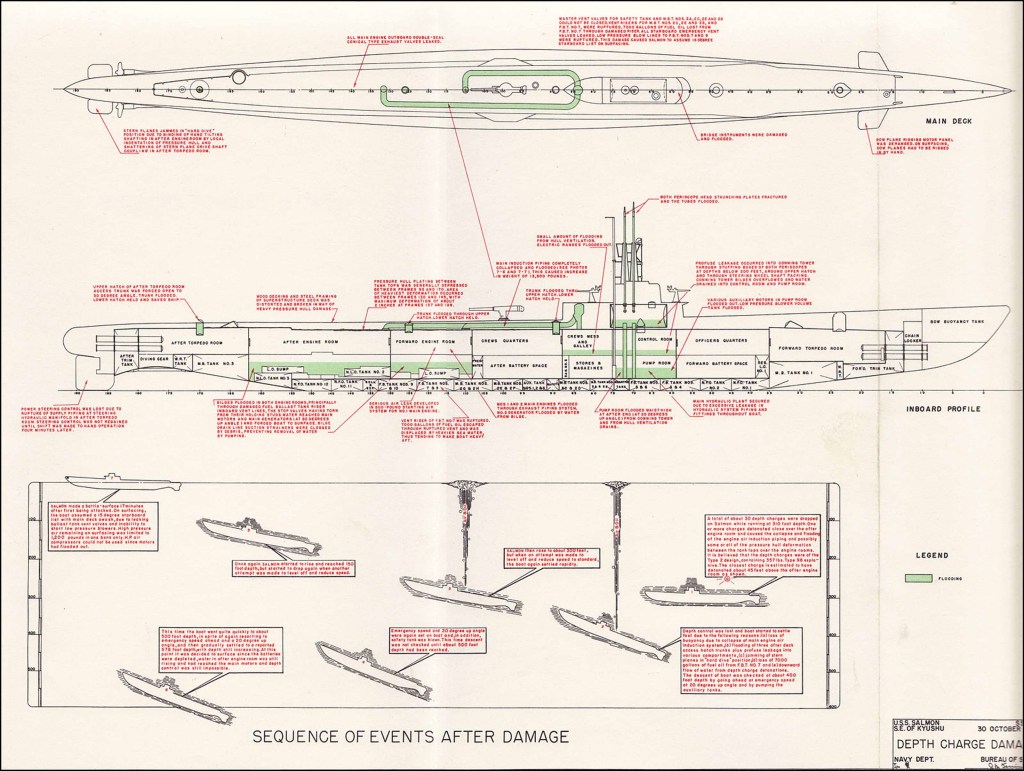
Several defenses nevertheless held. Her submerged propulsion remained available, allowing speed and hull angle to oppose the descent. Secondary hatches beneath flooded access trunks kept the sea from entering directly through those openings. The pressure hull deformed but did not tear open. The engineering assessment also cautioned that excessive depth, as well as the explosions, probably contributed to the hull damage. Salmon’s survival depended on that remaining structural integrity and on men continuing to operate equipment under conditions far outside normal service.
Fighting on the surface
Seventeen minutes after the depth charging began, Nauman surfaced and manned the guns. The nearest escort was about 7,000 yards away, and for roughly half an hour the Japanese failed to press home their advantage. Salmon’s crew used the interval to recover propulsion and correct the list. One engine was on the line almost immediately; both after engines were running by 2050. Some exhaust valves required chain falls to open them. At 2100, electricians got the low-pressure blowers operating, helping restore buoyancy and bring the boat upright.
By 2115, a third main engine was available. Steering had been restored, the stern planes had been brought back toward neutral, and the bilges had been pumped. These repairs gave Salmon a chance to maneuver, but they did not restore her ability to dive. Damaged antennas required an emergency transmitting antenna, and her SJ radar transmitter was flooded out. The four-inch gun remained usable, although its telescopic sights were damaged.
At about 2100, an escort illuminated Salmon with a searchlight and opened fire. For nearly three hours, the faster enemy vessel maneuvered around her, forcing her into a broad circle and repeatedly firing. Nauman conserved ammunition, answering when the escort presented a worthwhile target. Shells landed close enough to throw water onto the bridge and decks, but Salmon avoided a disabling hit.
The Americans also tried to make the Japanese uncertain about the opposition around them. Salmon reported her condition to the other boats and transmitted a plain-language message using numerous calls and the instruction “Get Hot.” Nearby submarines added radio traffic. Nauman could not know how much the enemy understood, but the presence of other American boats mattered. His damaged submarine was fighting alone at close range, while help remained within reach.
Near midnight, the pursuing escort made a determined attempt to close. It passed Salmon’s port beam at approximately 2,000 yards. A rain squall offered concealment to the southwest, but the escort moved across the submarine’s course to intercept her. Nauman turned hard left toward the enemy instead. Salmon passed on the opposite course at about fifty yards, bringing her guns to bear at a range where the Japanese ship could hardly be missed.
Automatic weapons swept the escort from end to end. Salmon’s patrol report recorded a four-inch hit in the bridge structure that failed to explode, with additional hits or very near misses as the ships separated. The escort fired during the opening moments of the pass, then fell silent and dropped astern. Another escort tried to close but was discouraged by further fire. By 0015 on 31 October, Salmon was at the edge of the squall; at 0045, her crew lost sight of the enemy.
The tanker sinks and the screen forms
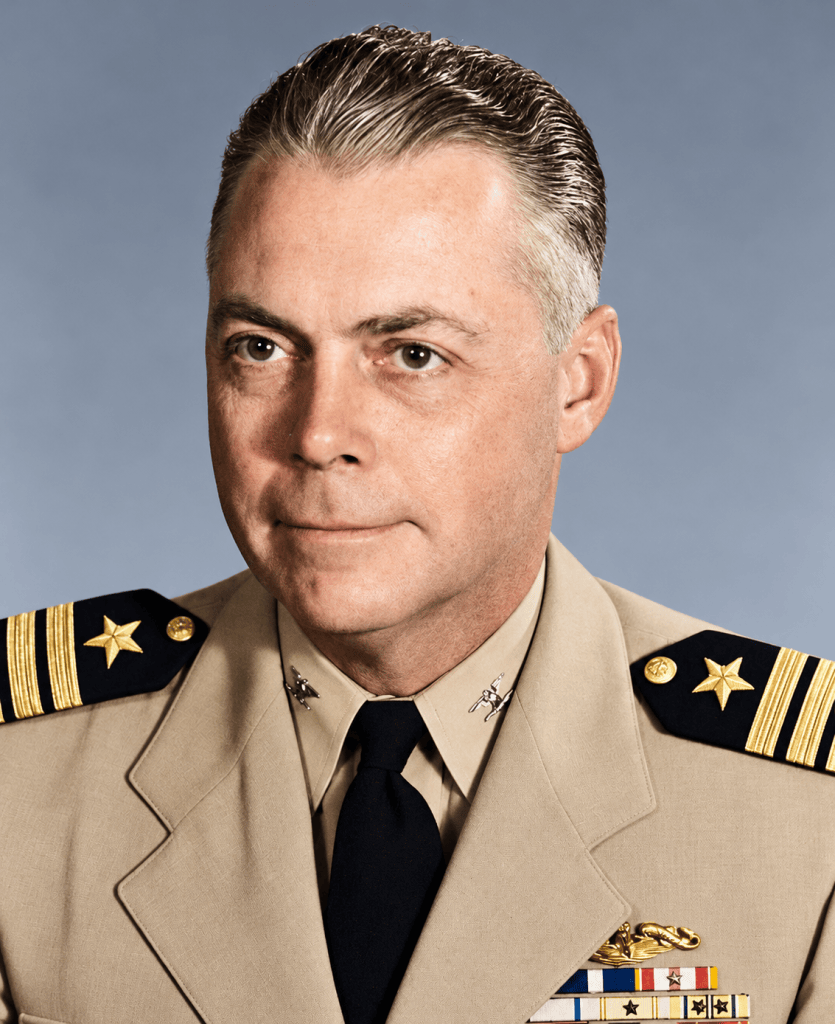
While the escorts pursued Salmon, USS Sterlet (SS-392), commanded by Lieutenant Commander Orme C. Robbins, approached the tanker. Sterlet had headed toward the distant gun flashes and at 2355 obtained radar contact with the long-sought target. Her report described it lying dead in the water, slightly down by the stern, with no escorts nearby.
At 0035 on 31 October, Sterlet fired six bow torpedoes with a run of about 3,000 yards. Her crew observed at least four hits and reported that the tanker sank almost immediately. The patrol-report sequence therefore places the final attack after midnight, although JANAC’s postwar loss table assigns Takane Maru to 30 October and credits Trigger, Salmon, and Sterlet jointly. Salmon’s wartime credit was one-third of the tanker, recorded as 3,300 tons against the estimated total used at the time.
For Salmon, escape from the escorts was only the beginning of the passage to safety. Unable to submerge, she had to cross exposed waters on the surface, making approximately sixteen knots on three engines. On 31 October, a serious lubricating-oil leak forced another stop for repairs. Trigger, Silversides, and Sterlet converged on her position, forming a protective screen late that night. Salmon’s executive officer went aboard the accompanying boats to explain her condition and coordinate assistance.
Sterlet offered supplies and received a request for belted .50-caliber ammunition. Her report recorded the admiration of men who had seen what Salmon’s crew had repaired and understood how little protection remained. Shortly after midnight on 1 November, Sterlet sighted torpedo wakes close aboard and warned Salmon to get moving. The damaged boat and her companions accelerated without hesitation. Even surrounded by friends, she was not yet beyond enemy reach.
American aircraft subsequently added overhead protection. On 1 November, a patrol bomber of VPB-116 piloted by Lieutenant Guy M. Thompson Jr. shot down a Japanese “Emily” flying boat in the area while covering Salmon’s return. The submarines maintained their screen toward the Marianas. On the evening of 3 November, Salmon reached Tanapag Harbor, Saipan, where she moored alongside the tender Fulton.
A boat brought home
Temporary repairs allowed Salmon to continue through Pearl Harbor to Hunters Point, arriving on 2 December. Inspection established that restoring her for further combat patrols was unwarranted. She later went to Portsmouth for limited repairs intended to support training and experimental service. Further work was halted after the war, and she was decommissioned on 4 April 1946 and subsequently scrapped. Her eleventh patrol had been her last; the crew received the Presidential Unit Citation.
Takane Maru’s loss belongs in the record of the submarine campaign against Japanese shipping. Salmon’s return deserves equal attention. It was made possible by machinery that continued to turn, hatches that held, and sailors who restored vital systems while their boat was flooding or under fire. Nauman’s close-range maneuver opened the way out, and other submariners helped keep that way open to Saipan. In preserving the memory of the Silent Service, there is a place for the men who brought a battered boat home, carrying with them an account of how close she had come to joining those still on patrol.
Sources
United States Navy. USS Salmon SS-182. Report of Eleventh War Patrol, including “Report of Engagement October 30, 1944,” November 8, 1944. Supplied scan SS-182_SALMON_Part2.pdf, especially PDF pages 163–169, printed narrative pages 12–18, and command endorsements.
United States Navy. USS Trigger SS-237. Report of War Patrol Number Ten. September–November 1944. Supplied scan SS-237_TRIGGER_Part2.pdf, especially PDF pages 16–20, entries for October 30 through November 3.
United States Navy. USS Sterlet SS-392. Report of Second War Patrol. 1944. Supplied scan SS-392_STERLET.pdf, especially PDF pages 75–77, printed pages 17–19, entries for October 30 through November 3.
United States Navy, Bureau of Ships. “U.S.S. Salmon SS-182: Depth Charge Damage, Southeast of Kyushu, 30 October 1944.” In Submarine Report, War Damage Report No. 58, vol. 1, section VII, 61–81. 1949. https://ibiblio.org/hyperwar/USN/rep/WDR/WDR58/WDR58-7.html.
Joint Army–Navy Assessment Committee. Japanese Naval and Merchant Shipping Losses During World War II by All Causes. February 1947. Appendix, “Combinations Including United States Submarines,” 56. https://www.ibiblio.org/hyperwar/Japan/IJN/JANAC-Losses/JANAC-Losses-6.html.
Parken, Oliver. “The Extraordinary Tale of USS Salmon’s Escape from Destruction.” The War Zone, December 1, 2023. Supplied article PDF and Yahoo republication, print-in-tab(4).pdf.
“USS Sterlet” and “USS Trigger (SS-237).” Supplied reference PDFs, consulted for ship background and patrol summaries.


Leave a Reply