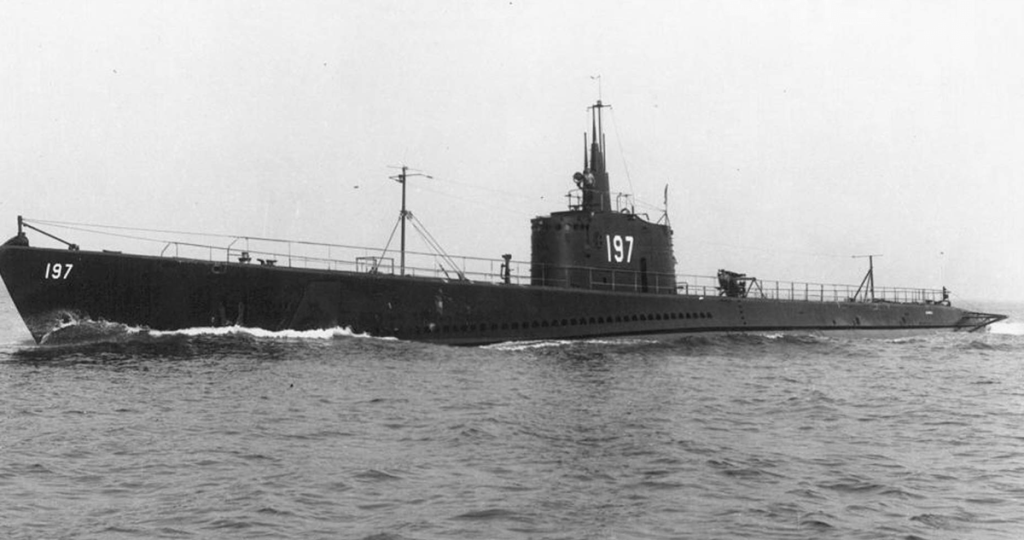
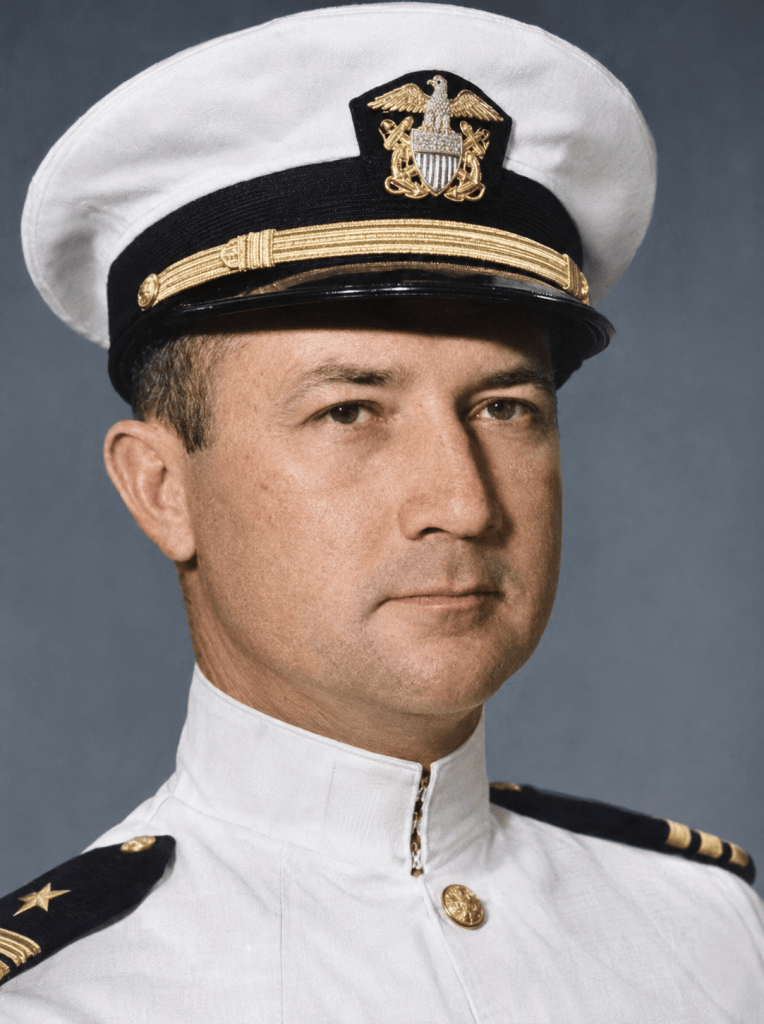
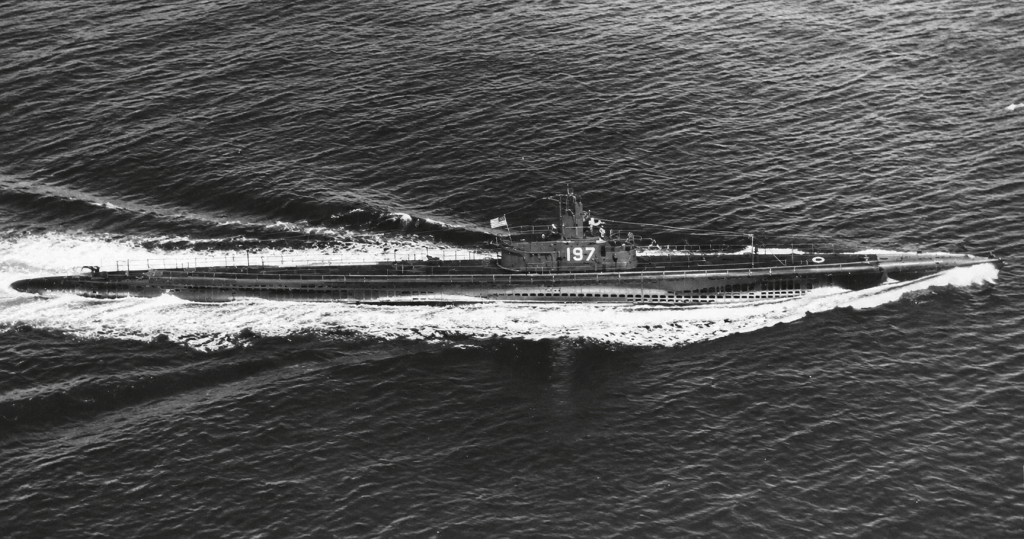
On November 2, 1942, USS Seawolf (SS-197) spent much of the morning fighting the currents outside Davao Gulf. Before the afternoon was over, Commander Frederick B. Warder would watch a Japanese ship disappear through his periscope, count forty-one men in the water, and wait for a rescue vessel that never appeared. His patrol report preserves both the successful attack and the uncertain fate of the men left behind.
Davao Gulf opens onto the waters south of Mindanao in the southern Philippines. Cape San Agustin marks its eastern entrance, making the approaches a useful hunting ground for a submarine looking for shipping entering or leaving Davao. Reaching the right position, however, required more than drawing a course on a chart.
Seawolf submerged at 0555 with Cape San Agustin Light twenty-two miles away. A strong westerly current frustrated her effort to reach the traffic lane. At 0714, Warder concluded that he could not get there before sunset and turned toward another route serving Davao. By 1022, the current had reversed, setting eastward at 1.8 knots. He changed course again and tried for the original lane.
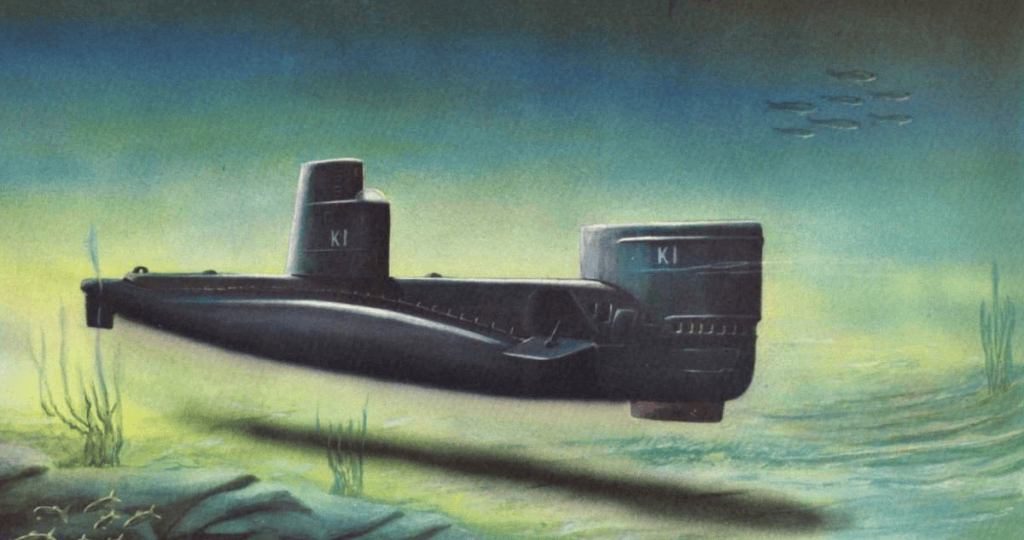
(NAVSOURCE)
The first possible contact came at 1145, when Lieutenant (junior grade) Mercer, the officer of the deck, reported smoke almost due north. Warder exposed twelve feet of periscope, but found only suspicious clouds. At 1324, Lieutenant Siverson reported smoke on nearly the same bearing. This time Warder found the tops of masts. Seawolf went to battle stations and increased speed to close the shipping route.
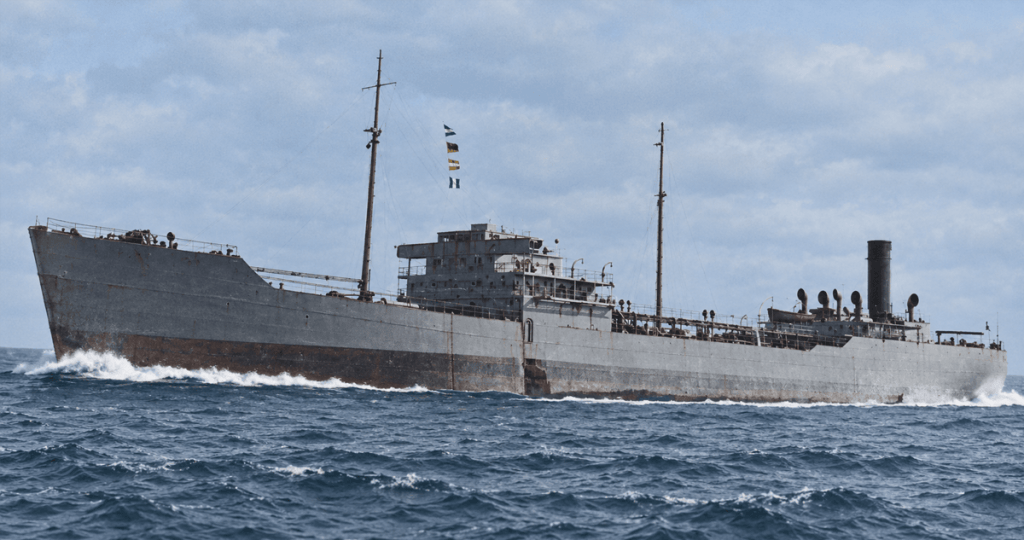
The approaching vessel was steaming out of Davao. Warder described a freighter transport about 350 feet long, with two masts, a single coal-burning stack, passenger decks, and a gun aft. Her funnel produced heavy smoke at irregular intervals. He estimated her size at 3,500 tons. The report did not name her; the Navy’s subsequent ship history identifies the vessel sunk that day as Gifu Maru. The postwar Joint Army–Navy Assessment Committee listed her as a 2,933-ton cargo ship.
Warder initially intended to fire two torpedoes from the bow tubes. At 14:33:20, however, he found Seawolf directly ahead of the target at about 2,700 yards. He changed the attack to three torpedoes from the stern tubes. During the approach, flat water gave way to rain and then rougher seas, adding another complication to a firing solution already shaped by current and the target’s movement.
At 14:41:55, the first torpedo left tube five. Tube six fired fifteen seconds later, followed by tube seven at 14:42:24. The attack table recorded an 1,100-yard run and a four-foot depth setting. The three aiming points bracketed the target’s length: a quarter-length ahead, the middle of the ship, and a quarter-length astern. Sound reported all three running straight.
At 14:43:23, a torpedo struck the forward half of the ship. Several men aboard Seawolf insisted there had been two hits. Warder refused to claim more than he could substantiate: “I only saw and heard one.” The distinction matters. His report recorded the crew’s impression while preserving the limit of his own observation.
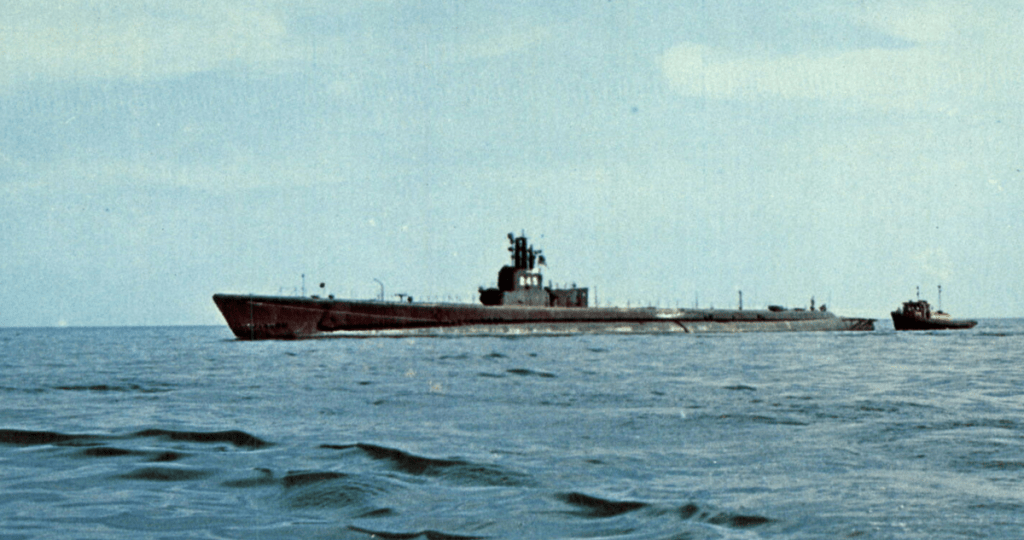
(NAVSOURCE)
Gifu Maru listed to starboard and settled by the bow. At 14:52, Warder photographed her with only the stern above water. The narrative places the sinking at 14:52:35; the separate attack account gives 14:53:35. That one-minute discrepancy remains in the record. Either way, the ship had gone down roughly ten minutes after the observed hit, about five and a half miles from Cape San Agustin Light.
The periscope then revealed the men in the water. Warder counted forty-one, about sixteen holding to wreckage. The starboard whaleboat had been lowered partway, but the ship’s heavy list prevented men from boarding it. He believed it went down with the vessel. On the port side, the forward falls had carried away while the other whaleboat was being lowered, spilling it several minutes before the sinking. Warder thought that boat also broke up. Most of the men appeared to have escaped down a collision mat or cargo net hung over the port side.
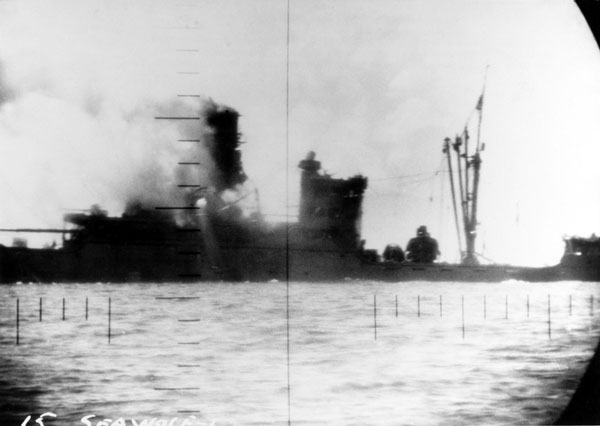
(US NAVY Official Photograph)
Seawolf stayed nearby until nightfall. Warder expected a destroyer or some other rescue ship to arrive, but none appeared. Although the sinking had occurred within sight of the lighthouse, he believed it had escaped notice ashore. The weather and strong southeasterly current led him to fear that few, if any, would survive. That was his assessment from the submarine, not a verified casualty count. The patrol report does not establish what eventually happened to those men.
At 14:58, Seawolf recorded another violent explosion, its origin undetermined. At 18:43, she surfaced and stood into Davao Gulf through rain and limited visibility. The day’s entry closed with 122.4 miles steamed. Behind those figures lay hours of maneuvering, a revised attack plan, three torpedoes, and a ship sunk. Warder’s account also left a more difficult record: forty-one men seen alive after the sinking, and no answer about their eventual fate.
Sources and record notes
Seawolf patrol report entries for November 2, 1942, narrative p. 1 (7), enemy ships sighted p. 5 (1), and particulars of attacks p. 7 (1), reproduced in the supplied transcription (source PDF pp. 209, 221, 226). The supplied narrative was used as a reading aid. Target identification checked against Naval History and Heritage Command, “Seawolf I (SS-197).” Postwar tonnage and classification: Joint Army–Navy Assessment Committee, Japanese Naval and Merchant Shipping Losses During World War II, November 2, 1942 entry. Wartime estimates and observations are distinguished from postwar identification; the conflicting sinking times are retained.
https://www.history.navy.mil/research/histories/ship-histories/danfs/s/seawolf-i.html https://www.ibiblio.org/hyperwar/Japan/IJN/JANAC-Losses/JANAC-L
If you’d like to know more about “Fearless Freddie” Warder, check out the Facebook page for the Film, “Fearless Freddie.”


Leave a Reply