USS Cobia, the Manitowoc submarines, and the Wisconsin Maritime Museum’s enduring mission
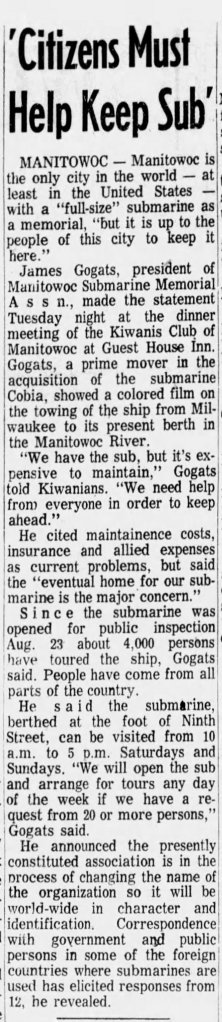
On October 28, 1970, readers of Manitowoc’s Herald-Times-Reporter encountered a headline that expressed both an accomplishment and a warning: “Citizens Must Help Keep Sub.”
USS Cobia (SS-245) had arrived that August. Visitors were coming aboard, and the community had acquired a tangible connection to the submarine war in the Pacific. Yet bringing a retired submarine to Wisconsin was only the beginning. James Gogats, president of the Manitowoc Submarine Memorial Association, explained the problem to the local Kiwanis Club: “We have the sub, but it’s expensive to maintain.”
Maintenance, insurance, and a permanent home all required money and sustained public commitment. More than half a century later, that newspaper account captures the central challenge behind the Wisconsin Maritime Museum’s achievement. Preserving a submarine requires generations of people willing to accept responsibility for her.
The story began with another formidable undertaking: building ocean-going submarines on the shores of Lake Michigan.
Manitowoc Shipbuilding Company possessed considerable experience constructing Great Lakes vessels, but a fleet submarine presented a different order of complexity. Its pressure hull, propulsion machinery, electrical systems, weapons, and countless fittings had to function together under conditions that allowed little tolerance for failure. As American naval expansion accelerated before Pearl Harbor, the Navy turned to Manitowoc’s skilled workforce to help meet the demand.
The company adapted its facilities and developed methods suited to the work. Rotating jigs allowed welders to turn pressure-hull sections into favorable working positions. Heavy lifting equipment moved those sections through assembly, while the narrow Manitowoc River made side-launching a practical necessity. At peak production, approximately 7,000 employees, including more than 600 women, supported the effort. USS Peto (SS-265), launched April 30, 1942, became the first of 28 submarines built there.
Completing a submarine in Wisconsin created an unusual delivery problem. Lake Michigan offered room for trials, but the boats still had to reach the ocean. Their route led through Chicago, the Illinois Waterway, and the Mississippi River to New Orleans. Special floating dry docks carried the submarines through stretches where water depth otherwise restricted their passage. Bridge clearances required additional preparations along the way. Building the boats and delivering them demanded separate feats of engineering.
Twenty-five of the 28 Manitowoc submarines reached combat before the war ended. The Wisconsin Maritime Museum credits them collectively with sinking 132 Japanese ships. Four never returned: USS Robalo (SS-273), USS Golet (SS-361), USS Kete (SS-369), and USS Lagarto (SS-371). Their names belong beside the production statistics, because the achievement of the shipyard cannot be separated from the service and sacrifice of the crews.
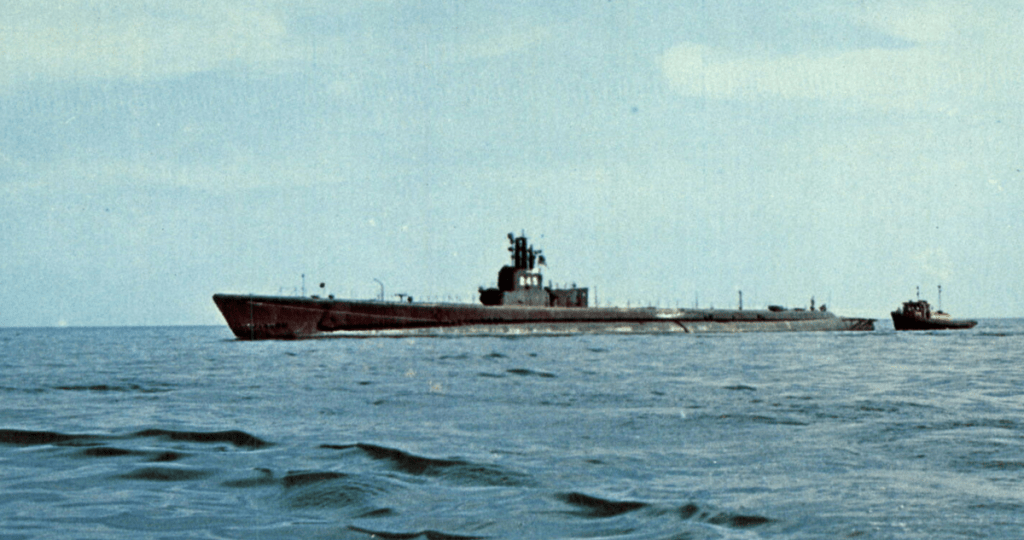
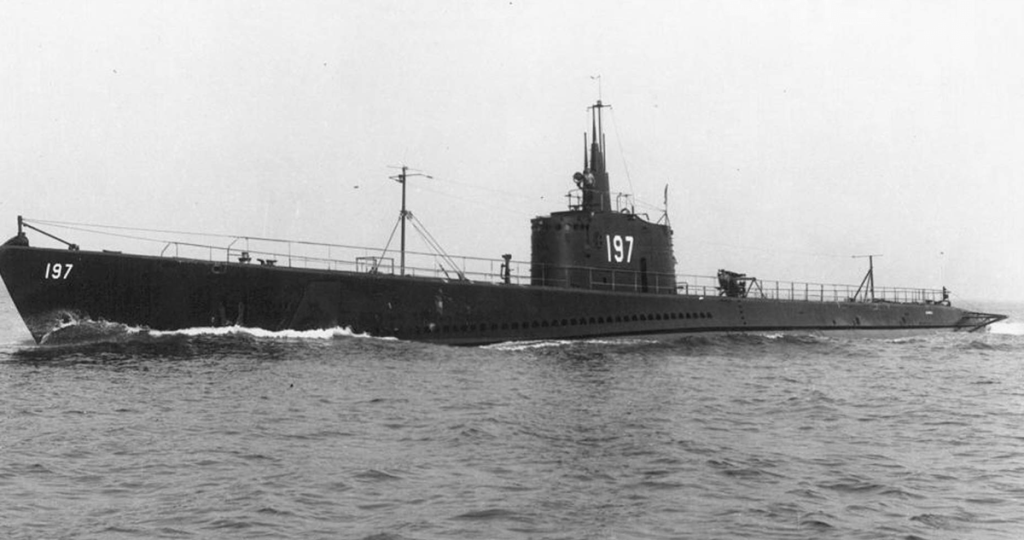
The submarine that eventually became their memorial came from another yard. Electric Boat built Cobia at Groton, Connecticut, and the Navy commissioned her on March 29, 1944, under Lieutenant Commander Albert L. Becker. Her six Pacific war patrols brought torpedo attacks, surface engagements, reconnaissance, rescue work, and enemy counterattacks. She earned four battle stars.
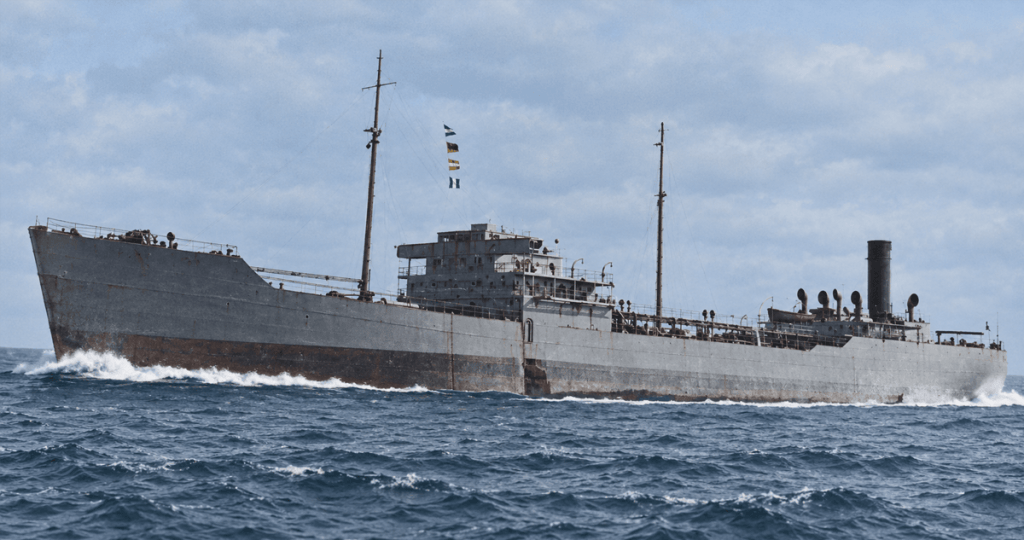
Among her first patrol’s victims was Nisshu Maru, sunk in July 1944 while transporting Japanese troops and tanks toward Iwo Jima. The loss destroyed 28 tanks, although replacements subsequently reached the island. That distinction matters: Cobia disrupted an important reinforcement movement, but the sinking did not leave Iwo Jima without Japanese armor.
Her later service also demonstrated the varied demands placed on American submarines. She sank the minelayer Yurishima in January 1945, rescued Japanese survivors, and on April 8 recovered seven surviving crewmen of a downed Army bomber. In May, an unsuccessful attack brought a punishing depth-charge counterattack. Her final patrol included landing intelligence personnel on Java and serving as a lifeguard for Allied air operations.
Those operations carried a human cost. During a surface engagement with Japanese small craft on February 26, 1945, enemy machine-gun fire mortally wounded Ralph Clark Huston Jr., a loader on one of Cobia’s 20mm guns. He became the boat’s only wartime combat fatality. His story gives individual meaning to the machinery visitors encounter aboard her: these were working battle stations occupied by men whose survival depended upon their shipmates.
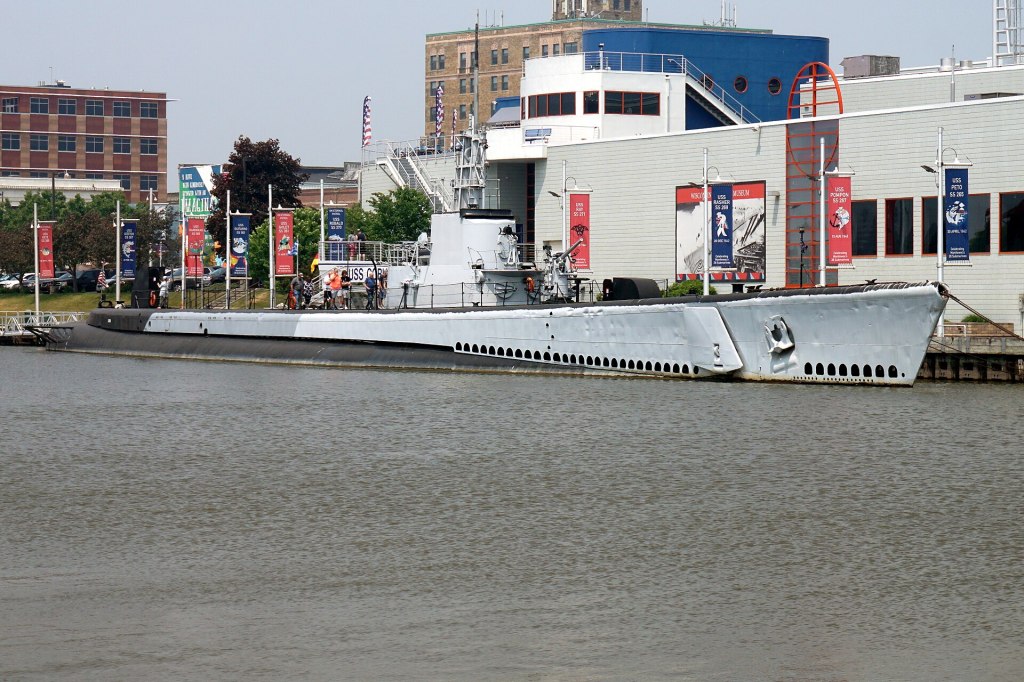
After the war, Cobia passed through reserve and training assignments, eventually serving Naval Reservists in Milwaukee. That Wisconsin connection helped make her available when Manitowoc sought a submarine memorial. She was struck from the Naval Vessel Register in July 1970 and brought to Manitowoc the following month.
Her arrival provided a representative fleet boat through which the city could explain its own submarine history. Although she had not come down Manitowoc’s building ways, her compartments and equipment made the work of the local shipbuilders understandable. Visitors could stand inside the kind of vessel those workers had constructed and consider what it meant to take one into combat.
The early newspaper reports show how uncertain that future initially remained. By October 1970, Gogats reported that approximately 4,000 people had toured Cobia since she opened for public inspection on August 23. Visitors had come from across the country, but admission traffic alone did not resolve the association’s expenses or its concern about a permanent location.
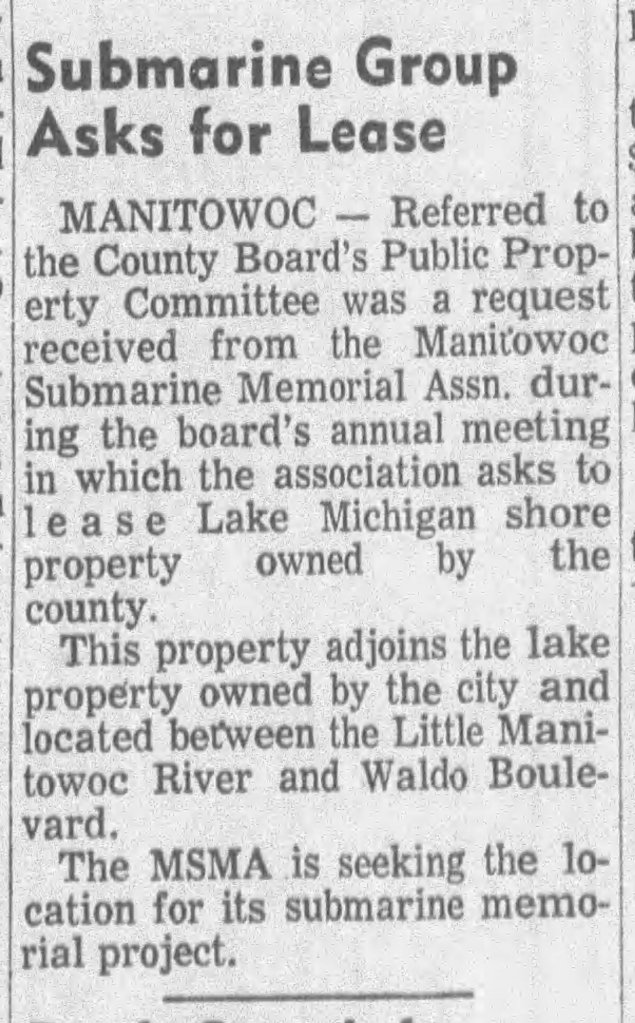
A second Herald-Times-Reporter account, published October 28, 1971, recorded the association’s request to lease county-owned Lake Michigan shoreline property for its submarine memorial project. The request had been referred to the County Board’s Public Property Committee. That brief notice does not establish that the proposed site was approved or became the eventual home. It does reveal the practical work behind preservation: finding property, approaching public officials, and trying to turn an ambitious idea into a durable institution.
The association’s efforts developed into the Wisconsin Maritime Museum. Its scope expanded beyond the submarine to encompass Wisconsin and Great Lakes maritime history, eventually filling more than 60,000 square feet with collections, exhibits, and educational activities. That broader setting strengthens the submarine story by placing it within the region’s long relationship with shipbuilding, transportation, industry, and the waterways themselves.
Cobia remained central to that undertaking. Designated a National Historic Landmark in 1986, she underwent dry-docking in 1996 and extensive interior restoration. Wartime furnishings and fittings helped return her spaces toward their 1945 appearance. The work required research as well as craftsmanship, because an authentic restoration depends upon knowing what belongs aboard and how it was arranged.
Volunteers also restored equipment to operating condition, including two main diesel engines, the wartime radio room, and the SJ-1 surface-search radar. These achievements preserve more than the outward appearance of a submarine. Working equipment helps explain the relationships among the boat’s systems and the knowledge required to operate them. The museum’s own restoration history credits projects led by Sub Vets, Inc., U.S. Submarine Veterans of World War II, and other dedicated volunteers.
For submarine veterans, that work has particular significance. A boat can preserve details that a written description struggles to convey: the arrangement of a watch station, the space available around machinery, or the proximity of sleeping quarters to the work of the ship. Guided visits and overnight programs give people without submarine experience a physical setting in which to understand the service.
The museum also carries remembrance beyond Cobia’s pressure hull. Plaques along Manitowoc’s Riverwalk commemorate the locally built submarines and their commissioning crews. The city’s designation as an American World War II Heritage City recognizes the larger contribution of its industries and citizens. Together, those memorials connect the men who went to sea with the people who supplied their boats.
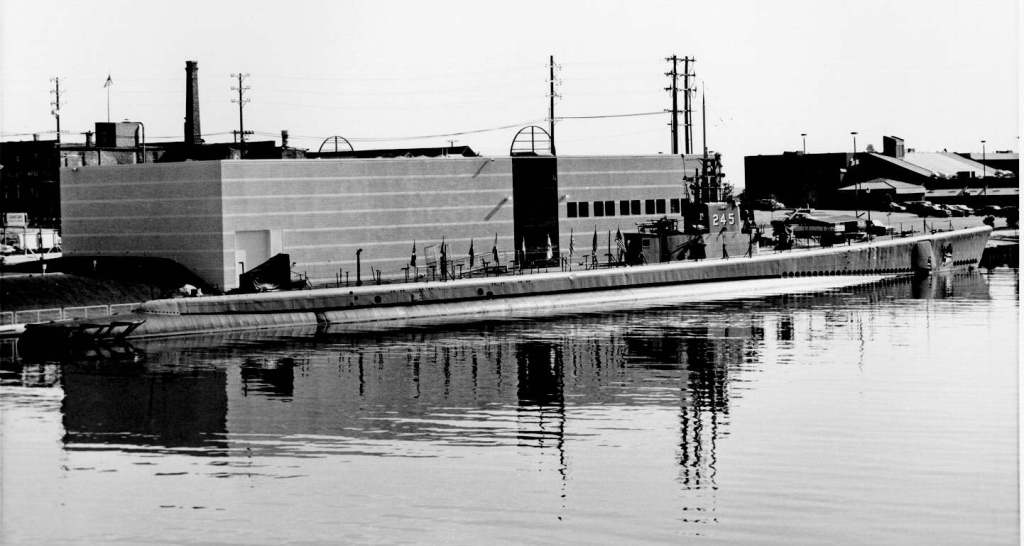
That connection lies close to the purpose of USSVI. Perpetuating the memory of shipmates requires preserving their names and telling their stories, while also ensuring that future generations have opportunities to understand their service. In Manitowoc, those responsibilities have taken the form of a museum, a maintained submarine, and decades of volunteer labor.
James Gogats understood the essential requirement in 1970. Acquiring Cobia gave the community an opportunity; keeping her required a continuing commitment. Every repaired fitting, documented artifact, guided tour, and contribution toward preservation has helped fulfill it.
The Manitowoc boats carried Wisconsin craftsmanship into the Pacific war. At the Wisconsin Maritime Museum, Cobia helps carry their story forward, honoring the builders, the crews who returned, and the shipmates who remain on Eternal Patrol.
Sources
Herald-Times-Reporter (Manitowoc, WI). “Citizens Must Help Keep Sub.” October 28, 1970, 2. Supplied newspaper clipping.
Herald-Times-Reporter (Manitowoc, WI). “Submarine Group Asks for Lease.” October 28, 1971, 19. Supplied newspaper clipping.
Naval History and Heritage Command. “Cobia (SS-245).” Dictionary of American Naval Fighting Ships. https://www.history.navy.mil/research/histories/ship-histories/danfs/c/cobia.html.
Naval History and Heritage Command. “H-051-1: The Last Sacrifices.” https://www.history.navy.mil/content/history/nhhc/about-us/leadership/director/directors-corner/h-grams/h-gram-051/h-051-1.html.
National Park Service. “Manitowoc, Wisconsin.” https://www.nps.gov/places/manitowoc-wisconsin.htm.
Wisconsin Maritime Museum. “USS Cobia.” https://www.wisconsinmaritime.org/collections/submarines/uss-cobia/. Supplied PDF copy also consulted.
Wisconsin Maritime Museum. “USS Cobia & Manitowoc Subs.” https://www.wisconsinmaritime.org/collections/submarines/.
Wisconsin Maritime Museum. “Museum History.” https://www.wisconsinmaritime.org/about-us/museum-history/.
Wisconsin Maritime Museum. “WWII American Heritage City.” https://www.wisconsinmaritime.org/about-us/wwii-american-heritage-city/.
“USS Cobia.” Supplied reference PDF, USS_Cobia.pdf. Used for supplementary vessel chronology and the account of Nisshu Maru’s tank cargo.


Leave a Reply