How the October 25 1944 announcement revealed an undersea supply campaign
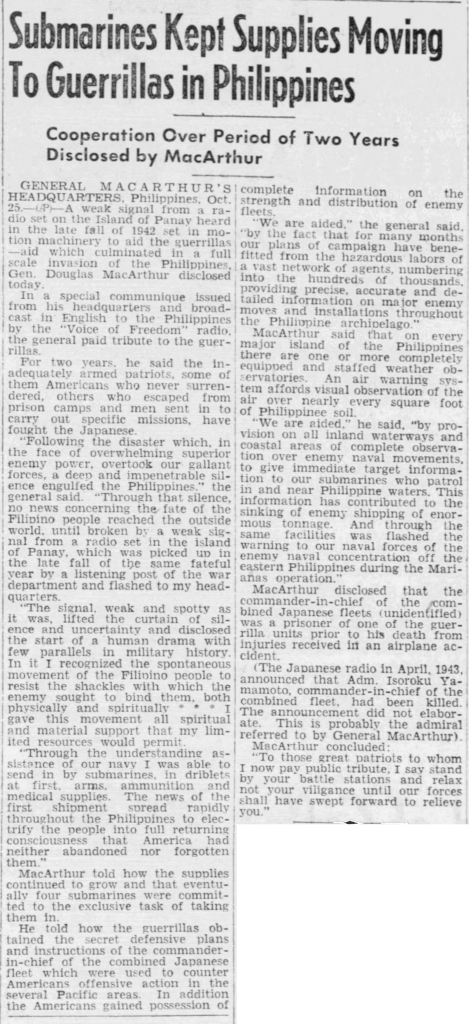
On October 25, 1944, readers of the Casper Star-Tribune encountered a story that carried them behind the familiar headlines of invasion and advancing armies. Five days after American forces landed on Leyte, an Associated Press dispatch from General Douglas MacArthur’s headquarters described how submarines had been carrying supplies to guerrillas in the Japanese-occupied Philippines. For families following the war from Wyoming, the announcement offered a new understanding of what had happened after the surrender of American and Filipino forces in 1942. Resistance had continued, and American submariners had helped sustain it.
The headline was direct: “Submarines Kept Supplies Moving To Guerrillas in Philippines.” Beneath it, the newspaper explained that MacArthur had disclosed two years of cooperation. His special communiqué, also broadcast in English to the islands over the Voice of Freedom radio, acknowledged a campaign whose effectiveness had depended upon secrecy. Weapons and medicine had gone north from Australia; intelligence and evacuees had traveled south. Between those passages lay months of dangerous work by submarine crews and Filipinos living under occupation.
A signal from Panay
MacArthur began with the isolation that followed the disasters of 1942. Bataan had fallen in April and Corregidor in May. Organized resistance under American command had collapsed, but surrender orders had not ended the determination of every soldier or civilian. Filipino guerrilla organizations took shape across the archipelago. Americans who had evaded capture or escaped imprisonment joined some of them, while local leaders assembled forces under conditions that varied considerably from island to island.
In the communiqué’s telling, the first opening through that isolation came from Panay late in 1942. A weak radio signal reached a War Department listening post and was relayed to MacArthur’s headquarters. The transmission established contact with people still resisting Japanese control. It also presented Allied commanders with a practical problem. Encouragement could travel by radio; ammunition could not.
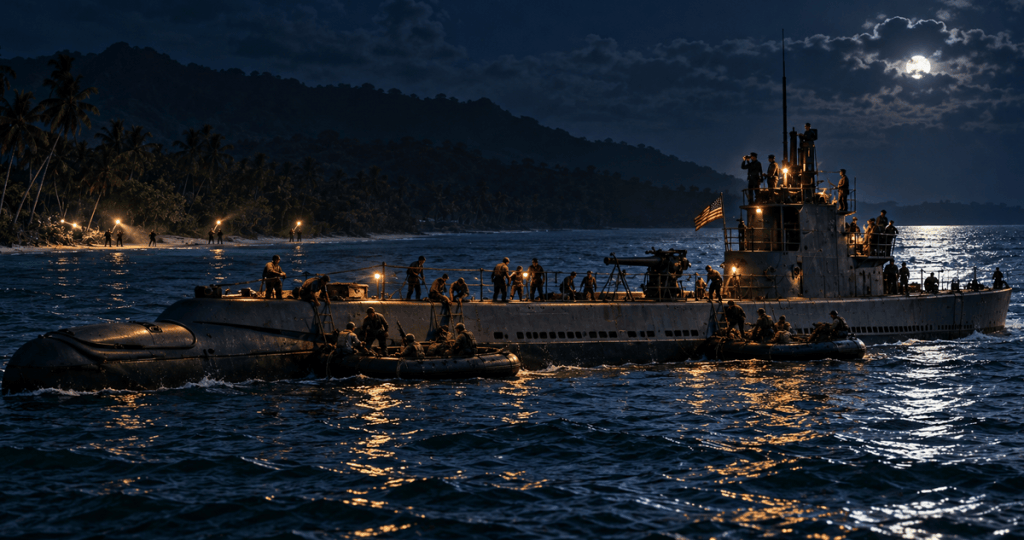
The geography favored clandestine movement by sea, provided a vessel could survive the approach. Japanese aircraft and patrol craft watched the islands, while uncertain charts, reefs, and shallow coastal water complicated any landing. A submarine could cross those waters submerged, surface near an agreed rendezvous, and put men and cargo ashore. Every such assignment, however, consumed time and space that might otherwise have been devoted to attacking Japanese shipping.
Building the supply service
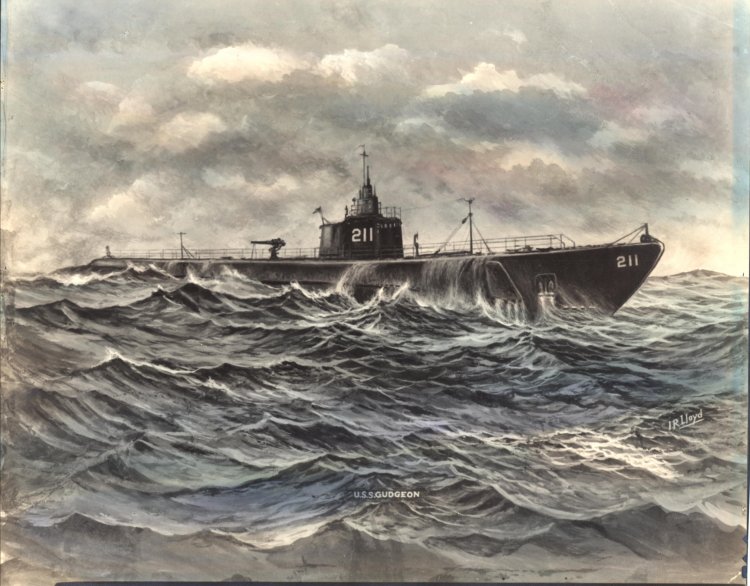
The early missions were improvised around operational patrols. In January 1943, USS Gudgeon (SS-211) landed an intelligence party led by the Filipino aviator Jesús Villamor on Negros. Its work helped establish communications between the resistance and MacArthur’s headquarters in Australia. USS Tambor (SS-198) followed with ammunition, money, and another party that included Lieutenant Commander Charles “Chick” Parsons.
Parsons brought years of experience in the Philippines to the assignment. Before the war he had worked in Manila’s shipping business, learning coastal waters and developing relationships that proved invaluable under occupation. Traveling among resistance leaders, he assessed their strength and needs. His recommendations helped turn occasional deliveries into an organized submarine supply service, remembered as SPYRON, the Spy Squadron.
Coordination mattered as much as cargo capacity. Supplies had to be collected in Australia, moved to the loading port, and matched with requests from guerrilla districts. Radio contact had to produce a rendezvous that both parties could find without alerting the Japanese. Once a submarine arrived, the shore party needed enough boats and labor to clear the cargo before exposure became fatal. The operation depended upon Filipinos who could move supplies inland after the submarine had disappeared.
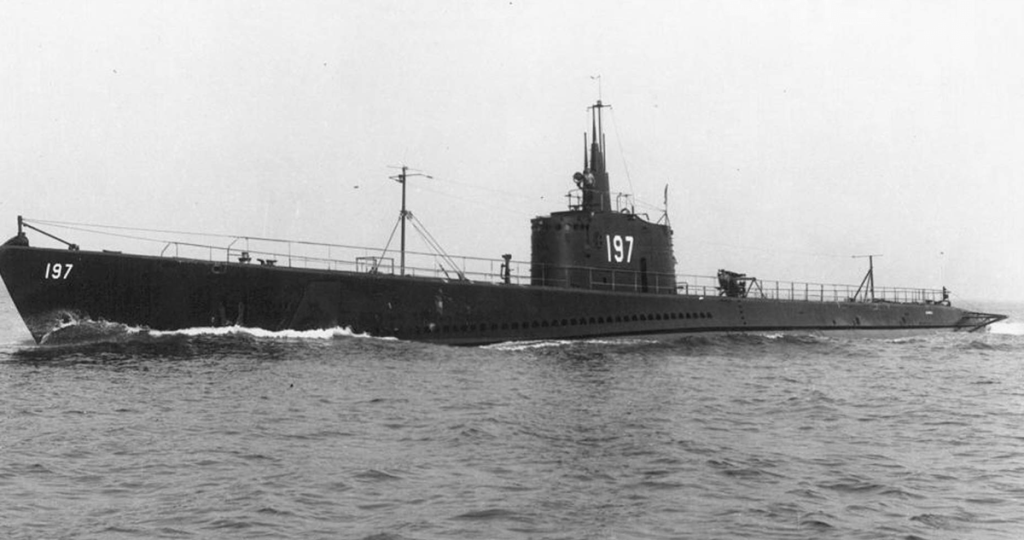
USS Narwhal (SS-167) and USS Nautilus (SS-168), the Navy’s large cruiser submarines, were particularly useful. Their size, an awkward feature in some offensive operations, gave them room for substantial loads. Narwhal departed Australia on October 23, 1943, with 92 tons of cargo, intelligence personnel, and Parsons aboard. Nautilus joined the service in 1944; USS Seawolf (SS-197) and USS Stingray (SS-186) were also assigned to the growing effort. Other fleet submarines continued to undertake special missions as circumstances required.
Cargo included rifles, ammunition, radio equipment, and medical supplies, but the requisitions extended to the ordinary tools of a functioning organization. Uniforms, lubricating oil, typewriter ribbons, and carbon paper accompanied the military stores. Religious supplies and small comforts addressed needs that did not disappear under occupation. A guerrilla district required communication, administration, and civilian confidence as well as armed men.
MacArthur emphasized the effect of the first shipments upon morale. Their arrival demonstrated that contact with the outside world could bring tangible assistance. For communities exposed to Japanese reprisals and shortages, a submarine’s cargo made continued American involvement visible. The promise of return acquired substance in supplies that could be carried ashore and used.
Intelligence moving in the other direction
By October 1944, the relationship was serving Allied operations well beyond the beaches where supplies were unloaded. Guerrilla observers reported enemy installations and movements. Coastwatchers supplied information about shipping, creating opportunities for submarines operating in Philippine waters. Weather stations and visual air-warning posts extended the network’s usefulness to air and naval planning.
The communiqué described an enormous body of agents and observers. Its claims about coverage reflected a commander publicly honoring the resistance and explaining its contribution during an ongoing campaign. The operational point was clear enough without treating every wartime estimate as a precise census: people ashore could observe activity that Allied commanders could not continuously see for themselves. Submarine deliveries helped keep those observers equipped and in communication.
Captured Japanese naval plans supplied the most striking example. The October 25 dispatch announced that guerrillas had obtained secret defensive plans of the Combined Fleet. Later records establish the connection to the Z Plan and the loss of aircraft carrying Admiral Mineichi Koga and members of his staff in a storm at the end of March 1944. Koga died; his chief of staff, Shigeru Fukudome, survived and fell into guerrilla hands. Recovered documents eventually reached USS Crevalle (SS-291), which carried them from Negros in May while evacuating 40 people. Their translation gave American commanders valuable insight into Japanese naval intentions before the Marianas campaign.
The contemporary newspaper account also illustrates the limits of wartime disclosure. It reported that the Japanese fleet commander had been captured before dying of injuries from an aircraft accident, and an accompanying parenthesis speculated that this meant Admiral Isoroku Yamamoto. That identification was wrong. Fukudome was subsequently released and survived the war. The distinction matters because the announcement combined a real intelligence achievement with an account of the captured officer that later evidence did not sustain.
The work still ahead
MacArthur closed by directing the guerrillas to remain at their battle stations until Allied forces reached them. The Leyte landing had opened the liberation campaign, but occupation continued across much of the archipelago. The men and women who had supplied intelligence or received submarine cargo could not assume that public recognition meant their danger had passed.
Nor had the submarine service escaped the cost. Earlier that October, Seawolf had been lost on a special mission, almost certainly to American antisubmarine action. Her loss belonged to the same campaign now receiving public praise. Cargo runs exposed crews to enemy patrols and hazardous coastal navigation, while the difficulty of identifying friendly submarines added another deadly complication.
The October 25 announcement gave Americans a glimpse of a war largely absent from the daily record of torpedo attacks and ships sunk. Submarines had carried the equipment that allowed scattered resistance organizations to maintain contact and keep fighting. Filipino couriers, radio operators, and guerrillas had made those deliveries useful, often at great personal risk. When American forces returned in strength, they entered islands where organized resistance and its undersea connections had already been working for their arrival.
References
Associated Press. “Submarines Kept Supplies Moving To Guerrillas in Philippines.” Casper Star-Tribune, October 25, 1944, 2. Supplied newspaper clipping.
Bradsher, Greg. “The Z Plan Story.” Prologue 37, no. 3 (Fall 2005). National Archives and Records Administration. https://www.archives.gov/publications/prologue/2005/fall/z-plan.
Eger, Christopher. “Warship Wednesday, Dec. 28, 2022: Spyron.” Last Stand on Zombie Island, December 28, 2022. https://laststandonzombieisland.com/2022/12/28/warship-wednesday-dec-28-2022-spyron/.
Smith, Steven Trent. “Submarine Special Missions in the Pacific.” WWII Quarterly, Early Fall 2012. Warfare History Network, November 28, 2016. https://warfarehistorynetwork.com/article/submarine-special-missions-in-the-pacific/.


Leave a Reply