Submarine Lifeguards and the First Patrol of USS Skate
On November 4, 1945, readers of Lancaster’s Sunday newspaper found a different measure of the submarine war in the Pacific. The headline reported that American submarines had rescued 504 United States and Allied aviators from enemy waters and beaches. The Associated Press dispatch, datelined Washington the previous day, described a rescue effort that had become an integral part of American air operations. Submariners had spent the war destroying the ships that sustained Japan’s military power. Along the way, they had also become the men aircrews hoped would find them when their airplanes could no longer bring them home.
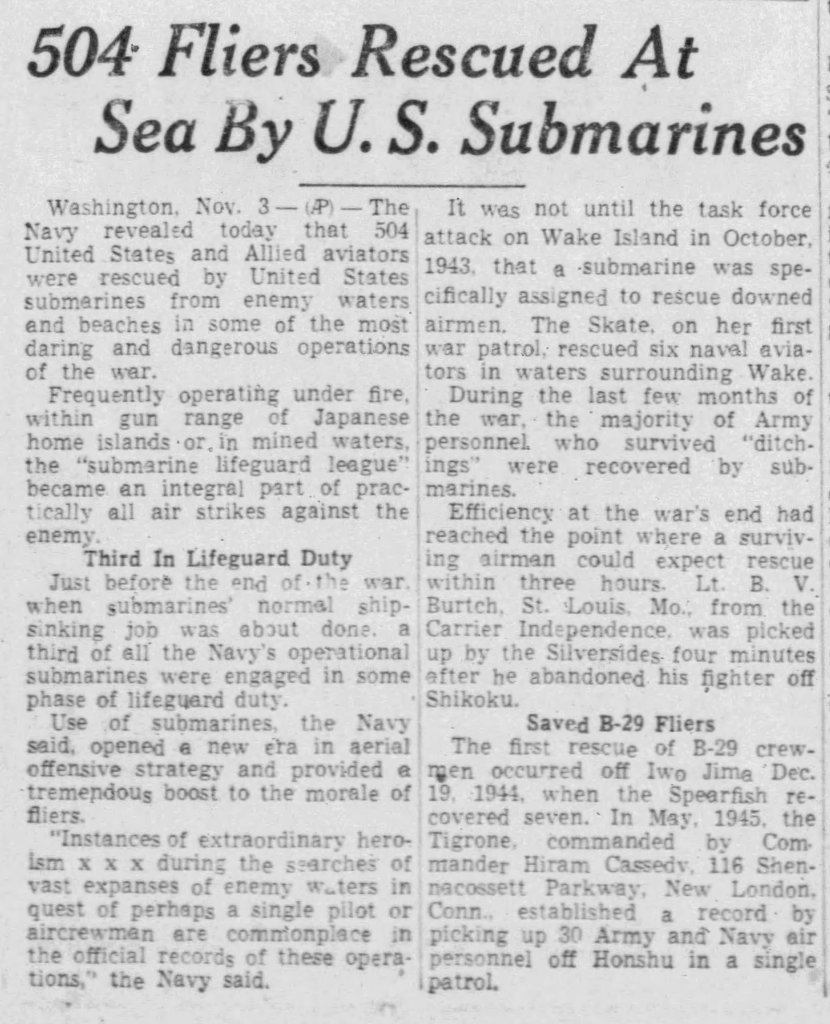
The Navy’s announcement called this effort the “submarine lifeguard league.” By the closing months of the war, according to the dispatch, approximately one-third of the Navy’s operational submarines were engaged in some phase of lifeguard work. Boats waited near enemy-held islands and along the routes flown by American bombers, sometimes within range of shore guns or in mined waters. Their presence gave an aviator a practical reason to believe that surviving a ditching might lead to something better than a raft drifting toward an enemy beach.
Among the examples in the announcement were USS Spearfish (SS-190), credited with recovering seven B-29 crewmen off Iwo Jima on December 19, 1944, and USS Tigrone (SS-419), which picked up 30 Army and Navy airmen off Honshu during a single patrol in May 1945. These were achievements of a system that had developed through experience. One of its decisive early demonstrations had come more than two years before the newspaper announcement, when a new submarine took station off Wake Island.
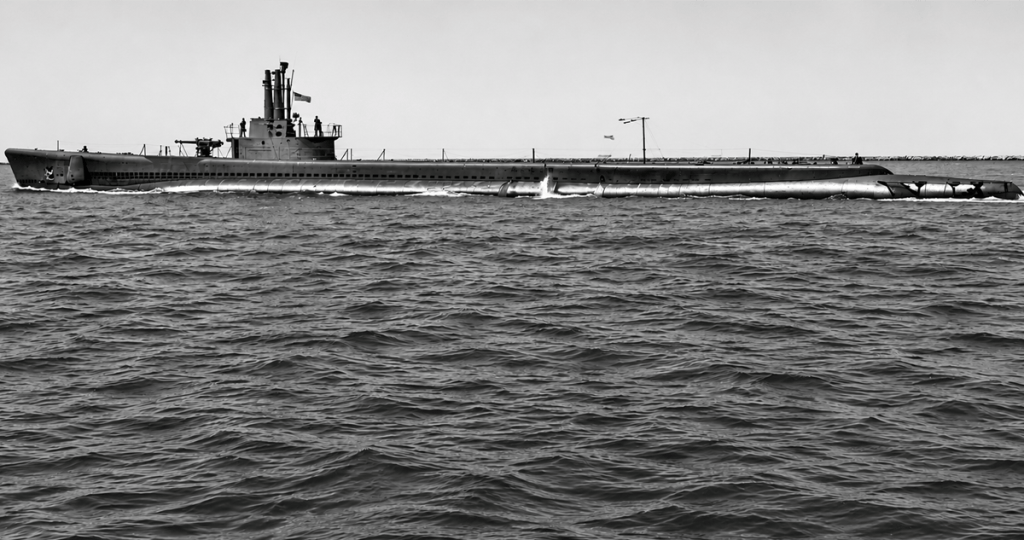
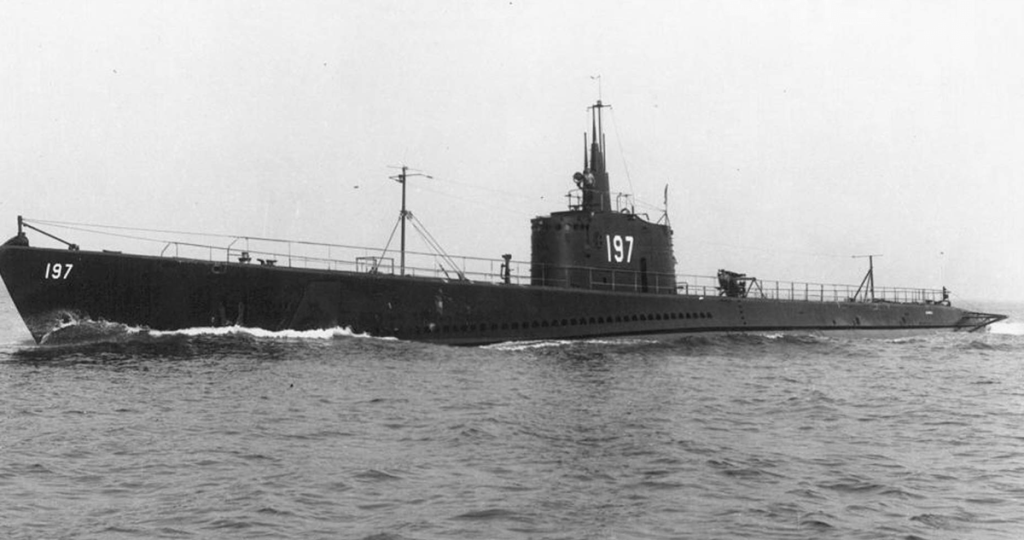
USS Skate (SS-305), a Balao-class boat commissioned at Mare Island in April 1943, departed Pearl Harbor on September 25 under Commander Eugene B. McKinney. Her first war patrol included an assignment to recover airmen during carrier strikes against Wake, the isolated central Pacific atoll captured by Japan in December 1941. The island’s location made it useful to Japanese aviation and a recurring target for American attacks. It also left a downed American flyer far from friendly territory.
Skate’s place in the story deserves precision. Submarines had already received rescue responsibilities while providing navigational support for bombers attacking Wake in December 1942. Snook and Steelhead subsequently covered carrier strikes in September 1943 without having to recover airmen. Skate’s October operation demonstrated the developing mission through successful rescues under fire. She helped turn an operational precaution into a proven means of bringing men back.
The difficulty was built into the assignment. A submarine approaching survivors had to expose herself on the surface, often in waters the enemy could watch and fire upon. Men handling a raft or helping an exhausted aviator aboard could not simply vanish below at the first appearance of a hostile aircraft. The captain had to weigh the safety of everyone in his boat against the immediate danger facing the men in the water. Near Wake, those choices arrived almost at once.
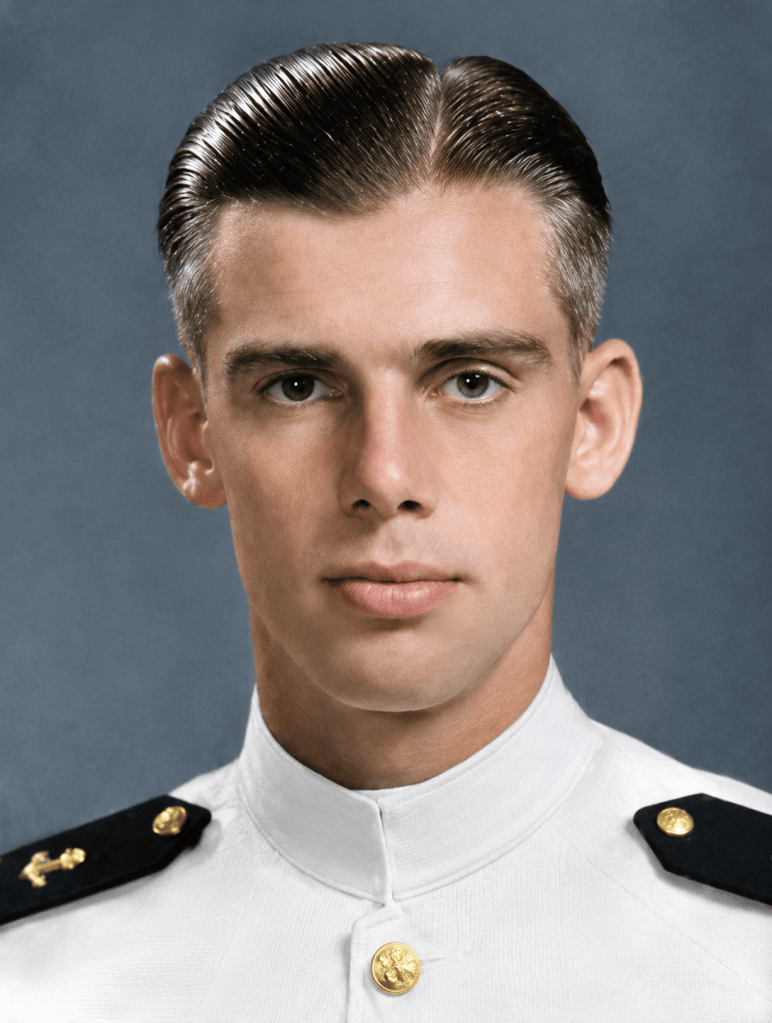
(United States Naval Memorial)
On October 6, while Skate was responding to a downed airplane, a Japanese fighter strafed the submarine. Lieutenant (junior grade) Willis Edward Maxson III was mortally wounded. The boat escaped beneath the surface, and treatment began, but the injury proved fatal. Maxson died on October 8. The outline of Skate’s patrol thereafter contains both the names of men brought aboard alive and the loss of an officer who would never return with his shipmates.
On October 7, Skate closed to approximately 5,000 yards from Wake’s beach to recover two aviators while Japanese shore batteries fired on her. McKinney remained exposed on the bridge as men went forward to conduct the rescue. Torpedoman Arthur G. Smith entered the water with a life ring to reach one of the flyers, Ensign Murray Tyler. The other aviator recovered was Lieutenant Harold Kicker. Their rescue required the submarine to remain where enemy gunners could reach her, with members of her crew outside the protection of the pressure hull.
A search for another man brought a further attack, this time from a Japanese dive bomber, and Skate submerged to escape. The episode showed how quickly a rescue could become a struggle to preserve the boat itself. A damaged or sinking submarine would add her own crew to the men needing help, and she could lose the ability to rescue anyone else.
Skate nevertheless continued searching. Lieutenant (junior grade) Richard G. Johnson was recovered on October 9. The following morning brought Lieutenant (junior grade) William McCarthy and Aviation Ordnanceman Second Class Paul T. Bonilla aboard from their raft. Later on October 10, Skate rescued Lieutenant Commander Mark A. Grant, an air group commander. Six naval aviators had been saved during the patrol.
Bonilla’s later recollections gave those pickups a perspective no operational tally could supply. He remembered the difficulty of standing after the confinement of the raft, the treatment of immersion sores, and the welcome of dry clothing and hot food. He also recalled volunteering for lookout duty, where his familiarity with aircraft could help the crew distinguish friendly airplanes from hostile ones. A rescued aircrewman could contribute to the submarine’s work while awaiting his return to aviation duty. For the time being, the flyers shared their rescuers’ patrol and its risks.
Skate’s experience helped establish the value of keeping submarines available for air rescue, even when that work diverted them from attacking shipping. As the American offensive advanced, lifeguard stations became part of the planning that linked submarines with carrier and land-based aircraft. Each successful recovery preserved a trained aircrewman and spared a family the consequences of a death or disappearance. The possibility of rescue also mattered before an airplane ever left its carrier or airfield.
The figure published in November 1945 represented hundreds of separate searches and recoveries. Some ended quickly; others required prolonged exposure to enemy fire or persistent searching across open water. The Navy’s announcement credited the entire effort with saving 504 aviators. Skate’s contribution had begun with six, at the cost of Maxson’s life and repeated danger to the men who remained on station.
An ancient teaching preserved in Mishnah Sanhedrin 4:5 likens saving a single life to saving an entire world. Its meaning becomes concrete in a rescue such as those off Wake: the man pulled aboard carried a future that might otherwise have ended in the Pacific. Remembering the submarine lifeguards means remembering those futures alongside the sailors who made them possible. In Skate’s first patrol, the lives recovered and the shipmate lost belong to the same account.
Sources and editorial notes
Associated Press, “504 Fliers Rescued At Sea By U. S. Submarines,” Lancaster newspaper clipping, November 4, 1945, supplied by the author. The Navy announcement was released November 3. Its wartime totals and the Spearfish and Tigrone examples are attributed here to that contemporary announcement.
Naval History and Heritage Command, Dictionary of American Naval Fighting Ships, “Skate I (SS-305).” https://www.history.navy.mil/research/histories/ship-histories/danfs/s/skate-.html
Nathaniel S. Patch, “Mission: Lifeguard,” Prologue, Fall 2014. https://www.archives.gov/publications/prologue/2014/fall/submarine-lifeguards. This account establishes the earlier rescue assignments and describes Maxson’s wounding on October 6 and death on October 8.
Paul T. Bonilla, “Wake Island Odyssey,” Naval History, April 2020. https://www.usni.org/magazines/naval-history-magazine/2020/april/wake-island-odyssey. Bonilla’s firsthand account supports the surname Kicker rather than Ricker in the supplied outline. Middle initials for Kicker, Tyler, and McCarthy differ between sources and have been omitted.
The US Navy Memorial – Willis Edward Maxson III


Leave a Reply