
At just sixteen years old, Timothy A. Boone of Muskegon, Wisconsin, returned home a wounded veteran of the Pacific submarine war. With three broken ribs, burns, and a cast on his arm, Boone limped off the front lines of World War II not with fanfare, but with the quiet resolve of someone who had seen too much, too soon. The Navy had tried to say he was too young. He insisted otherwise. After slipping past the red tape, training hard, and deploying into the teeth of the Pacific theater, Boone found himself on the wrong end of a Japanese depth charge attack during a tense submarine patrol between Saipan and the Philippines. His actions—gunning topside and surviving the brutal concussion of an underwater barrage—earned him an honorable discharge and a quiet seat at the table of submarine legends, though he wasn’t done yet. Not by a long shot.
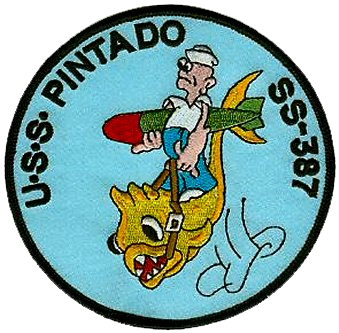
The crew of USS Pintado had been on patrol for days in the summer heat of the Pacific when June 1, 1944, delivered the kind of moment submariners live for and dread at the same time. It began before dawn. The radar was hot, the bearings were locked, and the men were tense. A Japanese convoy was plodding along in formation, three Marus, each fat with cargo or soldiers, and a swarm of protective escorts. This wasn’t a soft target. It was a floating fortress.
Lieutenant Commander Bernard Clarey, the man in command of Pintado, knew what this meant. If they played it right, they could tear a hole in Japan’s supply line. If they didn’t, the boat and everyone aboard her would vanish into a boiling sea.
At 0345, the boat went to battle stations. No one needed to be told what that meant. The big target in the port column was the Tarayasu Maru, a heavy transport. The other two ships, medium freighters by the look of them, kept close company on the starboard side. The sea was flat and moonlit. It was a shooting gallery, but only if they could close in tight enough.
Clarey’s plan was clinical. Fire three torpedoes from the bow at each ship, then whip around and finish with the stern tubes. At 0415, the range closed to 4700 yards. Everyone was sweating. Every sound, every hiss of compressed air or whir of machinery, felt like it might give them away. At 0419, they launched the first spread. The gun flashes from the Tarayasu Maru lit up the periscope view, and a splash to starboard might’ve been another sub in the fight. The range opened, but they circled back, cold and calm.
They tried again. Miscommunication in the fire control gear nearly blew it, but they salvaged the setup. At 0437, they fired six more torpedoes at just 1200 yards. The Tarayasu Maru erupted, broke apart, and vanished beneath the waves. The crew barely had time to celebrate. They pivoted to fire aft. One of the other ships took a torpedo amidships, then cracked open like an egg. Another burned, listing hard. Dawn revealed the wreckage. The water was peppered with survivors. Pintado slipped away, deep and silent, as 27 depth charges rained down around her for hours. The boat held. No damage, but the crew got their first real taste of what it meant to be hunted.
The next few days were a blur of smoke sightings, sonar contacts, and endless nerves. On June 2, they linked up with Shark and Pilotfish, two other subs in their wolfpack. Another convoy was spotted. It was big. Sixteen ships. Clarey ordered flank speed. The enemy must have known. Two escorts peeled off and moved to intercept. By 2221, Pintado crash dived, streaking past 250 feet. Depth charges came fast and loud. Forty-eight in all, none close enough to damage, but close enough to make everyone remember why the stakes were life or death.
June 3 and 4 brought more chaos. Convoys zigged and zagged. Submarines coordinated in bursts of cryptic radio messages. On the 4th, they heard three torpedo hits from another sub, then endured fifty-two depth charges in retaliation. It was a baptism in pressure and steel. Still no damage. Still in the fight.
By June 5, Pintado was in front of another convoy. The plan was textbook. Submerge. Close. Kill. But the Japanese weren’t playing dumb. A Chidori-class escort hunted them hard. They had to abort at 400 feet. Later that day, they watched another Japanese transport vanish in a mushroom cloud of fire. One of their wolfpack had scored again.
That night, they went back in.
Five ships remained. Pintado slid beneath the waves and got in tight. The first volley missed. No panic. They adjusted, fired again. Four solid hits at under 3000 yards. One transport rolled over and disappeared. No countermeasures. No return fire. Just silence, then wreckage.
On the morning of June 6, they spotted another Chidori brimming with troops on the deck. At 1109, they picked the biggest remaining target, the London Maru, leading the center column. Six torpedoes roared out. Within seconds, the ocean exploded. The ship was literally lifted out of the water. Flames, metal, bodies, it was gone in a blink.
But Japan struck back with fury. Fifty more depth charges screamed into the sea. One of them rocked Pintado so hard it nearly sheared fittings in the torpedo room. Another escort passed so close overhead the screws shook the hull. But they made it.
When they surfaced again, the convoy was in tatters. They had sunk at least five ships. Hundreds of Japanese soldiers and sailors were dead. Thousands of tons of supplies were gone.
And somewhere in the middle of it, a sixteen-year-old sailor named Timothy Boone, still practically a boy, was flung against the boiling hot exhaust pipe during one of those depth charge attacks. He broke three ribs. He got burned. He lived. They sent him home. But he had done his part in the most unforgiving corner of the war.
The crew of Pintado came out battered, exhausted, and hardened. They had survived their first war patrol, blooded in the fire of Pacific convoy warfare. They didn’t get the headlines. They didn’t ask for them. But if the war in the Pacific was won an inch at a time, this crew took a mile.
They were quiet men. But beneath the silence was the kind of courage that only exists in the deep.
Timothy Arl Boone departed on Eternal Patrol on September 20, 2018…
Deck Logs of USS Pintado (SS-387), June–July 1944. National Archives Catalog, National Archives and Records Administration. Record Group 24: Records of the Bureau of Naval Personnel. Accessed July 7, 2025. https://catalog.archives.gov/id/74831483
Narrative by David Ray Bowman FTB1(SS) 07/07/2025


Timothy Boone was my grandfather. I have searched his name countless times to find out more about him, and yet somehow today is the first time I have ever found this article. I can’t express how much this means to me. Thank you so much for this.
LikeLiked by 1 person
I’m glad we could tell a part of his story and help you connect with him.
-Dave Bowman
USSVI Bremerton Base
Historian
LikeLike