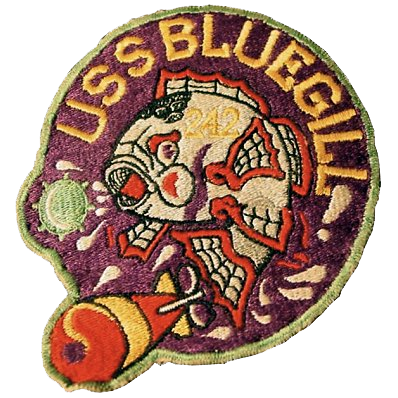
USS Bluegill began her life on the ways at Groton, Connecticut, in December of 1942. She was a Gato-class boat, built for the long patrols and hard work the war in the Pacific demanded. When Mrs. W. Sterling Cole christened her on August 8, 1943, she slid into the Thames River looking every bit the part of a warship that would soon prowl far from home. Commissioned that November under Lt. Comdr. Eric L. Barr, Jr., she went through the usual shakedown, torpedo shoots, and workups before making the long transit to the war zone.
Her first war patrol, beginning in April 1944, set the tone. Operating between the northern Halmaheras and Sonsorol Island, she showed her bite early, sinking the Japanese light cruiser Yubari and later the freighter Asosan Maru. These were not easy kills. The Yubari was fast and alert, forcing Bluegill into quick thinking and aggressive maneuvering. The Asosan Maru took torpedoes and still refused to go down until the deck gun finished the job the next day. It was the kind of persistence submariners respect. When that patrol ended in Brisbane, the crew had earned the combat insignia and the knowledge that their boat could deliver.
After a short refit that included bridge modifications and new gear, Bluegill sailed for her second patrol in July 1944. This time the hunting ground was the Davao Gulf region of Mindanao. It was a place where Japanese traffic moved under the watchful eyes of shore-based aircraft and vigilant escorts. The patrol log tells a story of constant interruptions by enemy planes, often forcing the boat to spend long hours submerged. Opportunities were rare, and when they came they were often spoiled by the enemy’s defensive measures.
Bluegill’s second war patrol began on July 6, 1944, when she cleared Seeadler Harbor in the Admiralties and set a northerly course toward the southern Philippines. The orders were straightforward on paper: patrol the Davao Gulf, Mindanao, and its approaches, and disrupt whatever Japanese shipping could be found there. On the chart it looked like a promising hunting ground, but the reality was far less forgiving. This was an area where the Japanese still had plenty of resources. Shore-based aircraft were quick to appear at the first hint of a submarine’s presence, escorts were aggressive, and coastal waters forced the boat into narrow maneuvering lanes where a mistake could be fatal.
Almost from the moment she entered the assigned area, Bluegill found herself on the defensive. The patrol report reads like a litany of aircraft contacts, one after another. A visual sighting of a speck in the sky, a quick call to dive, the long minutes waiting for the throb of engines to fade before edging back up to periscope depth. It wasn’t just the number of planes but the way they worked—searching close to the water, sometimes in pairs, sometimes in larger formations. They seemed to know where to look, forcing Bluegill into a constant cycle of submerging and surfacing, often without enough time to fully charge her batteries.
The first major engagement came on July 20. Inside Cape San Agustin, the sound gear picked up the high-speed beat of a ship’s screws. A Natori-class cruiser came into view through the periscope, a sleek and dangerous target, zigzagging hard as she moved along the coast. Lt. Comdr. Eric L. Barr, Jr., knew it was a long shot. She was making 26 knots, and even with a well-timed setup, the odds of getting fish into her track were poor. Still, you don’t turn your back on a cruiser. Bluegill fired six steam torpedoes from about 3,400 yards. The wakes were plain to see, and so were the cruiser’s counter-moves. She dodged them all and disappeared around the cape, trailing a puff of smoke. It was a frustrating reminder that speed and maneuverability could be as effective as armor.
Two days later, on July 22, the patrol brought what looked at first like an easy opportunity. Off Calian Point, a small 1,000-ton merchant ship came into sight. She was moving slowly, not zigzagging, and appeared to be alone. It was almost too good to be true. Bluegill lined up from periscope depth and fired three steam torpedoes, set to run shallow. Incredibly, all three ran under the target and detonated harmlessly against the beach. The target, startled but apparently unscathed, turned toward the submarine. That was when Barr and his crew realized this wasn’t the harmless freighter it appeared to be. A wire led astern to a submerged tow, and her behavior suggested she was a Q-ship, a decoy designed to lure submarines into a trap. Seconds later, the water shook with the first of eleven depth charges. Barr took her deep, rigged for silent running, and worked her clear. It wasn’t the first time the Japanese had tried the tactic, but it was a reminder that in these waters the enemy’s bag of tricks was still very full.
August began with another near miss. On the 1st, Bluegill was patrolling submerged near the entrance to Sarangani Bay when a 3,500-ton freighter appeared, escorted by three surface craft. The contact was promising, but it became clear almost immediately that the enemy’s screen was tight and alert. The escorts reacted before Bluegill could get into an ideal firing position. The freighter began radical maneuvers, forcing Barr to choose between a low-percentage shot and preserving his boat for another day. He chose to withdraw. It was the right call, but in the close confines of submarine warfare, moments like that always left a lingering sense of unfinished business.
If the first week of August had been an exercise in frustration, August 7 provided something to celebrate. Off Maculi Point, Bluegill made contact with a Sanju Maru-type cargo ship moving with two escorts, a decoy vessel, and three aircraft patrolling overhead. It was the kind of layered defense that could make a torpedo attack almost impossible. But the target was tempting, and the setup was too good to pass. Barr maneuvered in, and four torpedoes left the tubes. Two of them struck home. Almost immediately, oily black smoke rose from the target, blotting out the green of the Mindanao coastline behind her. The crew barely had time to register the hits before the counterattack began. Depth charges came in rapid succession, thirty-six in all. The explosions rattled the hull and threw men against bulkheads. Bluegill went deep, making full use of what little room there was under her keel, and ran silent until the pattern began to fade. When they finally slipped away, the tension in the boat eased with the news that the target had gone down.
That first week of August summed up the nature of Bluegill’s second patrol. The successes were hard-won, the failures often the result of sharp enemy tactics or bad luck, and the constant presence of aircraft turned even routine movements into cautious gambles. By the time August 13 rolled around, the crew had endured weeks of evasion, missed shots, and pounding counterattacks. They were still looking for the kind of decisive engagement that could turn a patrol from a grind into a clear victory. That day would come, but it was built on the frustrations, near misses, and calculated risks that had defined every mile since they left Seeadler Harbor.
The morning of August 13, 1944, began much like many others on Bluegill’s second war patrol. She was off the eastern coast of Mindanao, near the southern tip where Cape San Agustin juts into the Pacific. It was a dangerous stretch of water. The coastline here is rugged, the currents can be tricky, and the enemy used these approaches as a lifeline between their island garrisons and the larger ports farther north. For weeks, Bluegill’s crew had been chasing shadows—targets that slipped away, aircraft that drove them down, escorts that kept them from pressing home their attacks. This day would prove different.
At periscope depth, the sea was calm and the light was good enough for clear observation. Through the scope, a contact appeared, first as specks on the horizon, then resolving into a medium-sized freighter running close to shore. She wasn’t alone. Two torpedo boats moved like watchdogs at her flanks. Farther out, two submarine chasers kept a steady pace, and one vessel bore the look of a decoy—a Q-ship whose sole purpose was to invite an attack and then punish the attacker. To anyone studying the group, the message was clear: this was a formation prepared for trouble.
From the behavior of the freighter, it looked as though the crew believed they were at the end of a run. They hugged the coastline, likely thinking the cover of shore batteries and the layers of escort protection would discourage any submarine from making an attempt. It was a dangerous assumption. In the control room of Bluegill, Lt. Comdr. Eric L. Barr, Jr., saw opportunity. The escorts were spread just far enough apart, the visibility was favorable, and the approach could be made without having to cross too many lookouts’ lines of sight. The decision was made to attack.
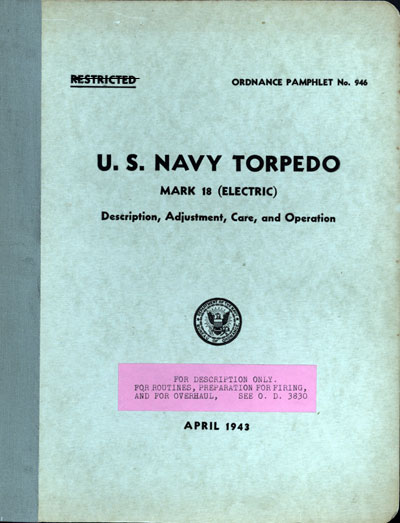
The choice of weapon was deliberate. Bluegill carried both steam-driven and electric torpedoes. The steam fish left visible wakes and sometimes a faint trail of exhaust, making it easier for a sharp-eyed lookout to spot an incoming attack and give the alarm. The Mark 18 electric torpedoes had no telltale wake, and although they were slower, they were ideal for a situation where surprise mattered more than speed. Barr ordered four Mark 18s readied, set for a shallow run, and assigned each its target. In this case, the plan was to split the spread between the freighter and one of the chasers, striking hard enough to damage the group’s cohesion.
Closing the range was tense work. At periscope depth, the escorts seemed almost close enough to reach out and touch. The sound of their screws came through the hull in distinct beats. Every few moments Barr would raise the scope, take a quick look, and drop it again, careful not to linger and risk a telltale flash of sunlight off the lens. In the torpedo room, the crew waited for the firing order, hands on valves and triggers, ready to work in the cramped, humid space they knew so well.
When the moment came, the order was brisk. Four fish left the tubes in sequence, the hiss of compressed air and the muffled thump of the ejection giving way to the quiet that follows any submarine launch. In the control room, stopwatches ran, and every man with a job to do kept his eyes on either a dial, a sound headset, or a mental picture of where the torpedoes would be now. The Mark 18s moved out silently, their electric motors inaudible to all but the closest listening gear.
The first hit came as a sharp, hollow boom that rolled through the boat’s pressure hull. A second followed almost immediately, and the men listening on sound gear began calling out the chaos. One torpedo had found the 300-ton Submarine Chaser No. 12. Her smaller hull offered little resistance to the blast. She sank quickly, breaking up as she went under. Another struck the 1,931-ton Kojun Maru. The freighter was large enough to take longer to die, but the hit tore a deep wound, and she began to list heavily.
With the hits confirmed, the attack phase was over, and the escape phase began. The surviving escorts wasted no time. Their search patterns tightened almost at once. Through the hydrophones came the rising pitch of propellers at flank speed, then the telltale pings of active sonar sweeping the water. Bluegill’s crew knew what was coming next. Barr ordered the boat deep, using the available depth to get under the expected attack. The sound operators reported the pings getting stronger, the range closing. Then came the first depth charges.
The pattern was deliberate, the spacing close. Charges detonated in rapid succession, the pressure waves thudding against the hull, the lights in the control room flickering with each shock. Every man aboard understood the stakes. If the escorts could get a solid fix, they would keep dropping charges until something gave way. Barr kept her moving, changing depth and course, trying to make the sonar picture as difficult to read as possible. The Mark 18s had given him the advantage of surprise, but now the fight was about staying invisible in a sea where the enemy knew exactly where to look.
Minutes stretched out, each one measured by the rhythm of the pings and the occasional heavy concussion of another pattern of charges. Slowly, the intensity began to ease. One by one, the escorts broke off their closest passes, their propeller beats fading into the distance. The last to leave was likely the decoy vessel, unwilling to concede the search but unable to hold it alone. When the water was quiet again, Bluegill leveled off, still deep, and ran silent until Barr was satisfied they had made their escape.
Only then could the crew begin to absorb what had happened. In a single salvo, they had put down an escort and a freighter, scattering a convoy that had been well-protected and confident. For a submarine working the Mindanao approaches in mid-1944, that was no small feat. Convoys here were tough to crack, and most successful attacks took out one ship before the counterattack forced a withdrawal. To sink an escort and a freighter together was rare, and it came from a mix of good judgment, the right choice of weapon, and the ability to thread an approach through the enemy’s defenses.
The significance of the action was clear even before they cleared the patrol area. In tactical terms, removing an escort made future attacks on that route a little easier, at least for a while. Psychologically, it was a blow. The Japanese could not ignore the fact that their layered defenses had been breached in daylight by a submarine that came close enough to deliver a clean strike and get away intact. For Bluegill’s crew, it was proof that patience on a long patrol could pay off, that all the earlier frustrations and aborted attacks were part of the same story that now included a decisive victory.
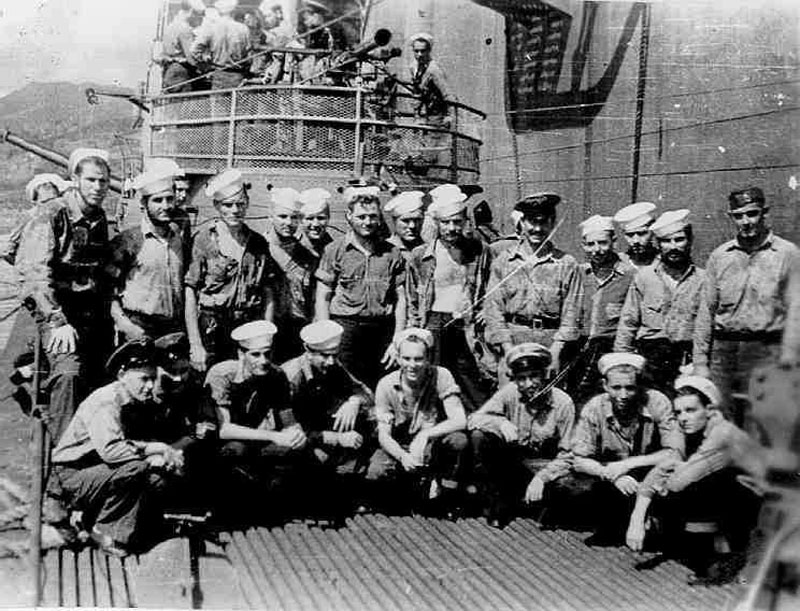
In the weeks that followed, the memory of August 13 stayed fresh. It was retold in the mess over coffee, in the quiet hours of watchstanding, and later in the bars and clubs of Fremantle when the patrol was over. The Mark 18s had worked as intended, the approach had gone like clockwork, and the escape had been as smooth as could be hoped for under pressure. It became one of those benchmark days in a submarine’s history, the kind that gets mentioned alongside the boat’s name whenever her record is discussed.
Looking back, it was more than just a lucky shot or a daring move. It was a calculated risk taken by a commanding officer who knew his boat, trusted his crew, and understood the weaknesses in even the most intimidating convoy screen. Bluegill’s war patrol reports would record the tonnage, the names of the ships, and the details of the attack. Among the men who were there, the memory would always include the unrecorded parts—the moment of decision, the quiet before firing, the deep thump of a hit, and the long, tense ride out from under the enemy’s guns. That was August 13, 1944, off Cape San Agustin, and it was one of Bluegill’s finest hours.
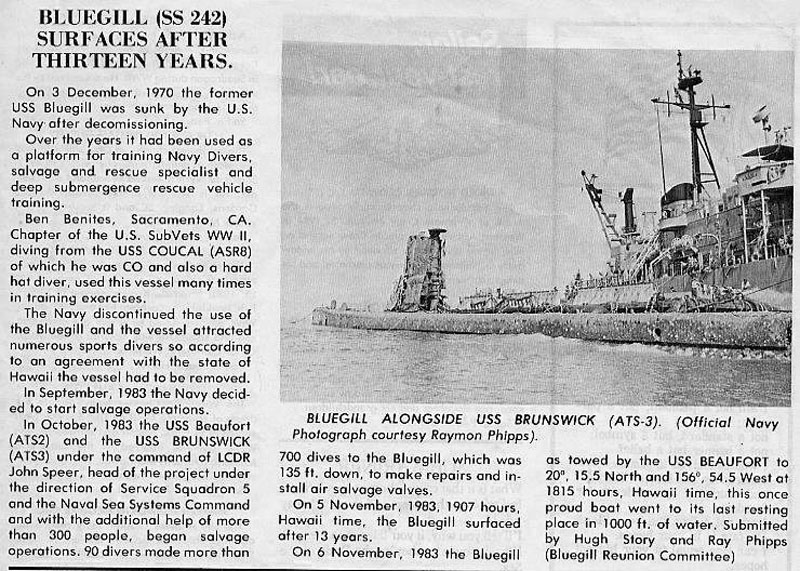
Bluegill would go on to complete eight war patrols, earning credit for more than 46,000 tons of enemy shipping. After the war she was converted to a hunter-killer submarine and later served off Vietnam in reconnaissance and rescue roles. Eventually she was scuttled off Lahaina, Maui, as a rescue training site, becoming a home for divers and marine life. In 1983, she was raised and towed to deep water and her final resting place.
For the men who served aboard her, and for those who read her patrol reports today, Bluegill’s story is one of persistence, adaptability, and the kind of determination that defined the Silent Service. The August 13 action stands as a testament to skill under pressure, the ability to seize an opening, and the calm resolve to see it through when the counterattack comes.

National Archives and Records Administration. USS Bluegill (SS-242), Report of Second War Patrol. Entry #139751468, Catalog of Holdings, NARA. Accessed via National Archives Catalog. Narrative version by David Ray Bowman FTB1(SS), 08.11.2025
Clancey, Patrick. SS-242 USS Bluegill. In Ships of the U.S. Navy, 1940-45 – Submarines. Ibiblio HyperWar website. Updated 29 July 2008. (Accessed via https://www.ibiblio.org/hyperwar/USN/ships/SS/SS-242_Bluegill.html)
Roscoe, Theodore. United States Submarine Operations in World War II. Annapolis, MD: United States Naval Institute, 1949. ISBN 0-87021-731-3.
Blair, Clay, Jr. Silent Victory: The U.S. Submarine War Against Japan. Philadelphia: Lippincott, 1975. ISBN 0-397-00753-1.
NavSource Naval History. “Submarine Photo Archive: USS Bluegill (SS-242).” NavSource.org. Accessed at https://www.navsource.net/archives/08/08242.htm
 Patrol Reports
Leave a comment