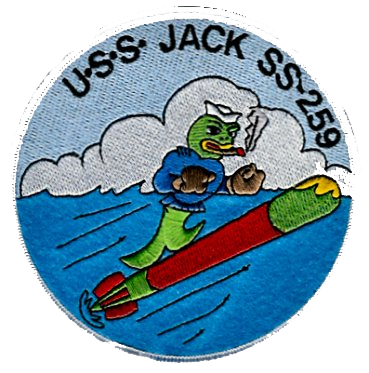
The South China Sea lay deceptively calm on the evening of June 28, 1944, as USS Jack SS-259 slipped through the tropical waters just off the coast of French Indochina. The day had begun hours earlier with routine maneuvers submerging before dawn, surfacing after first light, and diving again with the twilight. It was a pattern worn smooth by repetition, the daily rhythm of a hunter.
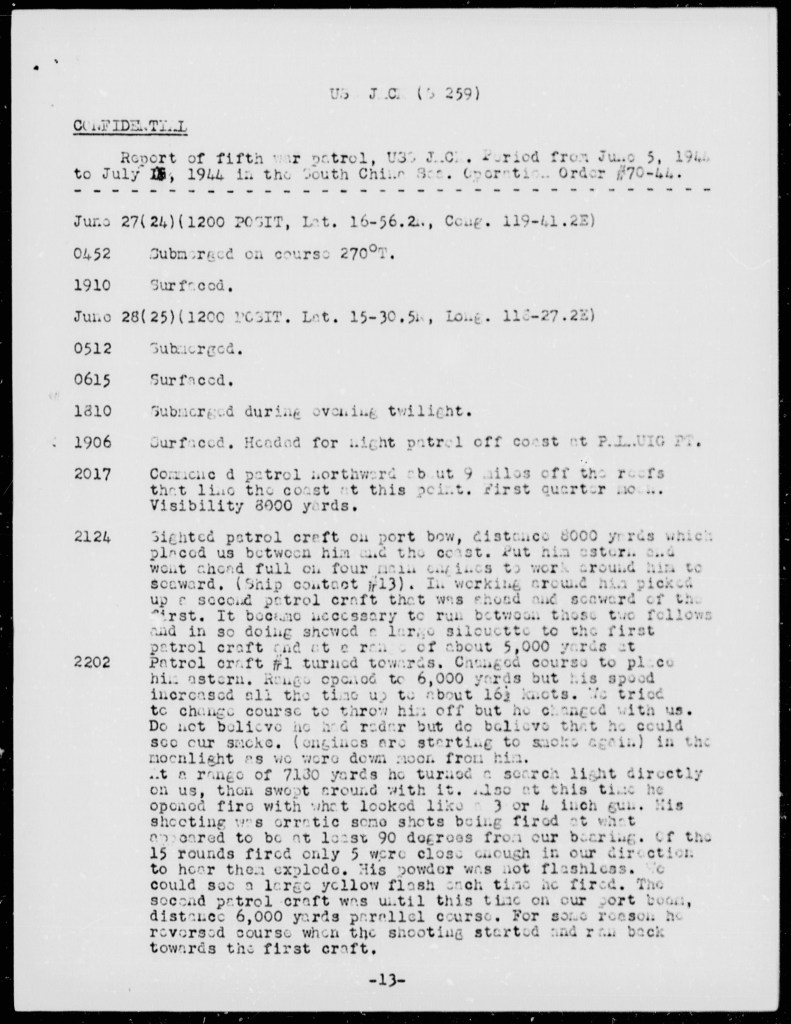
By 1906 hours, Jack had surfaced once more, preparing to commence a night patrol off P’i-lung Point. The moon hung at its first quarter, casting a ghostly sheen over the reefs that lined the coast. Visibility stretched to 8000 yards, which was good for spotting prey, but also for being seen.
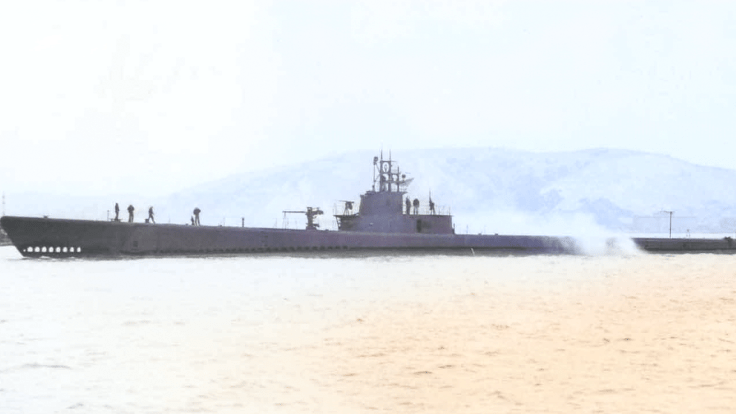
At 2124, the periscope revealed the first sign of company: a patrol craft on the port bow, about 8000 yards distant. Between it and the shore, another contact lurked in the dark. Now boxed in, Jack made a bold move, pushing full speed ahead on all four main engines to slide seaward, skirting danger but not avoiding it.
While maneuvering, the crew spotted a second patrol craft, one that had been quietly tracking the boat from the open sea. Jack was now a silhouette between two sentinels.
What followed was a dance between predator and watchdog, with Jack attempting to break the line. The submarine turned away from the first patrol craft, keeping it astern. The gap opened slightly, 6000 yards, but the enemy didn’t break off. In fact, he sped up.
Then came the telltale signs: engines smoking under pressure, the moon behind them, and suddenly, a spotlight slashing across the water.
At a range of 7130 yards, the first patrol craft turned sharply and hit them with a searchlight. Moments later, it opened fire. The bridge crew aboard Jack watched yellow flashes erupt from what appeared to be a 3 or 4 inch deck gun. The enemy was aiming poorly as the rounds whistled over and beyond, some as much as 90 degrees off but five of them came close enough to hear the whistle and pop of explosion.
This was not just a scare tactic. Fifteen rounds were fired. One even caught in Jack’s direction closely enough to cause alarm. No hits, but enough smoke, light, and sound to shake nerves and kick adrenaline into overdrive.
Meanwhile, the second patrol craft, positioned at a parallel course off Jack‘s port bow, inexplicably reversed course as the shooting began. Perhaps it lost nerve or lost sight. Either way, it turned back toward the first vessel, and Jack, seizing the moment, ran hard in the opposite direction.
By 2336, the smoke and searchlights were gone. So were the patrol boats. Jack set a new course, 270 degrees true and pulled quietly out to sea, disappearing once again into the cloak of darkness. The crew had dodged a bullet, literally and figuratively. There had been no convoy that night, just a routine patrol turned into a game of shadows and shots.
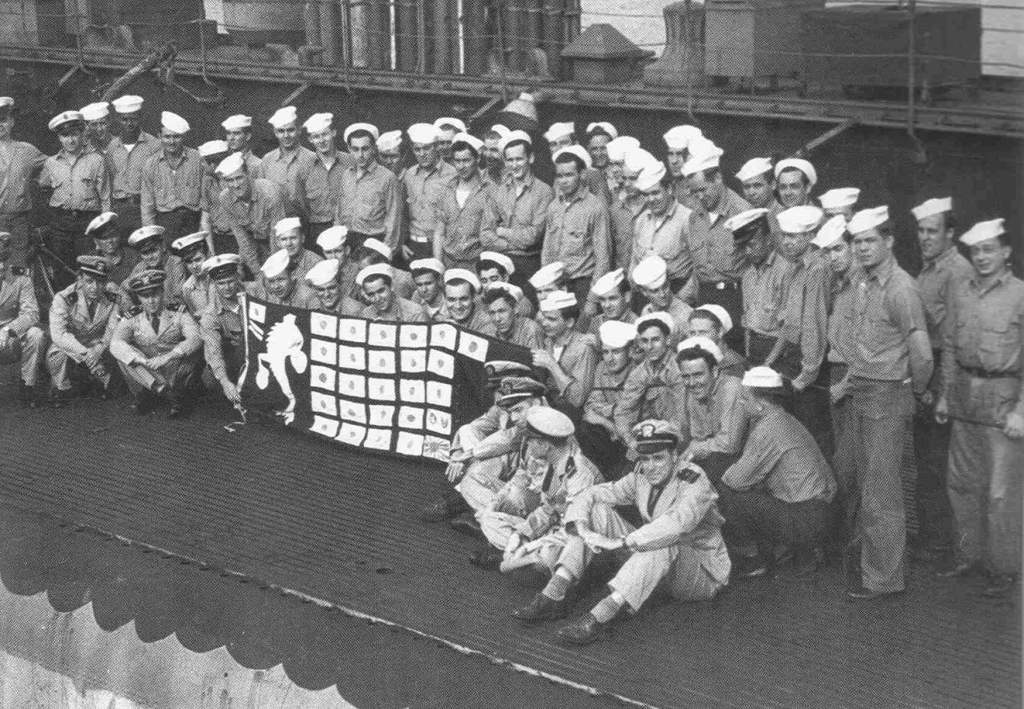
Still, the lesson was clear: in these waters, even a routine patrol could erupt into a deadly encounter with no warning. And Jack‘s crew, sharp and steady under fire, had proven again they could survive it.
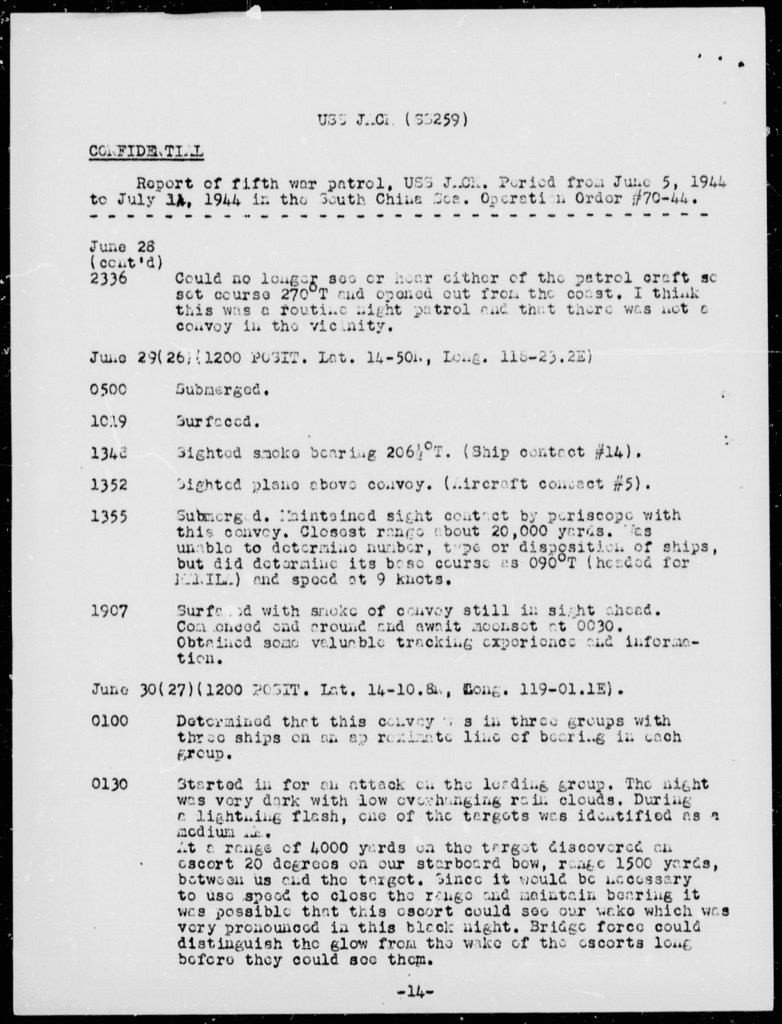
 Patrol Reports
Leave a comment