With the war over and things finally settled down, US Submarine Veterans began to return to their homes and family. They were still keenly aware of the deep sacrifice the Sub Force had made, and the reasons why so many had died there was still a reluctance to talk about how they had carried out the destruction of the Japanese Empire.
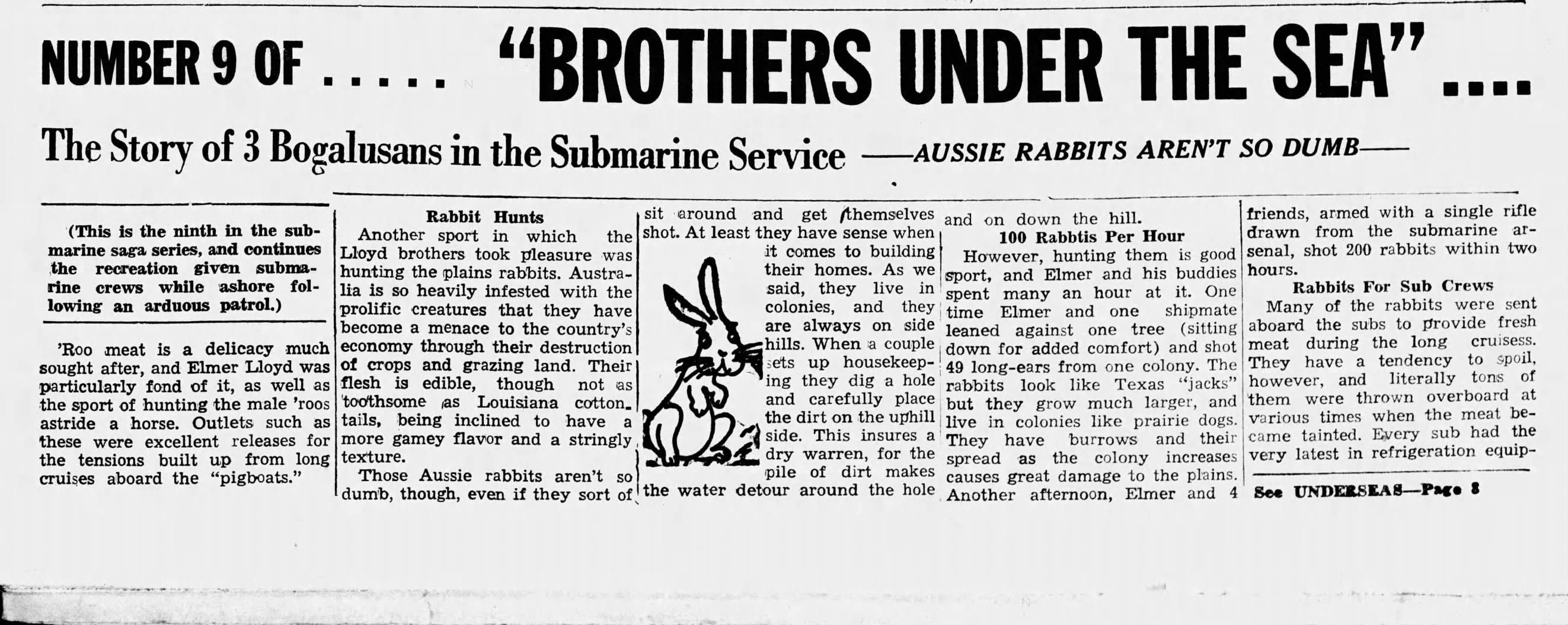
But in newspapers around the country, stories began to appear that gave the public a taste of what the Sub force had been through and what it had accomplished. In Bogalusa, LA, a multi-part series was run, telling the stories of submarine veterans from the area who had served on the USS Ray SS-271.
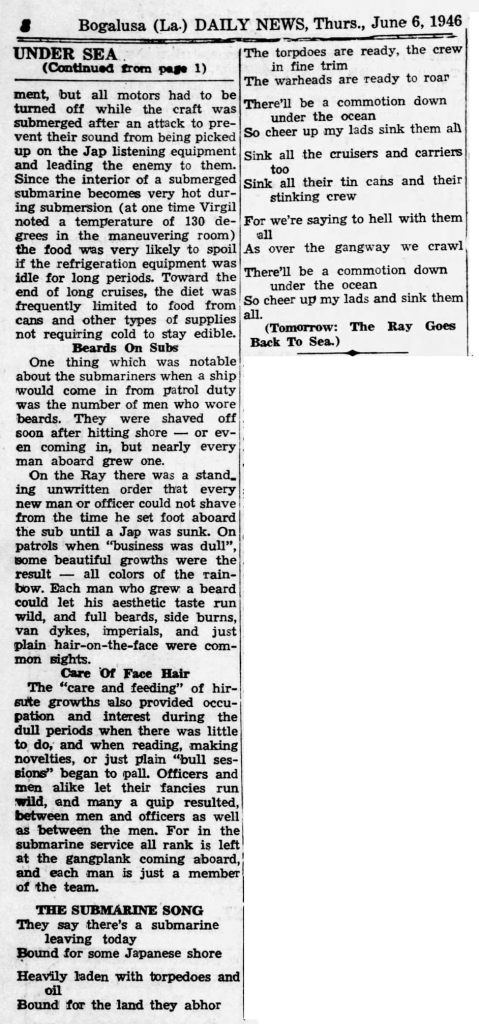
On June 6, 1946, almost a year after the war had ended, one of these articles appeared. In it were the lyrics to “The Submarine Song,” without attribution or any author listed.
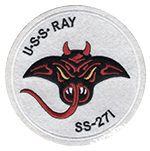
They say there’s commotion down under the ocean when a submarine like the USS Ray is on patrol. And if ever there was a boat that made waves in the Pacific, it was the Ray. Born in the steel yards of Manitowoc, Wisconsin, and brought to life by the hammer-and-torch grit of American shipbuilders, Ray (SS-271) wasn’t just another Gato-class submarine. She was a prowling predator beneath the sea, and during World War II, she made the Imperial Japanese Navy very uncomfortable.
Commissioned in July of 1943, the Ray took on her first breath of saltwater through the locks of the Panama Canal before diving headlong into the war. Under the steady hand of Lt. Commander B. J. Harral, her journey began in the South Pacific’s steaming waters, from the coral-strewn edges of New Guinea to the treacherous lanes near Truk. Her first war patrol wasn’t just a shakedown, it was a declaration. She hunted a Japanese convoy near New Hanover and delivered torpedoes with the kind of precision that gets remembered. One freighter was crippled, and the converted gunboat Nikkai Maru was sent to the bottom in a thunderous bloom of steel and seawater.
And Ray was only just getting started.
In her second patrol, she found herself stalking the Celebes-Ambon-Timor region. Late December brought fire and fury when she struck the Kyoko Maru, an unescorted tanker that lit the night sky like a floating bonfire. Then came Okuyo Maru, another converted gunboat that didn’t survive Ray’s approach. Enemy cargo ships tried ramming maneuvers, patrol planes dropped bombs, and destroyers unleashed depth charges in retaliation. Ray went deep, took the punishment, and came back for more.
Through it all, her crew kept calm and deadly. These weren’t Hollywood caricatures of sailors, these were men from places like Louisiana and Wisconsin and Ohio, boys barely out of school and seasoned Chiefs alike, sweating in diesel-slick confines, tracking targets through periscopes and sonar, eating powdered eggs and praying through depth charge barrages that rattled their bones.
Her third patrol saw her laying mines off Saigon, where her torpedoes collided with enemy tankers, and her shots were so close to perfect that another American sub, Bluefish, had to steer clear to avoid a friendly fire mishap. Even in chaos, the Ray kept her aim steady.
Then came patrol number four. A nine-ship convoy in the Davao Gulf became her quarry, and the Ray delivered a hammer blow. One ship, the Tempei Maru, went down, others were left wounded or vanished into smoke. Her escape during this attack, racing across the surface at flank speed in a tropical squall, reads more like fiction than fact. But it was very real, and very gutsy.
Her fifth war patrol? Let’s just say it was a shark’s feeding frenzy. She sank the Janbi Maru, then came back after reloading and knocked out Koshu Maru, Zuisho Maru, Nansei Maru, and Taketoyo Maru. That last one took four torpedoes, and it still tried to limp away before finally giving in to the depths.
On patrol six, Ray found herself tangling again in the South China Sea. The Toko Maru went down. Another day, another convoy. Another close call. An improperly sealed hatch during a crash dive almost did her in, flooding her conning tower and pushing her to the edge. But her crew held it together and got her to Mios Woendi for emergency repairs.
She kept going. In November 1944, she picked up two Navy fliers, two escaped American POWs from Corregidor, and a Filipino political prisoner. That’s the kind of patrol the Ray ran—part killer, part savior. On that same patrol, she hit the heavy cruiser Kumano with a salvo of six fish. The wounded cruiser was later finished off by Navy carrier planes, but Ray had drawn the blood.
Patrol seven brought more heroics. Off the coast of Japan, Ray pulled ten B-29 airmen from the sea. A week later, she rescued a full patrol bomber crew from a floundering Mariner. Later, she got ambushed by a group of disguised hunter-killers—small freighters that were anything but innocent. She went toe to toe with them using her deck gun in a moonlit shootout. She was running out of torpedoes but still fighting like a tiger.
Her final war patrol was as dramatic as her first. In the Gulf of Siam, she turned her guns on smaller vessels and tore through local Japanese traffic. Junks were set ablaze, their hulks smoldering on the horizon. The war was winding down, but Ray never let her guard down. She fired until her ammo ran dry and turned for home.
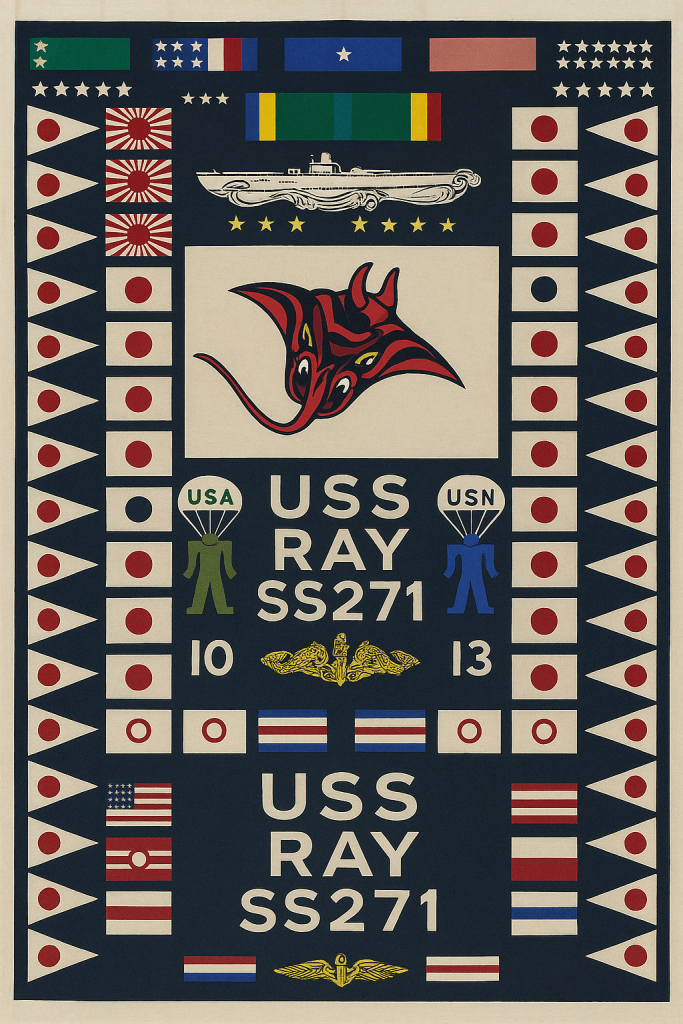
Ray earned seven battle stars, but ask any submariner, and they’ll tell you it wasn’t the medals that mattered. It was survival. It was mission success. It was bringing your crew home.
By the time Ray docked back in the United States, stories of her exploits were trickling out into newspapers, including a June 6, 1946, feature in the Daily News of Bogalusa, Louisiana. Locals read about a hometown boy coming back from the deep, alive and whole, having stared down the fury of the Pacific War.
Ray would later serve in the Cold War, converted to a radar picket boat, cruising the Atlantic and Mediterranean during tense NATO standoffs. But for those who wore her dolphins during the heat of 1943 to 1945, her name will always echo with the quiet pride of Silent Service legend.
There really was commotion under the ocean. And the USS Ray was at the heart of it.


Leave a Reply