The month of January was pivotal for the U.S. Navy’s submarine fleet throughout World War II, showcasing its growing dominance in the Pacific theater. From the early war’s cautious beginnings to later aggressive campaigns, January consistently highlighted the Silent Service’s ability to strike both military and logistical targets. Across these years, the January campaigns demonstrated the Silent Service’s evolution into a decisive force, crippling Japan’s war machine and cementing its role as a cornerstone of Allied success in the Pacific.
In January 1942, just weeks after the attack on Pearl Harbor, the United States Navy began adapting to the harsh realities of war in the Pacific. Among the early bright spots of this challenging time was the groundbreaking achievement of the USS Gudgeon (SS-211), a Tambor-class submarine that earned its place in naval history as the first U.S. submarine to sink an enemy warship during World War II.
On January 27, 1942, while patrolling near Johnston Island, Gudgeon detected a Japanese submarine, later identified as I-73. At this early stage of the war, such encounters were rare and fraught with peril. The Japanese Navy’s submarines were formidable adversaries, often larger and better armed than their American counterparts. However, under the command of Lt. Cmdr. Elton W. Grenfell, Gudgeon executed its mission with precision and daring.
After spotting the target, Gudgeon maneuvered into a favorable position and launched three torpedoes. At least one struck I-73, resulting in a catastrophic explosion that sent the Japanese submarine to the bottom, marking the first confirmed sinking of an enemy warship by an American submarine in the conflict. This action demonstrated not only the potential of submarines as strategic weapons but also the resolve of the Silent Service to take the fight to the enemy, even in the face of overwhelming odds.
The sinking of I-73 was more than just a tactical victory; it was a morale booster for a Navy reeling from the devastation of Pearl Harbor. It signaled to both the U.S. military and the public that American submarines could and would play a crucial role in turning the tide of war. Submarines like Gudgeon would become instrumental in crippling Japan’s supply lines, sinking warships, and conducting daring reconnaissance missions.
For Gudgeon, this was just the beginning of an illustrious wartime career. It would go on to conduct numerous patrols across the Pacific, earning multiple battle stars before being lost with all hands in 1944. But its historic feat in January 1942 set a powerful precedent, marking the Silent Service’s emergence as a key player in the Allied effort to defeat Japan.
In January 1943, the USS Wahoo (SS-238), under the audacious command of Lt. Cmdr. Dudley “Mush” Morton, embarked on a patrol that would become a defining chapter in U.S. submarine warfare. Morton’s aggressive tactics, innovative strategies, and fearless leadership brought Wahoo to the forefront of the Silent Service’s war effort, but also left behind a legacy of controversy and reflection.
Morton had assumed command of Wahoo in late 1942, bringing with him an intense determination to reshape how U.S. submarines engaged enemy vessels. Rejecting the cautious doctrine of earlier submarine commanders, Morton believed that audacity and aggression were key to success. By January 1943, this philosophy was in full swing as Wahoo prowled the waters near Papua New Guinea, hunting Japanese convoys critical to the enemy’s operations in the South Pacific.
Morton’s tactics were revolutionary. He emphasized surface attacks, night operations, and precise torpedo strikes, all designed to maximize impact while minimizing risk to his crew. This approach, while not without peril, yielded significant results during the January patrols.
January 24, 1943: The Sinking of Buyo Maru
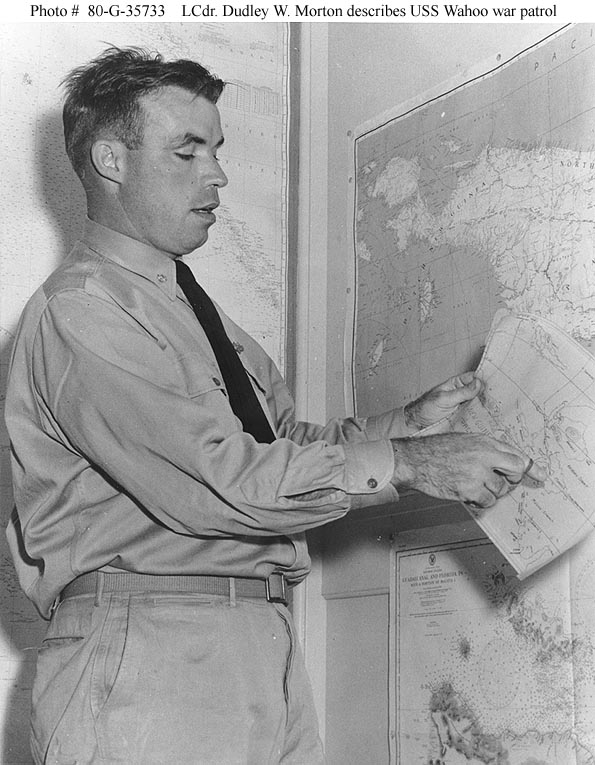
One of Wahoo’s most significant engagements came on January 24, 1943, when it intercepted the Buyo Maru, a Japanese transport ship, off the coast of Papua New Guinea. Morton and his crew fired torpedoes with deadly accuracy, sending the ship to the bottom. However, this action would later spark controversy.
Unbeknownst to Morton at the time, Buyo Maru was carrying not only Japanese soldiers but also Indian prisoners of war who had been captured during Japan’s conquest of Southeast Asia. Many of these Indian POWs, members of the British Indian Army, were aboard the transport under brutal conditions. When Wahoo attacked, survivors from the sinking vessel attempted to escape on lifeboats. Morton, concerned that enemy soldiers might mount a counterattack or radio for assistance, ordered Wahoo’s deck guns to target the lifeboats, further compounding the loss of life.
This incident became one of the war’s most contentious episodes involving U.S. submarines. While Morton’s actions were consistent with wartime practice—ensuring the destruction of enemy survivors who might pose a threat—the tragic loss of Indian POWs raised ethical questions. Post-war reflections on this event have sparked debates about the complexities of warfare and the unintended consequences of aggressive strategies.
January 26–28, 1943: A Flurry of Engagements
Morton’s aggressiveness did not wane after the Buyo Maru engagement. In the days that followed, Wahoo engaged multiple Japanese targets, demonstrating the effectiveness of Morton’s bold tactics.
-
- On January 26, Wahoo sighted a convoy and began stalking it, using calculated maneuvers to evade detection by enemy escorts. Morton ordered an attack at dawn, firing a spread of torpedoes that struck two Japanese cargo ships. One vessel was confirmed sunk, while the other was severely damaged and left listing.
-
- On January 27, Wahoo intercepted another target and launched a daring surface attack under cover of darkness. This engagement highlighted Morton’s preference for aggressive action, even in situations where traditional doctrine might have advised caution.
- On January 28, Wahoo attacked a heavily escorted troop transport. Despite the presence of multiple Japanese destroyers, Morton maneuvered Wahoo into position and fired a salvo of torpedoes, scoring direct hits. The transport sank rapidly, dealing a significant blow to Japan’s ability to reinforce its forces in the region.
These successive attacks demonstrated Morton’s ability to turn the submarine into an offensive weapon of unparalleled effectiveness. His willingness to take calculated risks transformed Wahoo into a fearsome adversary, earning the respect of both his crew and his peers.
By the end of its January patrols, Wahoo had cemented its reputation as one of the most aggressive and successful submarines in the U.S. Navy. The toll exacted on Japanese shipping during this period disrupted vital supply lines and weakened enemy operations in the South Pacific. Morton’s leadership became the standard by which other submarine commanders measured their performance.
However, the events of January 24, particularly the sinking of Buyo Maru, cast a shadow over Wahoo’s accomplishments. The incident highlighted the moral ambiguities of war, where split-second decisions could lead to tragic outcomes. While Morton’s actions were not unique—many submarine commanders took similar measures to eliminate threats—Buyo Maru’s mixed complement of enemy soldiers and prisoners of war turned the engagement into a subject of post-war scrutiny.
Morton’s approach to submarine warfare was as polarizing as it was effective. He broke from the cautious tactics of earlier commanders, choosing instead to embrace a more aggressive style that maximized damage to the enemy. This shift in philosophy had profound implications for the U.S. Navy’s Silent Service.
Under Morton, Wahoo became a symbol of what U.S. submarines could achieve with the right combination of audacity, innovation, and leadership. His emphasis on decisive action inspired a new generation of submarine commanders who adopted similar strategies, contributing to the overall success of the Silent Service during the war.
January 1943 was a pivotal month for the USS Wahoo and its legendary commander, Lt. Cmdr. Dudley “Mush” Morton. The patrols during this period demonstrated the devastating potential of American submarines to cripple Japan’s war effort. Morton’s tactics, though controversial at times, showcased the power of bold leadership and innovative strategy in the unforgiving environment of submarine warfare.
The legacy of Wahoo’s January patrols remains a testament to the bravery and determination of the Silent Service, whose efforts beneath the waves played a crucial role in securing victory in the Pacific. While the tragedy of Buyo Maru serves as a reminder of the human cost of war, the accomplishments of Wahoo and its crew stand as a lasting tribute to their courage and ingenuity in one of history’s most challenging conflicts.
USS Skate (SS-305): January 17, 1944
The USS Skate, a Balao-class submarine under the command of Lt. Cmdr. E. B. McKinney, executed a daring assault on a heavily protected Japanese convoy near Truk Lagoon, a major stronghold for the Imperial Japanese Navy. On January 17, 1944, Skate intercepted a task force that included the Katori-class cruiser Katori, a symbol of Japanese naval power. The area was bristling with escorts, making the mission exceedingly perilous.
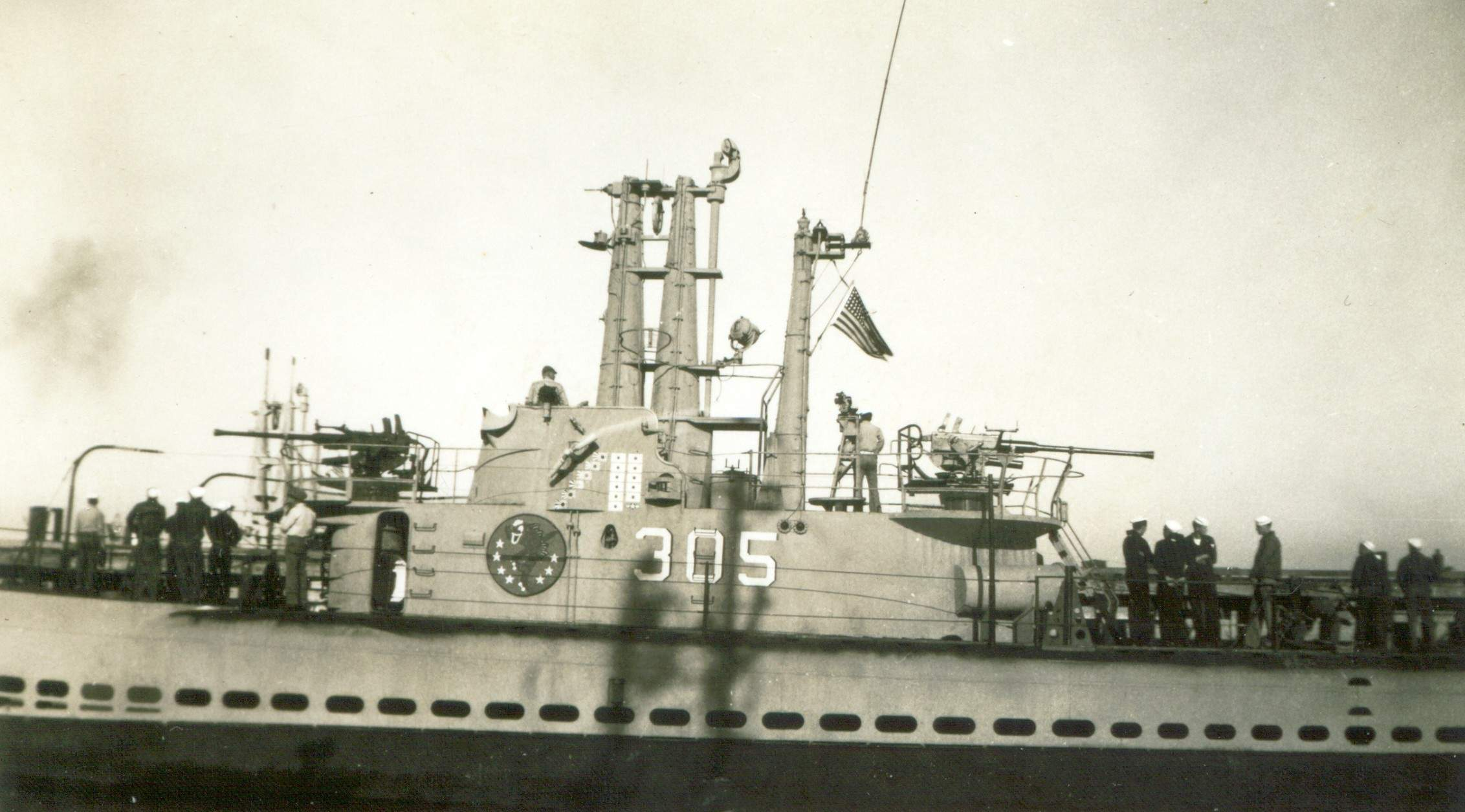
Skate maneuvered into position and launched torpedoes with precision, striking and sinking Katori, along with other smaller escort vessels. This bold attack not only neutralized a significant Japanese warship but also dealt a psychological blow to enemy forces, showcasing the ability of U.S. submarines to penetrate even the most well-defended convoys. Skate’s audacity and success underscored the growing dominance of American submarines in contested waters, paving the way for future operations against Japanese strongholds.
USS Skipjack (SS-184): January 12, 1944
 The USS Skipjack, a Salmon-class submarine commanded by Lt. Cmdr. William S. Post Jr., struck a decisive blow against Japanese logistics on January 12, 1944, by sinking the Hakozaki Maru, a transport ship. Operating in the Philippine Sea, Skipjack identified the target and executed a textbook attack, firing a spread of torpedoes that sent the transport to the ocean floor.
The sinking of Hakozaki Maru exemplified the vital role U.S. submarines played in choking Japan’s supply lines. By targeting merchant vessels, submarines like Skipjack significantly hindered Japan’s ability to reinforce its forces and maintain its far-flung empire. This success highlighted the skill of the crew and the precision of U.S. torpedo technology, which had undergone significant improvements since the early days of the war.
USS Blackfin (SS-322): January 18, 1945
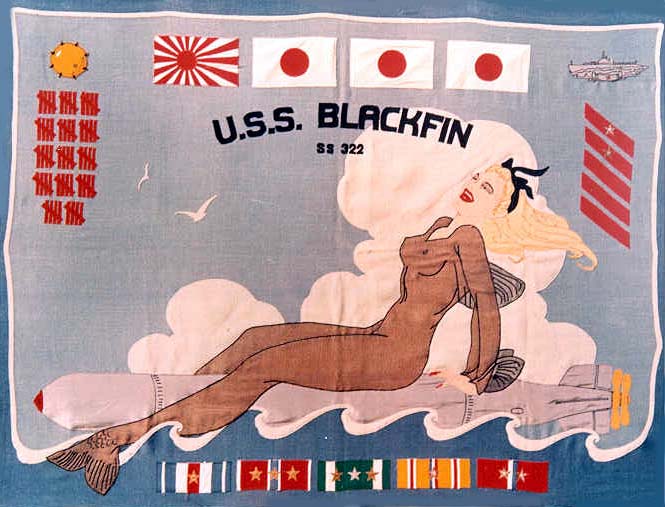
On January 18, 1945, the USS Blackfin achieved a rare and remarkable feat: sinking another submarine. Commanded by Lt. Cmdr. George H. Laird, Blackfin intercepted the Japanese submarine I-41 in the Philippine Sea. Submarine-versus-submarine encounters were infrequent during the war, as both vessels relied heavily on stealth and were unlikely to detect each other. However, Blackfin’s skilled crew identified and engaged the Japanese sub with precision.
Firing a spread of torpedoes, Blackfin struck I-41, resulting in a catastrophic explosion that sent the Japanese submarine to the bottom. This victory was one of the few instances in the war where a U.S. submarine successfully destroyed an enemy sub. The sinking of I-41 not only eliminated a potential threat to Allied naval operations but also highlighted the increasing proficiency of American sonar and detection capabilities in the latter stages of the war.
USS Bergall (SS-320): January 22, 1945
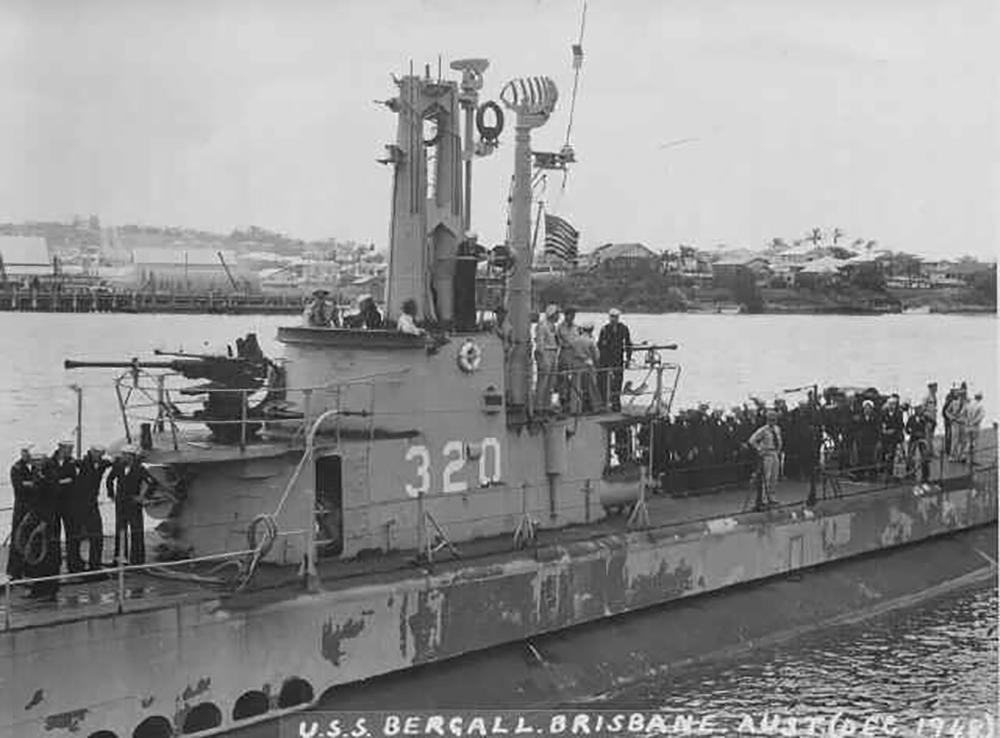
Four days later, the USS Bergall, under the command of Cmdr. John M. Hyde, scored a significant victory in the South China Sea by sinking the Hikari Maru, a Japanese transport ship. The South China Sea was a critical artery for Japanese logistics, making transport vessels prime targets for U.S. submarines.
Bergall stalked its prey and launched torpedoes with deadly accuracy, sending Hikari Maru to the ocean floor. By cutting off critical supply lines, Bergall played a vital role in the broader Allied strategy of isolating Japan from its remaining resources. The sinking also demonstrated the U.S. Navy’s ability to maintain aggressive operations deep in enemy-controlled waters despite the formidable challenges of Japanese anti-submarine defenses.


Leave a Reply