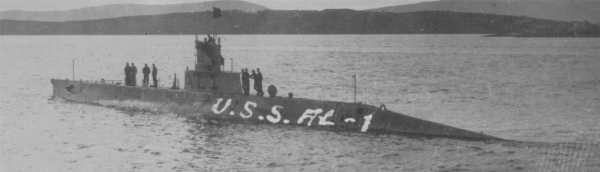
She started life as a workhorse, not a wonder. USS O-12 was never meant to make history, only to do her duty. Built in Bridgeport, Connecticut in 1916, this O-class submarine served briefly in the Panama Canal Zone after World War I. She was solid, if not spectacular. Compared to her Electric Boat sisters, she had her flaws. But for a few short years, she stood watch where it mattered. Then, in 1924, the Navy pulled her from service and parked her at the Philadelphia Navy Yard. She was supposed to be scrapped. That would have been the end of it.
Continue reading “Under the Ice”Vison Below The Surface – The Submarine Leadership of Admiral Samuel Shelburne Robison

In the fog of the Atlantic and beneath the waves, a quiet revolution was underway. As the United States entered World War I in 1917, its submarine force was still in its infancy—limited in number, rudimentary in design, and scattered in command. The boats were short-ranged, poorly coordinated, and used mostly for coastal defense. But at the helm of its transformation stood a man few have heard of, yet whose legacy shaped the very heart of the Silent Service: Admiral Samuel Shelburne Robison.
Continue reading “Vison Below The Surface – The Submarine Leadership of Admiral Samuel Shelburne Robison”The Silent Service Breaths
There was a time when submariners went to sea knowing that if disaster struck, they were likely never coming home. In the early days of the Silent Service, a sunken submarine was a steel tomb. Rescue was often impossible. Escape was unheard of. The ocean was merciless, and technology had not yet caught up to the bravery of the men who dared to ride beneath the waves. That is what made the invention and testing of the Momsen Lung on May 8, 1929, such a watershed moment in naval history. It was a turning point in the age-old struggle to wrest survival from the deep.
Continue reading “The Silent Service Breaths”