USS S-5: The Sunken Submarine That Cheated Death off Cape May


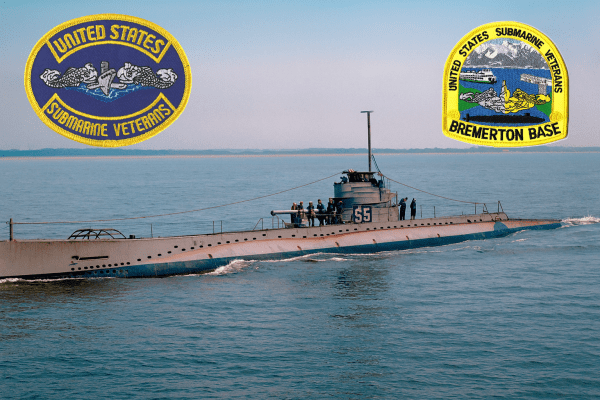
In the summer of 1920, the United States Navy had a new submarine to boast about. USS S-5, hull number SS-110, was one of the latest S-class boats, built not just for coastal defense but for true blue-water operations. She measured 231 feet in length, with a beam just shy of 22 feet, displacing 876 tons on the surface and 1,092 tons when submerged. She carried four 21-inch bow torpedo tubes, a 4-inch deck gun, and a crew of thirty-eight men. The S-class boats represented a new era of American submarine design, conceived during World War I and forming the backbone of the Navy’s undersea force through the 1920s. But with innovation came problems, and the S-5 carried a flaw that would prove decisive. Her main air induction valve, vital for sealing the submarine when diving, was notoriously hard to close.

Continue reading “USS S-5: The Sunken Submarine That Cheated Death off Cape May”

The Deep Peril: Submarine Disasters and the Urgent Quest for Safety in 1928

The year 1928 was not kind to submariners. It began with the aftermath of the USS S-4 tragedy, a disaster that left all forty men aboard entombed just a few hundred yards from Provincetown, Massachusetts. The submarine had been rammed by the Coast Guard destroyer Paulding and went down in less than a minute, settling at about a hundred feet. Six men trapped in the torpedo room signaled by tapping out messages on the hull, asking the haunting question: “Is there any hope?” Weather and sea combined to make the answer no. Despite the efforts of Rear Admiral Brumby, Captain Ernest J. King, Lieutenant Henry Hartley, and Commander Edward Ellsberg, the men suffocated before help could reach them. The tragedy became a defining moment for the submarine force, not just for the lives lost, but for the realization that rescue methods were woefully inadequate.

Continue reading “The Deep Peril: Submarine Disasters and the Urgent Quest for Safety in 1928”

Silent Pioneer

In the early days of the twentieth century, when the United States was just beginning to understand the promise and peril of undersea warfare, a small, steel-hulled boat slipped into the waters of the Puget Sound. She wasn’t flashy. There were no cheering crowds on the dock and no headlines outside the Navy towns. But when USS F-3, originally named Pickerel, was commissioned on August 5, 1912, she quietly joined the ranks of a fledgling force that would one day shape the future of naval combat.

Continue reading “Silent Pioneer”

Blog at WordPress.com.

Up ↑