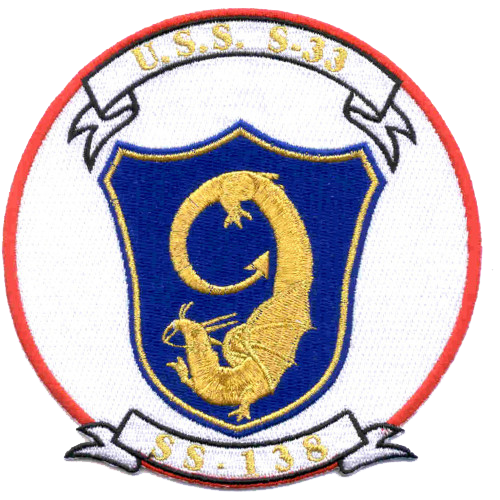
The USS S-33 didn’t start out as a headline boat. She wasn’t sleek or fast, and by the time World War II exploded across the Pacific, she was already a grizzled old hull in a Navy that was rapidly modernizing. But like a lot of things built with care and kept in working order, she still had something left to give. And give she did. Not in flashy battles or dramatic duels at sea, but in hard miles, cold dives, and one final mission that helped pave the way for an American victory in the Aleutians.
She was born at the tail end of the First World War, laid down in June 1918 at Union Iron Works in San Francisco and launched that December. She officially joined the fleet in April 1922, though she was quickly sent to New London for crankshaft modifications that sidelined her until the end of that year. Her early years were the usual mix of exercises and Fleet Problems, testing the defenses of places like the Panama Canal and practicing maneuvers off California. Eventually she was sent west to join the Asiatic Fleet, spending her time split between the Philippines and the coast of China. It was grueling but routine, and the boat earned her keep. When the Navy reshuffled its submarine forces, S-33 went to Pearl Harbor for a few years before being decommissioned in Philadelphia in 1937. She was put into storage with the unspoken understanding that she might never sail again.
That changed in 1940. War was already smoldering overseas, and Washington decided it needed every hull it could get. S-33 was recommissioned in October and spent the next year bouncing from Philadelphia to New London to Bermuda and up to Newfoundland, doing what older boats were often asked to do—patrol work in tough conditions. After Pearl Harbor, she made her way to the Panama Canal Zone for a couple of patrols, then up the coast to San Diego and north again to the Aleutians. From that moment, she was in the thick of it.
S-33’s war was defined by bad weather, limited contacts, and a frustrating lack of targets. Her first patrol out of Dutch Harbor in July 1942 was mostly spent hunting in fog so thick that her periscope was nearly useless. The second was spent supporting the American landings at Adak. During the third, she got close to Kiska but was driven off by enemy patrols or obscured by weather. She did her best, patrolling off Attu and Kiska again during her fourth through sixth patrols, and although no Japanese ships were sunk, she kept the lanes under surveillance. That in itself was a job worth doing. These were waters the enemy had claimed, and every American sub that went west into the Bering Sea helped chip away at that claim.
She received a much-needed overhaul after her sixth patrol, and by April 1943 was back on the line, headed for the Kurils. Her seventh and eighth war patrols took her to the waters off Shimushu and Paramushiro. There, she was mistakenly bombed by a U.S. PBY but came through intact. She did manage to hit two large fishing sampans, leaving them burning, and filed reports on the scarce enemy activity in the region. Still, it was clear the war was moving past the S-boats.
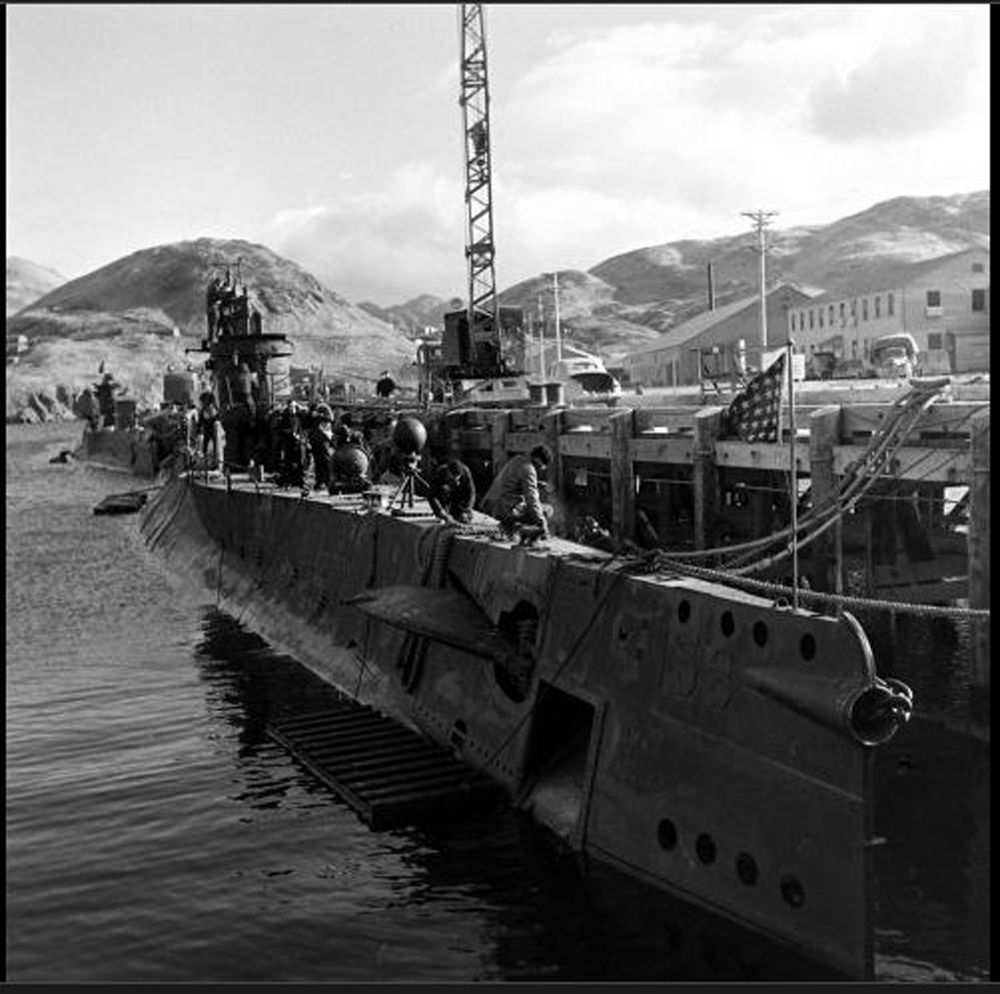
(NAVSOURCE)
Which made her final patrol a fitting one. In July 1943, the Navy needed detailed photographs of the western coast of Kiska. An amphibious landing was being planned, and the Army needed to know where it could land troops, where it couldn’t, what the beachheads looked like, and what the terrain would offer the enemy. This wasn’t about torpedoes or guns. This was about eyes. And despite her age, S-33 was equipped with a periscope camera and a crew who knew how to get close without being seen.
The weather almost spoiled everything. Fog blanketed the Aleutians for days at a time, and for the first week they barely glimpsed the islands they were sent to photograph. Radar was temperamental, periscopes were fogging, and even the air compressors gave them grief. But when the sky did open, they got to work.
Over fifteen days on station, they managed to capture over 350 photographs, including panoramic sets that showed beaches, rock formations, and landing zones. They recorded hydrographic data using the fathometer, updated charts with radar reflection notes, and observed both Japanese and American aircraft operating in the area. They also documented trails along the western ridgeline of the island, providing insight into potential troop movements. In a war where information could decide outcomes, this kind of work mattered deeply.
When S-33 returned to Dutch Harbor on August 9, the crew offloaded all logs, charts, negatives, and prints. The invasion force went ashore on Kiska just a few days later. And although the Japanese had already secretly withdrawn, no one had known that at the time. The recon work done by S-33 helped shape the planning, reduced the risk to the landing force, and reminded everyone involved that old boats could still deliver.
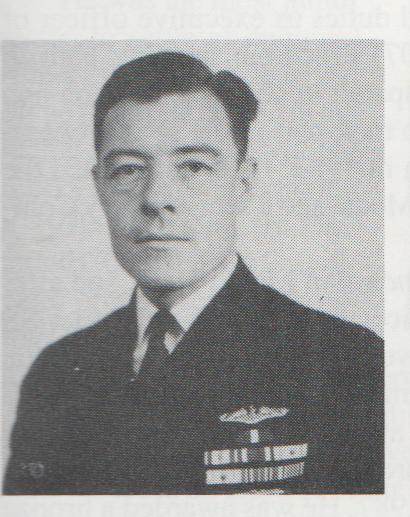
CO of the S-33 on her Final run
After bringing USS S-33 safely home from her final war patrol, Lieutenant Commander Clyde Benjamin Stevens Jr. was reassigned, his time aboard the aging submarine having reached a fitting conclusion. The quiet precision and firm resolve he showed off Kiska would not go unnoticed. He would soon take command of USS Plaice (SS-390), where his wartime career truly came into its own. Under his leadership, Plaice cut a swath through Japanese shipping, and Stevens earned two Silver Stars for daring attacks and calm courage under fire. But it was his boldness during one particularly aggressive patrol that brought him the Navy Cross. From the wheel of a worn-out S-boat to the bridge of a fleet submarine deep in hostile waters, Stevens proved himself a commander who led from the front, made hard choices without hesitation, and inspired the men who followed him.
But for USS S-33, it was the end of her combat career. After a brief stay in Adak, she was ordered south and assigned to the West Coast Sound School in San Diego. There, she served without fanfare as a training platform for antisubmarine warfare crews. She did not need glory for this final role. Just a willingness to run the course and be a reliable target while young sailors and airmen honed their skills.
She was finally decommissioned on October 23, 1945. Her name was struck from the Navy list a week later. By the next year, she was gone, sold for scrap to the Salco Iron and Metal Company.
Her final patrol earned her a battle star. Not for sinking a carrier or trading shots with destroyers, but for enduring the cold, fog, and constant wear of duty to bring home pictures that helped win a battle. The mission was called successful. Her commanding officer and crew were commended by Admiral Lockwood himself.
There’s something to be said for that kind of mission. Not every patrol ends in torpedo wakes and exploding ships. Some are long days in gray water, chasing glimpses through a lens, recording coastlines, and trusting that what you’re doing matters. It did. The Submarine Service has always known that victory isn’t just about attack. It’s also about preparation. And that’s what the S-33 did on her final run. She prepared the way.
National Archives and Records Administration. USS S-33 (SS-138) War Patrol Report, 14 July – 9 August 1943. Record Group 38: Records of the Office of the Chief of Naval Operations, 1875–2006. National Archives Identifier 74839033. https://catalog.archives.gov/id/74839033.
Narrative by David Ray Bowman, FTB1(SS), 08.01.2025, Silverdale, WA for the USSVI Bremerton Base History Website
Blair, Clay Jr. Silent Victory: The U.S. Submarine War Against Japan. New York: J.B. Lippincott Company, 1975.
Friedman, Norman. U.S. Submarines Through 1945: An Illustrated Design History. Annapolis, MD: U.S. Naval Institute, 1995.
Roscoe, Theodore. United States Submarine Operations in World War II. Annapolis, MD: United States Naval Institute, repr. 1982. ISBN 0-87021-731-3.
Naval History and Heritage Command. “S-33.” Dictionary of American Naval Fighting Ships,
https://www.history.navy.mil/research/histories/ship-histories/danfs/s/s-33.html. Accessed 07.28.2025.
 Patrol Reports
Leave a comment