By the summer of 1944, the Imperial Japanese Navy’s I-29 was no ordinary submarine. She was fast, long-ranged, and highly prized, not for the number of ships she had sunk, but for the secrets she carried. She had just returned from Nazi-occupied France, the only Japanese submarine to survive the perilous transoceanic “Yanagi” missions under the Tripartite Pact. These voyages were the Axis powers’ last hope at exchanging technology and critical war materials across submarine lanes, now that surface traffic had become suicidal.
Commanded by the highly decorated Captain Takakazu Kinashi—who had earlier torpedoed the USS Wasp, North Carolina, and O’Brien—I-29 departed Lorient in April 1944 carrying a precious cargo. The manifest included a Walter HWK 509A rocket engine, blueprints for Germany’s Messerschmitt Me 163 and Me 262 aircraft, radar components, several Enigma coding machines, and the know-how for Japan to develop her own jet-powered interceptor. She had reached Singapore safely by mid-July and was heading northward toward Japan, still carrying that cargo.
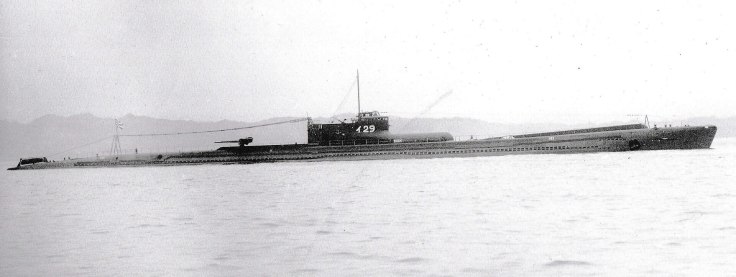
The Allies knew she was coming. ULTRA intercepts had decrypted Japanese communications. That intelligence put I-29 squarely in the crosshairs of a hunter-killer group operating under the U.S. Navy’s “Wildcats” wolfpack, made up of USS Tilefish, USS Rock, and USS Sawfish under Commander Alan Bannister.
The trap was set in the Balintang Channel, a bottleneck in the Luzon Strait, just north of the Philippines. On the morning of July 26, 1944, Sawfish submerged at dawn to begin her patrol. By late afternoon, things began to shift.
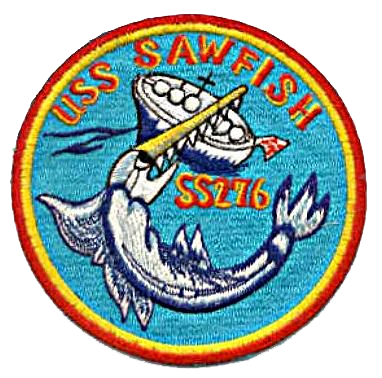
At 4:30 PM, Sawfish sighted smoke on the horizon. A submarine had appeared on the surface, bearing west. It was moving fast and steady. Through the periscope, the silhouette resolved into something unmistakable—long, narrow, and high in the water. No sign of American fittings. Then came the confirmation: a large, bold Rising Sun insignia painted on the conning tower. It was I-29.
Bannister called battle stations.
Sawfish tracked the Japanese boat carefully. At just over 5,000 yards, the enemy was still unaware. Then the moment came. The I-29 made a right zig. That maneuver gave Sawfish the perfect firing angle. At 3,200 yards, they took a sonar ping—1,850 yards came back as the confirmed range. Bannister gave the order.
At 4:51 PM, the first torpedo fired. Five more followed. The crew held their breath.
Twenty seconds later, the first hit slammed into the hull just abaft the conning tower. A second exploded forward, near the bow. A third struck close to the first. The effect was immediate and catastrophic. The enemy boat erupted in flame. A triple column of smoke and vapor blasted into the sky. The forward section lifted high, bow-up, before vanishing beneath the surface.
At 4:55 PM, a massive underwater explosion echoed through the sea. Another followed two minutes later. At 5:58, two smaller blasts were heard, followed by the telltale rush of escaping gas. The wreck had broken up.
There would be no rescue. No debris collection. No counterattack. Just a smoke pall drifting over the waves and the knowledge that I-29 was gone.
Only one of her crew survived. Kinashi went down with his boat. Posthumously, the Japanese government promoted him two ranks to rear admiral. With him, the last viable Axis submarine exchange effort died, along with rocket technology, encrypted machines, and jet blueprints that would never reach Japanese factories.
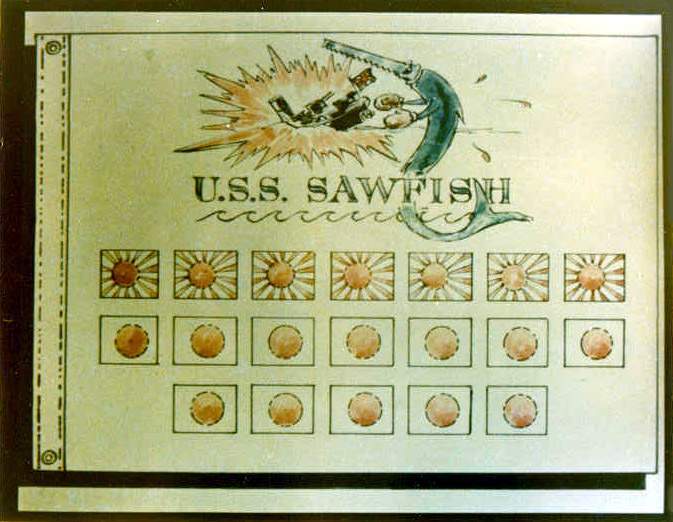
At 8:23 PM, Sawfish surfaced and sent the message: “Sighted sub. Sank same. Three hits. My course 270.” It was simple and final. The Wildcats had completed their hunt.
For the crew of Sawfish, July 26 was one for the war record. The attack had taken less than half an hour. The impact lasted much longer. Japan’s link to Germany beneath the waves had been severed with three well-placed torpedoes and a bit of help from Allied codebreakers. The war at sea, often cruel and quiet, had spoken loudly that day.
National Archives and Records Administration. Deck Log of USS Sawfish (SS-276), July 26, 1944. Record Group 24: Records of the Bureau of Naval Personnel, 1798–2007. National Archives Identifier 74842744. Accessed July 24, 2025. https://catalog.archives.gov/id/74842744
Narrative by David Ray Bowman FTB1(SS) 07.24.2025
Office of Naval Intelligence. Summary of Enemy Submarine Activity: Japanese Submarine I-29. Record Group 38: Records of the Office of the Chief of Naval Operations, National Archives and Records Administration.
 Patrol Reports
Leave a comment