A “Sub”-Par Afternoon: When the Ferry Klamath Kissed the USS Trepang

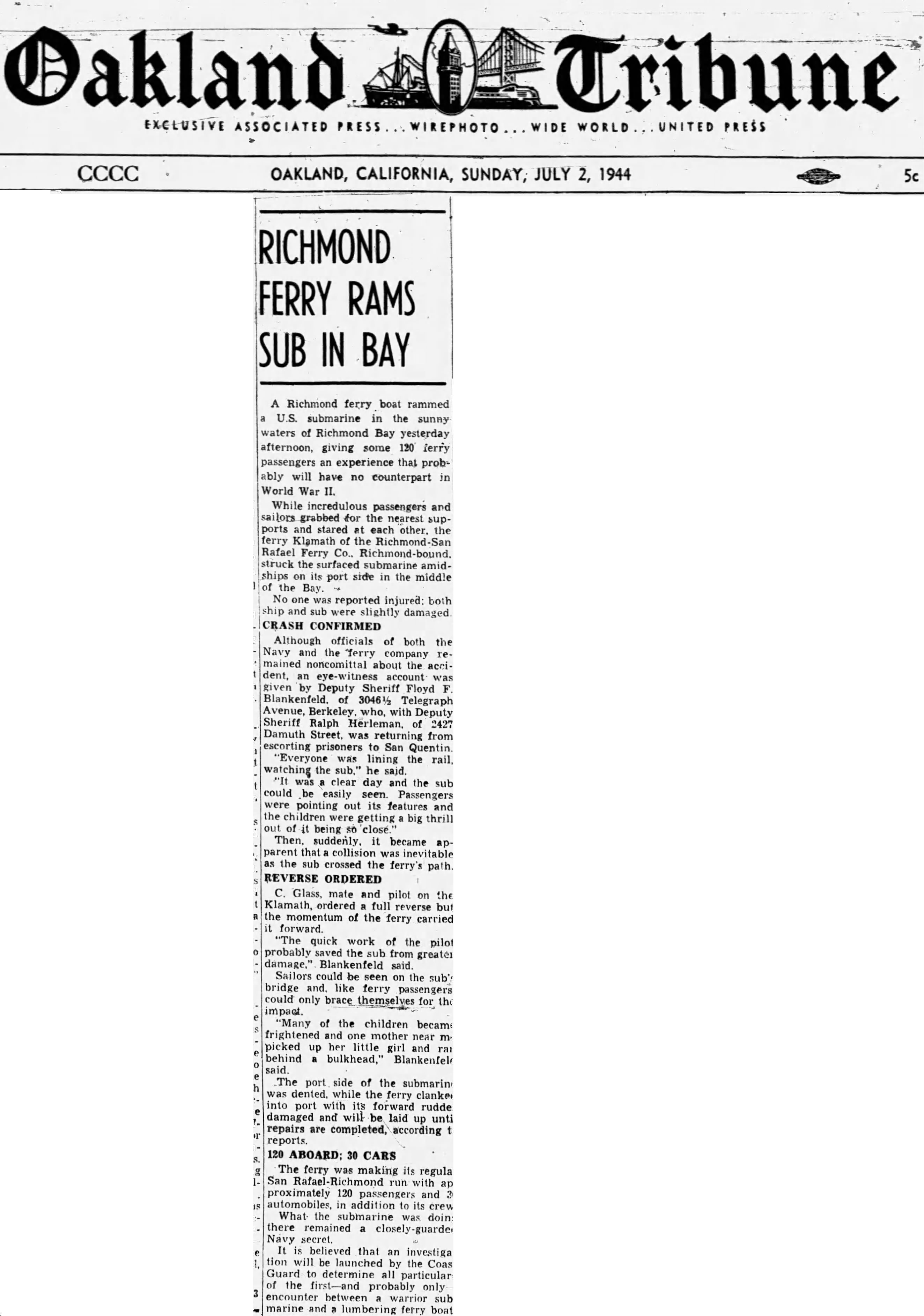
The sun was still high over the San Francisco Bay on July 1, 1944, as the ferry Klamath rumbled across familiar waters. She was no stranger to the waves. By then, she had been carrying passengers and vehicles between Richmond and San Quentin for years. On that day, she had 120 souls and 30 cars aboard, lazily making her last run of the afternoon.
But what was normally a routine trip quickly turned into a nautical curiosity, and then a minor catastrophe.
Off in the distance, passengers spotted something long, dark, and menacing breaching the surface. It was a brand-new U.S. Navy submarine on her maiden trial run. The vessel was the USS Trepang (SS-412), freshly launched from Mare Island and captained by Commander Roy M. Davenport, who would go on to earn five Navy Crosses and legendary status in the Silent Service.
As the Trepang surfaced, passengers aboard the Klamath crowded the railings. There were gasps, laughs, and wide-eyed children pointing at the spectacle of a massive war machine gliding so close. It was like spotting a sea monster at play. But admiration gave way to concern when the two vessels drew nearer.
Eyewitnesses reported that the Trepang and the Klamath seemed on a collision course. As the submarine loomed larger, the ferry’s pilot called for full reverse, but it was too late. Momentum was a cruel mistress.
And then came the crunch.
With an audible BOOM, the aging ferry rammed into the port side of the sleek new submarine. Nobody was hurt, but the Trepang was left with a notable dent. The Klamath fared worse. She suffered a bent rudder and a busted front propeller, not to mention a badly bruised ego. According to later accounts, the ferry’s captain had left his post… to change his pants. Whether from shock or something more personal, we’ll never know.
The incident made headlines across the Bay. The Oakland Tribune quipped that it might be the first, and probably only, encounter between a warrior submarine and a lumbering ferryboat. The Navy, for its part, remained mum on the details. Was it wartime secrecy or sheer embarrassment? We’ll let the reader decide.
The USS Trepang (SS-412), a Balao-class submarine named after a sea cucumber (yes, really), was launched on March 23, 1944, and commissioned that May under Cmdr. Roy Davenport. After her embarrassing debut on July 1, Trepang proved herself a fearsome fighter.
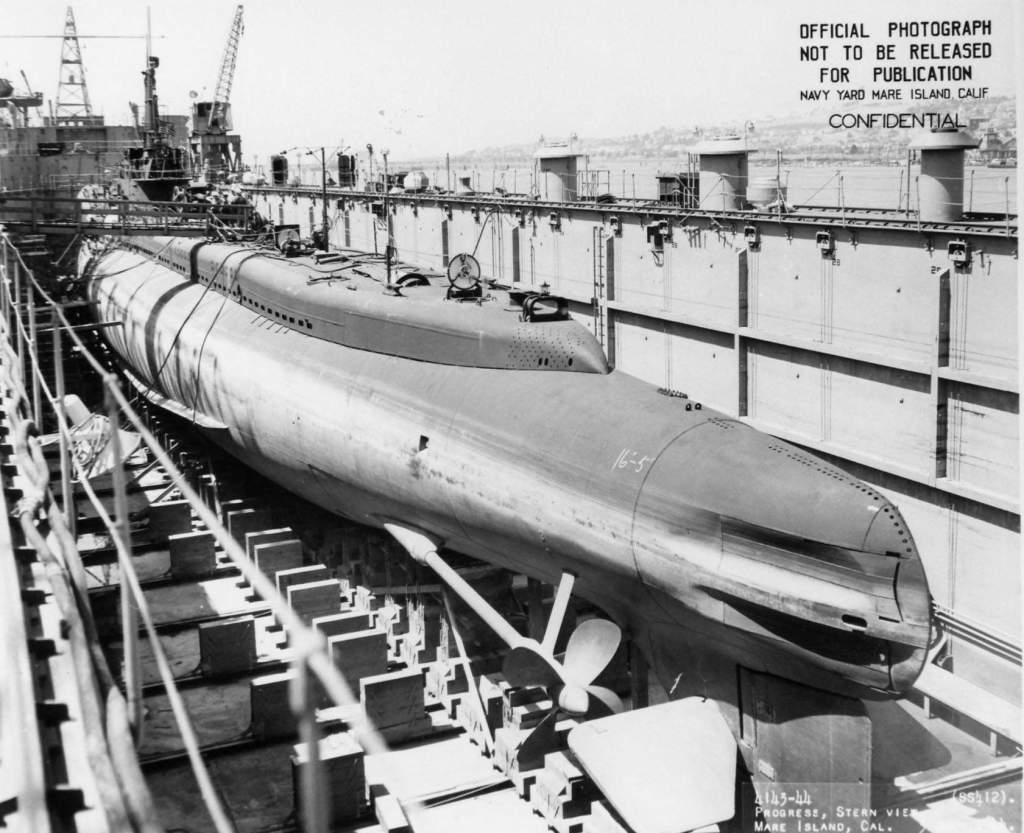
Over the course of five war patrols in the Pacific, Trepang sank multiple enemy vessels including the Takunan Maru, Banshu Maru No. 31, and Usuki Maru. She attacked convoys, fought off destroyers, and rescued downed American pilots. This included two Mustang pilots in June 1945, one of whom had to “be patient” while the first was hauled aboard.
She earned five battle stars and a Navy Unit Commendation for her wartime service. After the war, she appeared in a 1962 episode of Dennis the Menace (because every good sub deserves a sitcom cameo), was reclassified as AGSS-412, and was eventually sunk as a target in 1969 by destroyer gunfire off Southern California.
The Ferry Klamath: Queen of the Bay
The Klamath was born in a different world. Built for the golden age of Bay ferries, she shuttled passengers between Oakland, San Francisco, Richmond, and San Rafael. At her peak, she could carry 1,000 passengers and 78 vehicles. She ran tirelessly until September 21, 1956, the day before the Richmond–San Rafael Bridge opened and ended her active career.
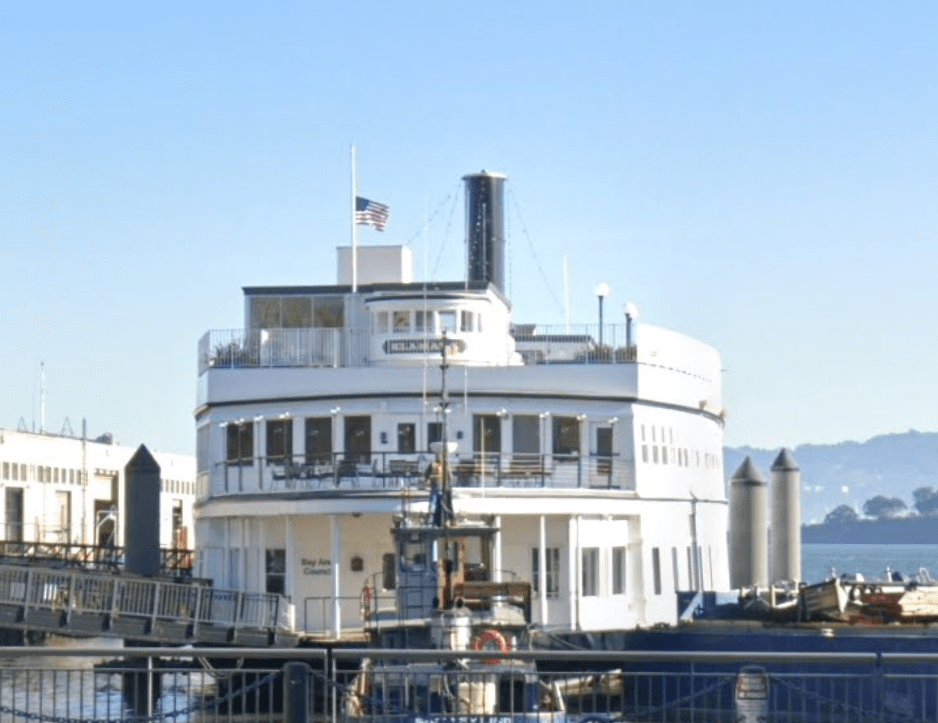
But she wasn’t scrapped. Instead, the Klamath spent decades tied to various piers, repurposed for office space and event use. At one point, she even hosted a miniature onboard supermarket as part of a consumer research project.
Today, she floats at Pier 9 on San Francisco’s Embarcadero. Restored, repainted, and ready for parties and events, she stands as one of only five remaining ferries from the Bay’s heyday, a survivor with scars and stories to tell.
And among those stories is the day she quite literally ran into history.
It’s rare for a humble ferry to collide with a warship. It’s rarer still for both to survive, go on to fame in their own right, and live to tell the tale. But the Klamath and Trepang did just that. One now serves as a floating venue, the other a hero laid to rest beneath the sea.
One changed her propeller. The other changed the tide of battle. Together, they shared one unforgettable bump in the bay.
 Patrol Reports
Leave a comment