
If Herman Melville had served aboard the USS Triton, he might’ve written Submarine! instead of Moby-Dick. But as fate would have it, that task fell to Edward L. Beach, a decorated U.S. Navy submarine officer and later the author of the bestselling novel Run Silent, Run Deep. In Submarine!, Beach doesn’t just tell sea stories. He opens the watertight doors of a secret world, inviting us into the steel bellies of America’s undersea fleet during World War II.
What makes Submarine! unique is its blend of firsthand memoir and composite storytelling. Rather than write strictly about his own missions, Beach gathers real-life experiences from several submarines—Trigger, Wahoo, Harder, Tang, and others—blending them into a chronological, unified narrative of the Pacific submarine campaign. The result is a thrilling, authentic, and highly readable account of a silent war fought beneath the waves.
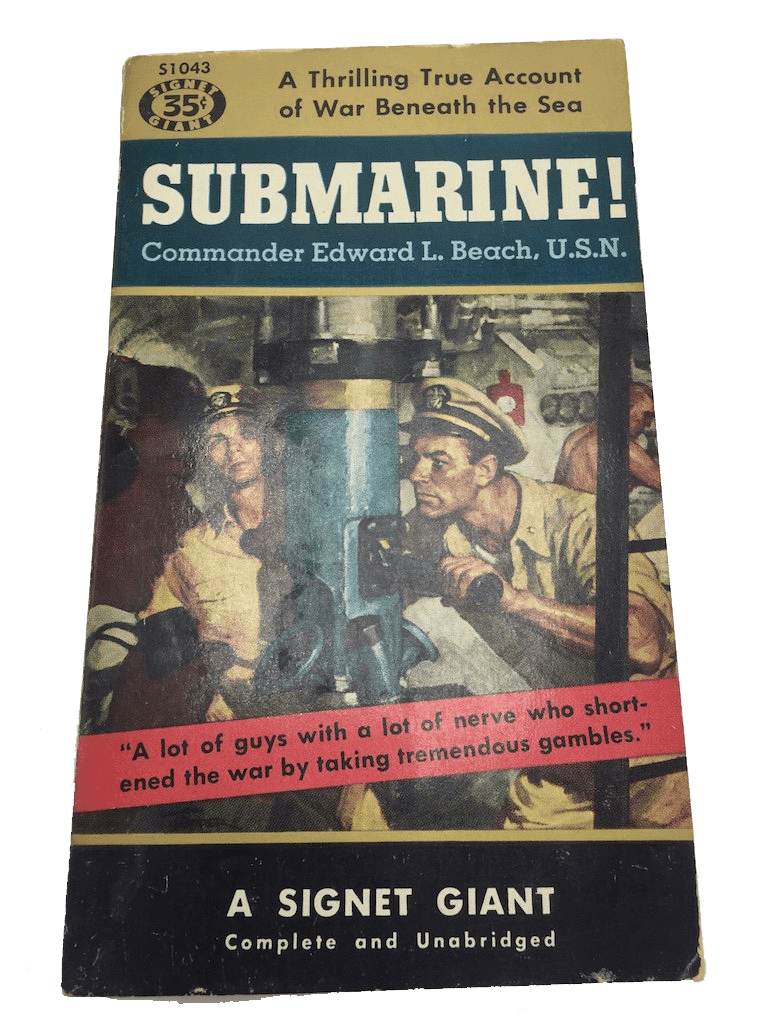
Captain Beach knows drama—but he doesn’t have to invent it. From harrowing depth charge attacks to breathless torpedo runs under enemy convoys, the tension feels like it was bled onto the page in sweat and diesel oil. His prose is lean, punchy, and no-nonsense—just like the men he writes about. There’s no bravado here, only resolve. The risks they took were staggering. So were the losses.
But Submarine! is more than a battle log. It’s a love letter to a breed of men—volunteers who stepped into tin cans and vanished beneath the sea, not knowing if they’d ever surface again. It captures their humor, courage, and deep camaraderie. Beach also pays tribute to fallen ships and lost friends, never letting the reader forget that this war was deadly, personal, and brutal.
Published in 1952, the book also served an important Cold War purpose. It reminded postwar America that victory came at a high price—and that the submarine force, often overlooked, played a critical role in sinking Japan’s merchant marine and crippling its war economy.
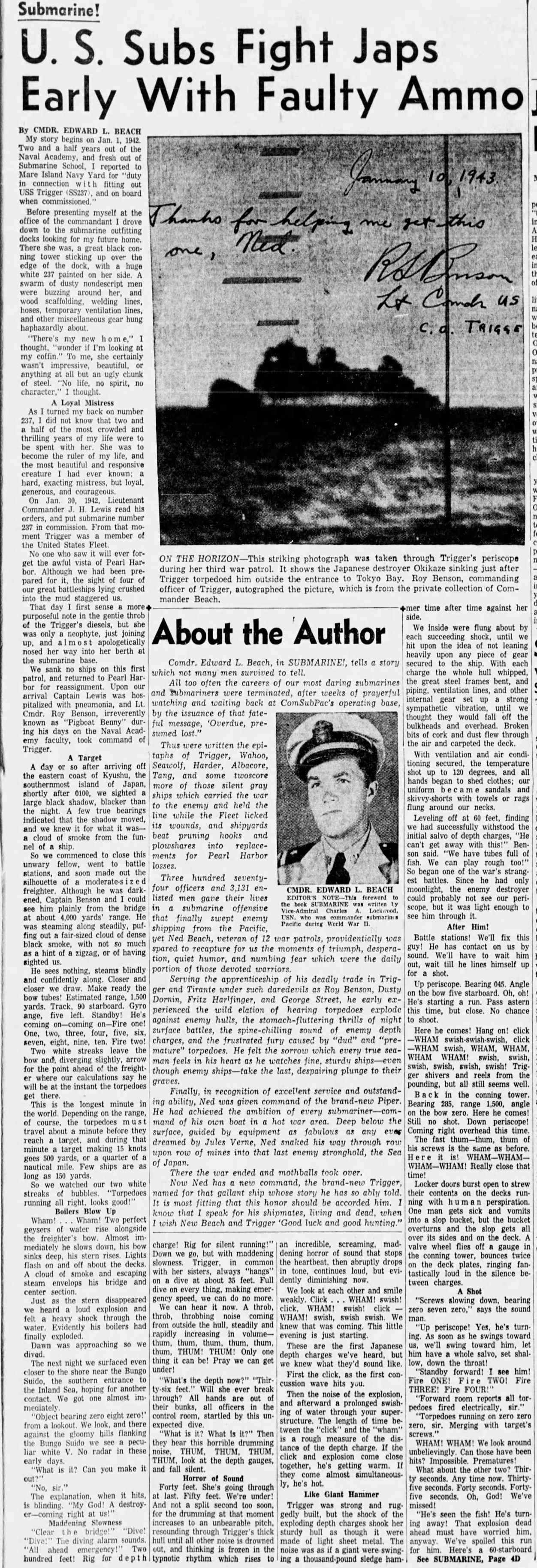
There are some dated elements—particularly in how Japanese forces are portrayed—but this reflects the era more than malice. And while the book glosses over some darker corners (like friendly fire incidents or faulty torpedoes early in the war), its tone is honest, reverent, and inspiring.

 Patrol Reports
Leave a comment