

In the dawn of the twentieth century, submarines were something between daring science fiction and mechanical gamble. For the United States Navy, the dream of underwater warfare was becoming real—though not without growing pains, near-disasters, and more than a few hard-earned lessons.
One of the Navy’s early forays into undersea warfare was the B-class submarine—three compact, steel-hulled pioneers that marked a turning point in submarine design. Among them was USS Tarantula (SS-12), a vessel whose name alone evoked a certain predatory elegance. She was laid down in Quincy, Massachusetts, and launched on March 30, 1907. The Navy would later simplify her name to B-3, but those who served aboard her knew exactly what she was: a trailblazer.
Continue reading “USS Tarantula (B-3) SS-12”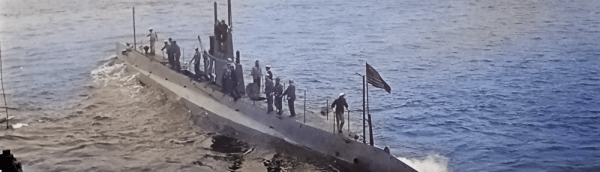
 Patrol Reports