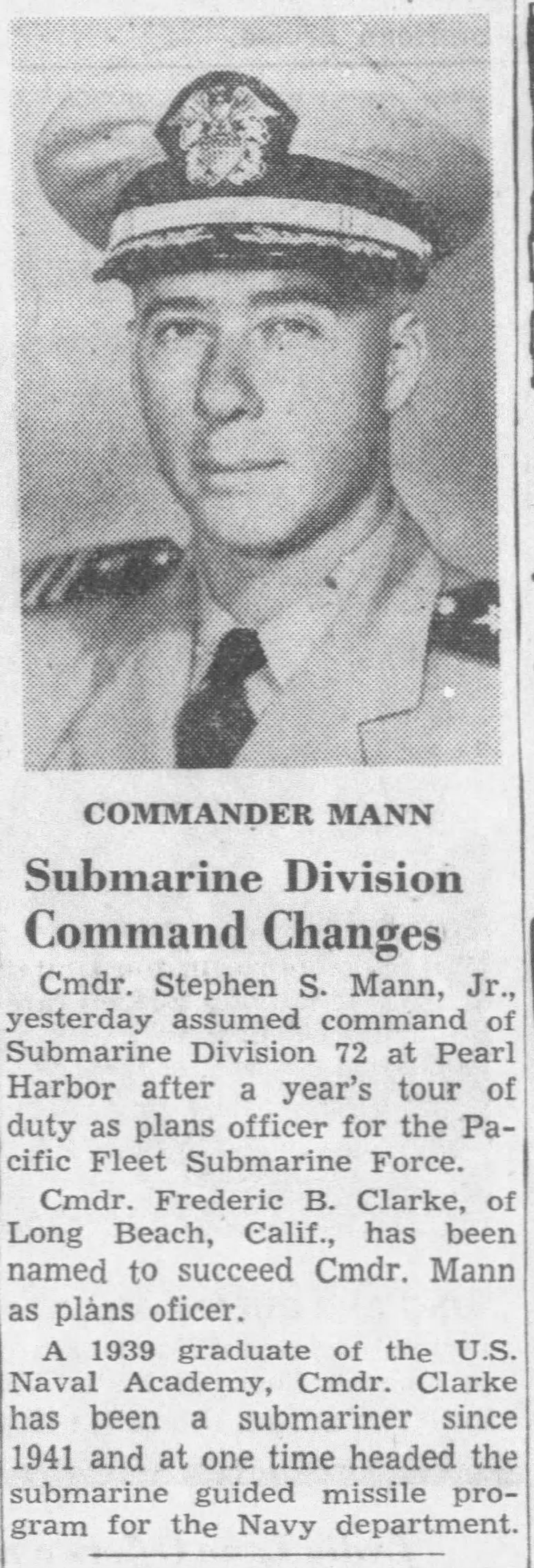
The Honolulu Star-Advertiser ran the story on June 10, 1955. There it was in black and white, plain as day: Commander Stephen S. Mann, U.S. Navy, was taking over Submarine Squadron 72. It might have just been another quiet military personnel notice to most folks reading their morning coffee over the paper, but for the men who served with Mann, it carried the weight of experience and the quiet authority of a man who had faced death and kept his boat afloat.
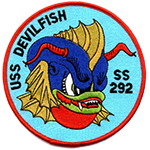
What the article didn’t say, and what most never knew, was that ten years earlier Mann had been in command of a submarine that experienced one of the strangest and most unsettling moments in all of World War II’s submarine history. Before Squadron 72, before the brass and staff cars, Mann had stood on the bridge of the USS Devilfish (SS-292) and survived something no other American sub ever had.
Rewind the clock to March 1945. The Pacific War was burning hot. Japan was dug in, desperate, and unleashing everything it had left. Allied forces were pushing in from all sides. Every sailor knew the next few months would be brutal. For Mann and the crew of Devilfish, it was the start of their second war patrol. They’d already patrolled the dangerous waters off Japan and now were headed toward a patrol zone known as the “Hit Parade,” a rotating hotbox of submarine duty off Tokyo Bay and the Northern Nanpō Islands.
The Devilfish was running on the surface west of Iwo Jima. The crew had seen combat. They were seasoned. But what happened on March 20 wasn’t in any playbook. Around 4:45 in the afternoon, the lookouts spotted a Japanese plane trailing them. That alone wasn’t unusual. They’d seen enemy aircraft before. The order was given to dive. She passed fifty feet when it hit.
There was no warning, just a thunderous shock and a violent shudder through the steel hull. A moment later, water was rushing into the conning tower. Saltwater, electronics, and panic are a bad combination in any environment, but inside the sealed belly of a submarine, it’s the stuff of nightmares.
Submariners are trained to expect the worst, and this was it. The Devilfish was built to withstand crushing depths, but not to be bombed. Somehow, the crew kept her level at 80 feet. The pumps worked overtime, men scrambled to protect panels with canvas and rain gear, anything that might hold off a short circuit. They were not out of danger, but they were not dead. And that was something.
When darkness fell, they surfaced. They needed to assess the damage. What they found on the deck stunned them. Twisted metal. Wing fragments. A piece of landing gear. All Japanese. Some of it still bore kanji characters. One man reportedly found a nameplate and stared at it like it was some kind of ghost. What they’d thought was a depth charge or bomb had in fact been something far more grotesque.
They’d been hit by a kamikaze.
Now, think about that. A kamikaze plane struck a submerged submarine. That didn’t just break protocol, it broke logic. Kamikazes were supposed to target the big fish: carriers, destroyers, battleships. Not a relatively small, low-profile submarine diving out of sight. It was like hitting a needle in a haystack, then crashing your plane into it.
The explanation came later, pieced together from logs, intelligence, and a bit of educated guesswork. That day, Task Force 58 was striking southern Japan. The Japanese responded with a swarm of suicide planes. One of them hit the destroyer USS Halsey Powell. Another, it seems, got separated from the pack. Maybe he lost his bearings. Maybe he panicked. Maybe he was just running out of fuel and saw a ship’s wake in the distance. What’s certain is that this lost and lonely bomber made a final desperate plunge. And somehow, impossibly, his aircraft collided with the Devilfish as she dove beneath the surface.
The damage was real. The radar masts were sheared clean off. The periscope shears were punched through with a hole the size of a man’s arm. The antennas were toast. The patrol was aborted. Devilfish limped back to Saipan. Mann made the call to return. No bravado, no stubbornness. He knew that a half-blind submarine in enemy waters was asking for a burial at sea.
The brass in Pearl later tried to make light of it. Rear Admiral Merrill Comstock, commander of Submarine Force Pacific, signed off the war patrol report with a line that probably got a chuckle in the officers’ club. He congratulated Mann and his crew for the destruction of an enemy plane, adding that he did not recommend this method of submarine air defense.
It was one for the books. No other American submarine was ever hit by a kamikaze. And even today, naval historians shake their heads at it.
The Devilfish survived. She returned to duty, completed two more patrols, and was eventually sunk as a target off San Francisco in 1968. Her name was never legendary, but for those who served aboard her, she was unforgettable. On August 14, 1968, she was expended (in the terms the Navy uses) as a target for the USS Wahoo while testing the Mk 16 torpedo.

As for Stephen S. Mann, his story didn’t end in March 1945. Far from it. After the war, he went on to command the captured German U-2513, a Type XXI experimental sub that gave the Navy a look into the future. He later commanded the Chivo, a Balao-class boat like the Devilfish, and served as a division commander over five submarines, then a squadron commander over fifteen. He capped his sea-going career as captain of the Bushnell, a submarine tender.
When he retired in 1968, Mann traded the sea for stocks, becoming an investment broker. He moved to Florida, joined the yacht club, and served on the vestry at his church. When he passed away in May 2002, the Navy honored him at Arlington, with full military rites. He earned them.
Men like Mann remind us that history isn’t just something that happened long ago. It’s the sum of choices made in impossible moments, the quiet acts of leadership that don’t make the headlines. He didn’t write a book, he didn’t give speeches, but for the crew of the Devilfish, his calm under pressure kept them alive when the laws of war and logic seemed to break apart in midair.
Sometimes the enemy is obvious. Sometimes it comes screaming out of the sky when you’re just trying to dive. But in every case, it’s the men in charge who matter most. And Mann, on that strange day in March, proved he was exactly the kind of leader every submariner hopes to follow.
 Patrol Reports
Leave a comment