Submarines at the dawn of the 20th century were a fascinating mix of ambition and limitation. The U.S. Navy, still grappling with the full potential of underwater warfare, had largely relied on gasoline-powered submarines, which—while groundbreaking—came with some rather alarming drawbacks. Gasoline fumes were not only nauseating but also highly flammable, making these early boats ticking time bombs for their crews. Then there was the issue of control beneath the waves. The Navy’s subs were growing larger, but their ability to maintain precise depth control was still rudimentary. It was clear that if the United States wanted to compete in the rapidly advancing world of submarine warfare, something had to change.
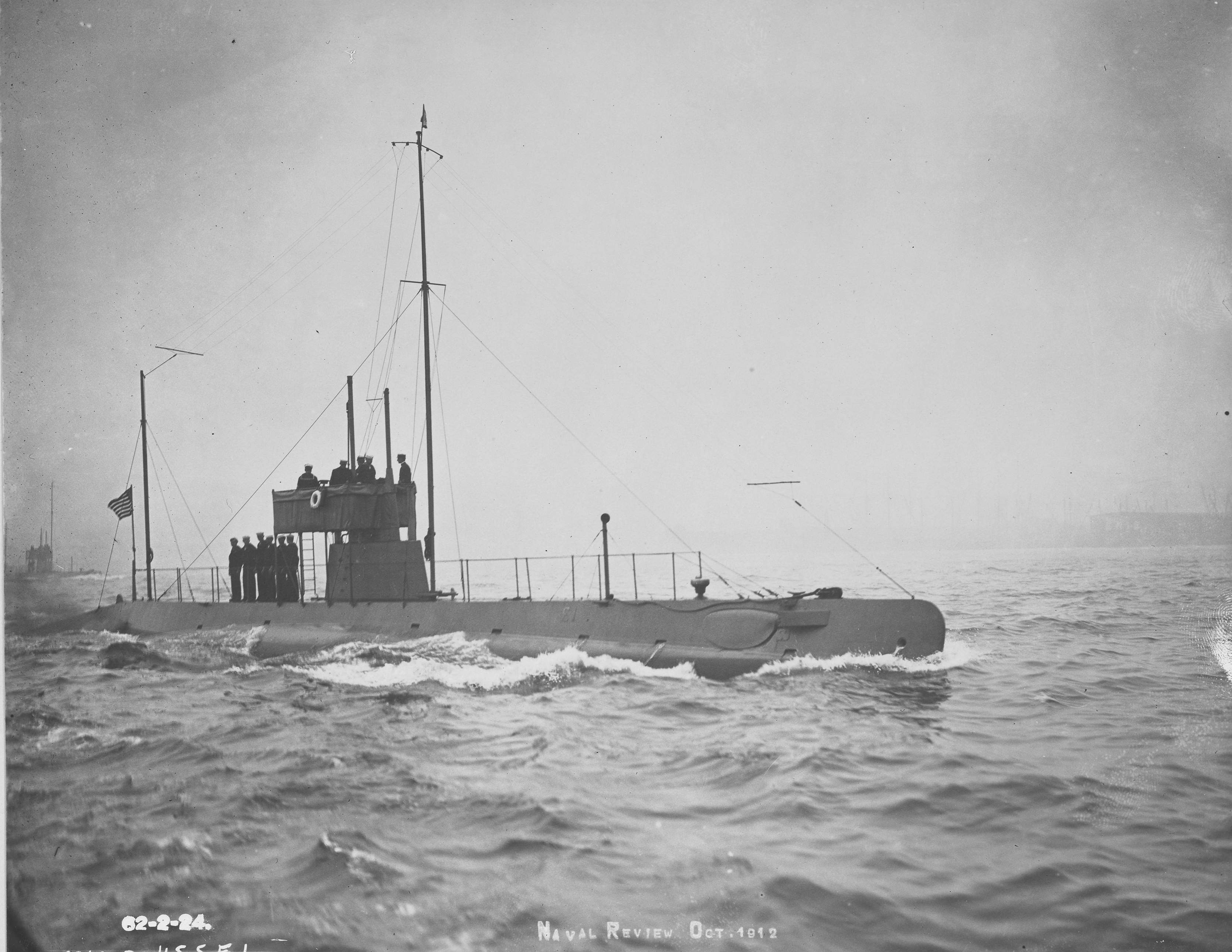
The E-2 (SS-25) is underway to the stern of the E-1. – National Archives
Enter the E-class submarines, the Navy’s first attempt at solving these problems. Designed by Electric Boat and built by Fore River Shipbuilding, these two submarines—originally named Skipjack and Sturgeon, later redesignated as E-1 and E-2—were the first in the U.S. Navy to use diesel engines instead of gasoline. This was a significant leap forward, as diesel engines were far safer and more efficient than their gasoline-burning predecessors. The E-class boats also introduced another crucial feature: bow diving planes. Prior subs had relied solely on stern planes, which controlled the boat’s angle in the water but provided little in the way of precise depth adjustments. By adding forward diving planes, the E-class improved underwater maneuverability, an innovation that would become standard on all future submarines.
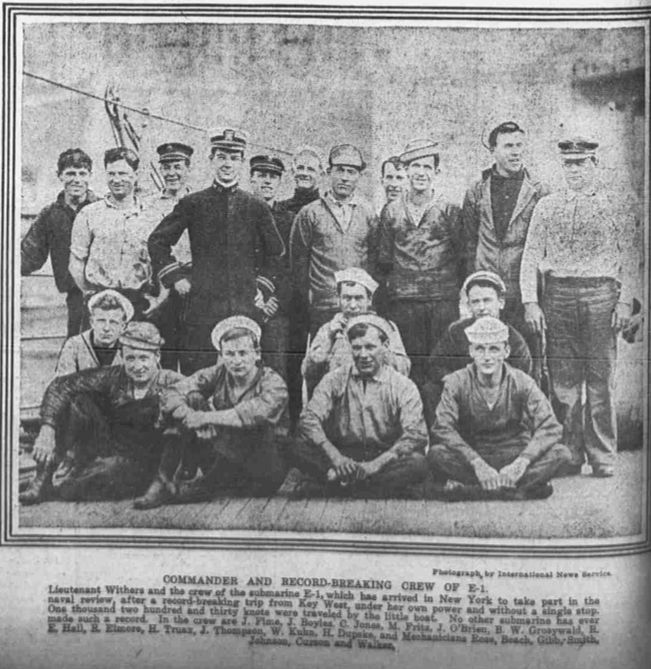
Submarine sailed 1,230 miles from Key West, Florida to New York under her own power without a single stop. No other submarine has ever made such a record. – Image and text provided by Penn State University Libraries; University Park, PA.
Photo from Evening Public Ledger. (Philadelphia [Pa.]) 1914-1942, 08 May 1915, Night Extra, Image 18, via chroniclingamerica.loc.gov.
Of course, the transition to diesel was not entirely smooth. Early diesel engines were notoriously unreliable, and the ones installed on the E-class were no exception. But the leap away from gasoline set the stage for the submarine force of the future. These were not ocean-going boats meant to range across the globe; they were coastal defense and harbor patrol submarines, intended to operate closer to home. But with tensions in Europe escalating, even these relatively small submarines would soon find themselves drawn into the world’s first great global conflict.
E-1, originally named Skipjack, was launched in 1911 and commissioned on February 14, 1912 under the command of a young officer named Chester W. Nimitz—yes, that Nimitz. He would later command the Pacific Fleet in World War II, but in 1912, he was just a promising young submariner. Shortly after taking command, he personally demonstrated his leadership when he dove into the icy waters of Hampton Roads to save a sailor who had fallen overboard. The Treasury Department awarded him the Silver Life-Saving Medal for the act, a foreshadowing of the kind of leader he would become.
Following her commissioning, E-1 spent her early years testing new submarine technologies, including the Sperry gyrocompass and submerged radio transmission. She conducted training exercises and patrolled along the East Coast, often operating out of Newport and New London. As the world moved closer to war, she was part of the fleet’s growing efforts to refine submarine tactics.
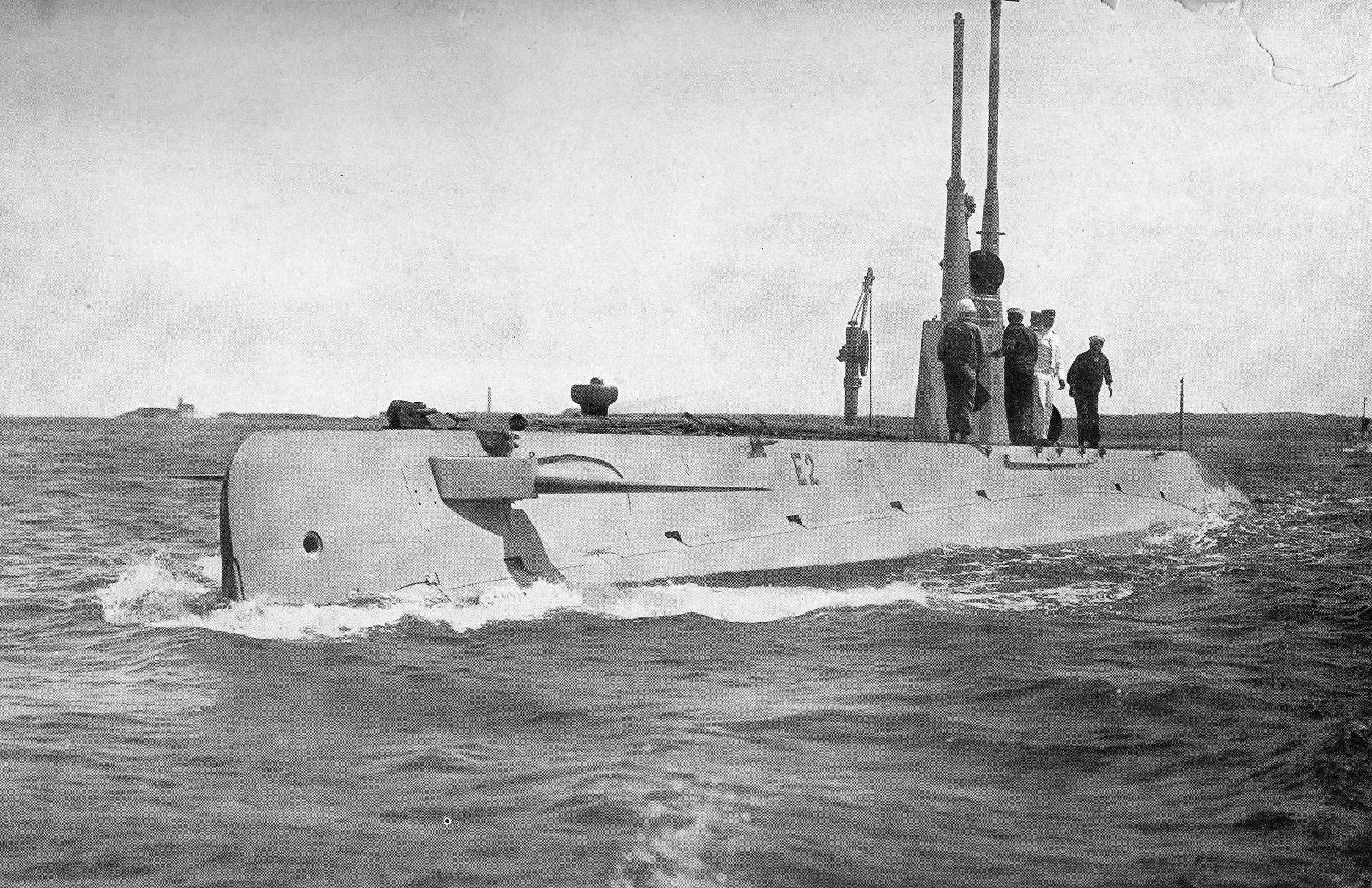
E-2, originally named Sturgeon, followed a similar trajectory at first, participating in training exercises and fleet maneuvers. But in 1916, her story took a dramatic and tragic turn. While undergoing tests on a new nickel-iron battery at the Brooklyn Navy Yard, an explosion ripped through the boat. Hydrogen gas had ignited, setting off a violent fire that killed four men and injured seven others. The resulting investigation, led in part by Lieutenant Chester Nimitz, cleared the boat’s commanding officer of wrongdoing. The explosion underscored the risks of early battery technology and the desperate need for safer power sources aboard submarines.
Following the explosion, E-2 was taken out of commission for extensive testing of the Edison storage battery, a project that would have long-term implications for submarine propulsion. The boat wouldn’t see service again until 1918, when she was recommissioned and sent to conduct anti-submarine patrols off Cape Hatteras. The waters off the American coast were not as dangerous as the North Atlantic, but German U-boats were an ever-present threat. E-2 made four patrols during this period, even sighting a large enemy submarine during one of them. The Chief of Naval Operations commended her crew for their efforts, particularly for two exceptionally long patrols—an impressive feat for a boat of her size and range.
Meanwhile, E-1 had been sent overseas. When the U.S. entered World War I in April 1917, the Navy needed every available submarine to counter the U-boat menace. In December of that year, E-1, along with a small flotilla of other submarines, departed Newport bound for the Azores. The journey was arduous, with heavy storms battering the small submarines, but by early 1918, E-1 was patrolling the waters around Ponta Delgada. Her mission was to deter German submarines from using the Azores as a refueling and repair base, and though no major engagements occurred, her presence was part of a larger strategy to keep the Allies’ sea lanes open.
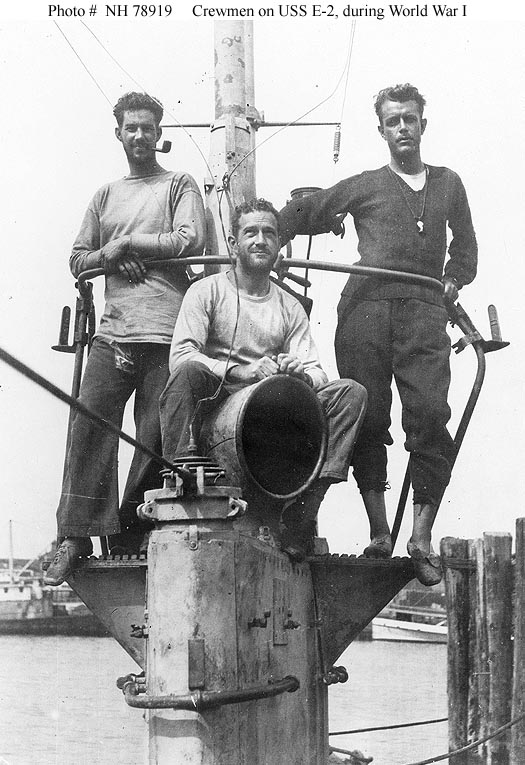 By the end of the war, both E-1 and E-2 had become training boats, helping to prepare new generations of submariners. The lessons learned from their service were invaluable. The transition to diesel was now complete, and bow diving planes had proven their worth. But both boats were showing their age. Submarine technology was advancing rapidly, and the E-class boats—already considered experimental—were quickly becoming obsolete.
In 1921, the Navy decommissioned both submarines, sending them to Philadelphia for disposal. The following year, they were sold for scrap, ending their brief but significant careers.
Looking back, the E-class submarines were not the most glamorous boats ever built. They were small, cramped, and limited in their capabilities. But they represented an important turning point. They were the first U.S. submarines to run on diesel, a technology that would become the standard for the next several decades. They were the first to use bow diving planes, an innovation that dramatically improved underwater maneuverability. And they helped train the generation of officers who would go on to lead the U.S. submarine force in World War II. One of those officers was Chester Nimitz, whose early experiences aboard E-1 undoubtedly shaped his understanding of submarine warfare.
The legacy of the E-class is not in heroic battles or daring torpedo strikes but in their contributions to the evolution of submarine design. Every submarine that came after them benefited from the lessons learned aboard these two unassuming boats. The diesel engine, bow planes, and improved battery technology that defined the E-class became standard features in the generations that followed. For a class of only two submarines, that’s a pretty impressive legacy.
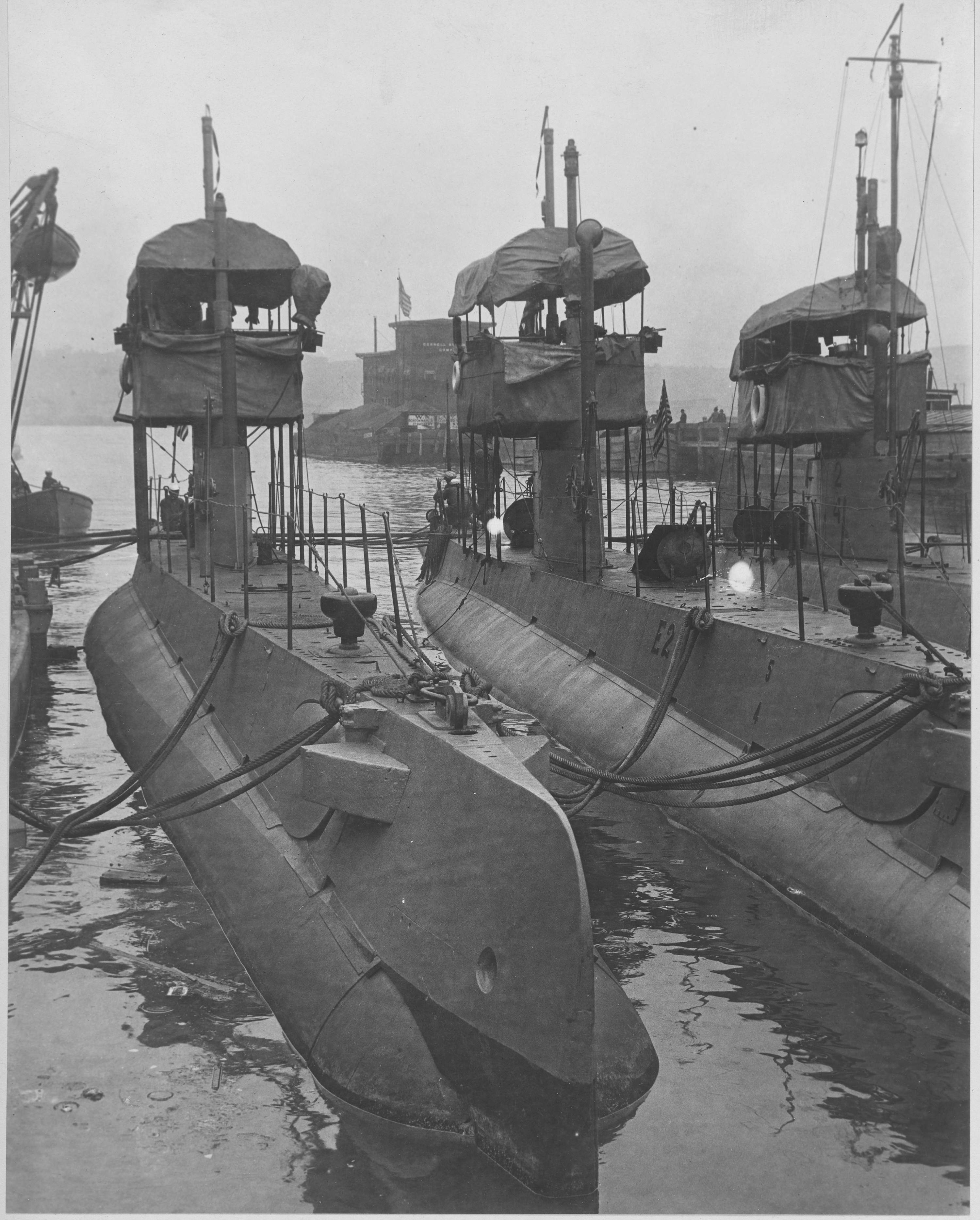
National Archives Identifier: 45513751
Local Identifier: 165-WW-338B-29.
Photo courtesy of catalog.archives.gov
 Patrol Reports
Leave a comment