On June 27, 1970, a reporter with a poetic bent described Admiral John S. McCain Jr. as the shortest, saltiest, and most incorrigible admiral in the Navy. That reporter was Col. R.D. Heinl Jr., and he was not exaggerating. McCain, standing barely five-foot-seven, paced the floor of his headquarters in Pearl Harbor with a cigar clenched in his teeth. He commanded the largest forward-deployed force in American history. His authority reached across 500 ships, 7,500 aircraft, and nearly a million servicemen scattered throughout the Pacific from the Golden Gate to the Indian Ocean.
Continue reading “Shortest and Saltiest”There’ll Be a Commotion Down Under The Ocean
With the war over and things finally settled down, US Submarine Veterans began to return to their homes and family. They were still keenly aware of the deep sacrifice the Sub Force had made, and the reasons why so many had died there was still a reluctance to talk about how they had carried out the destruction of the Japanese Empire.
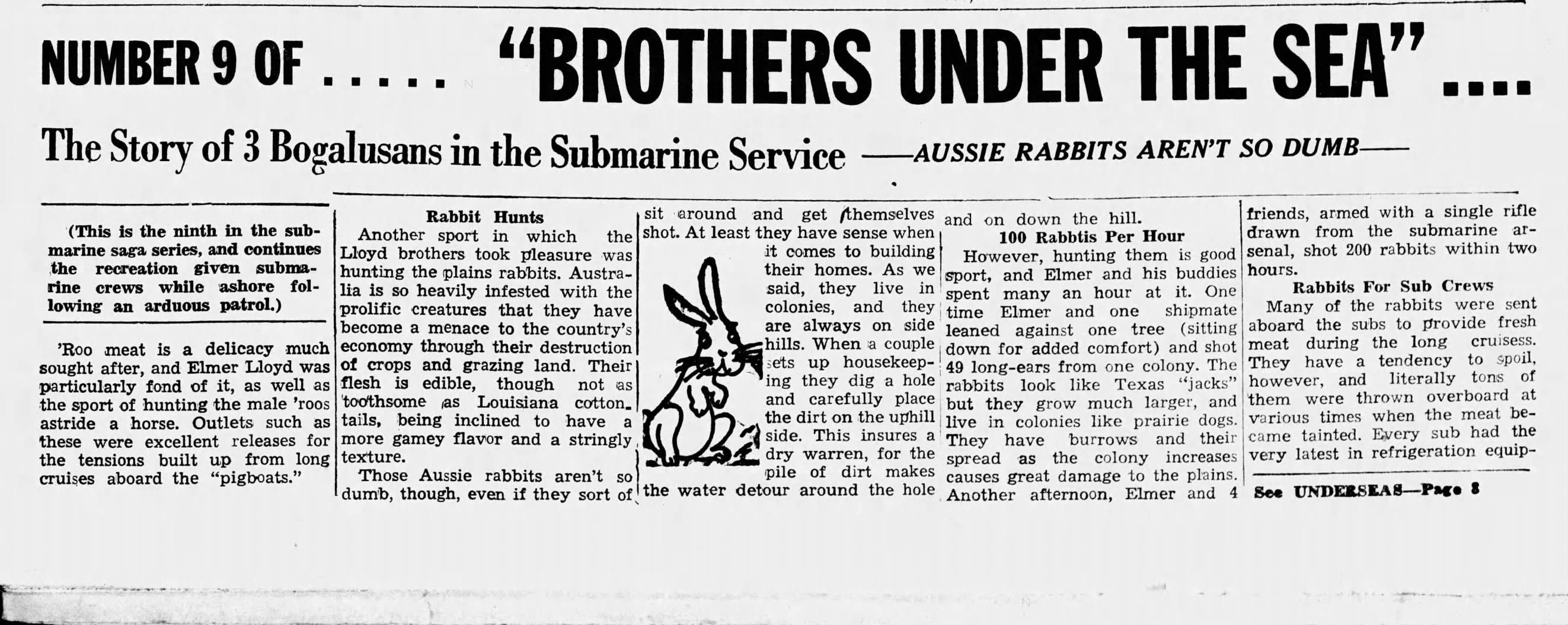
But in newspapers around the country, stories began to appear that gave the public a taste of what the Sub force had been through and what it had accomplished. In Bogalusa, LA, a multi-part series was run, telling the stories of submarine veterans from the area who had served on the USS Ray SS-271.
On June 6, 1946, almost a year after the war had ended, one of these articles appeared. In it were the lyrics to “The Submarine Song,” without attribution or any author listed.

Home from the Depths: The Miraculous Return of Renny Creighton

On June 5, 1944, while Americans were girding themselves for news of what would soon be called D-Day, the little town of Jonesboro, Arkansas, got a headline of its own that must’ve felt like resurrection. There, walking through the front door like a man who’d merely gone to the corner store, came Adolph “Renny” Creighton; presumed dead, but very much alive.
Two years earlier, Renny had been serving aboard the USS Sculpin (SS-191), a battle-hardened submarine with eight war patrols and dozens of enemy ships sent to the deep. But in November 1943, during her ninth patrol near the Caroline Islands, the Sculpin went silent. After a desperate engagement involving depth charges and a surface battle against a Japanese destroyer, she was lost along with the brave Captain John Cromwell, who famously chose to go down with the boat rather than risk enemy capture and compromise Allied operations. Some crewmen survived the ordeal only to suffer as POWs—some dying en route to Japan when their transport was sunk by a sister submarine, the USS Sailfish. A twist of fate, darkly poetic.
Continue reading “Home from the Depths: The Miraculous Return of Renny Creighton”