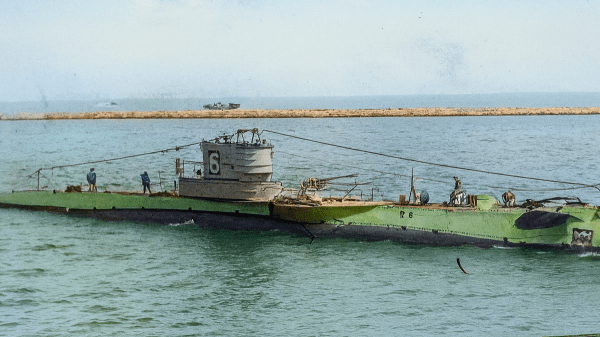
From Harbor Tragedy to a Resilient Legacy: The USS R-6 (SS-83)

San Pedro Harbor, late September 1921. The Pacific Fleet’s new base was a place alive with the restless energy of a Navy in transition. Battleships and destroyers filled the anchorage, while a cluster of small, dark-hulled submarines rocked gently in their moorings beside the big tender USS Camden. The sun had set, but the harbor was far from quiet. Ashore, the city of Los Angeles was swelling into one of the nation’s fastest growing metropolises, and the Navy’s presence was both a symbol of American reach and a reminder of unfinished business after the First World War. For the sailors aboard USS R-6, the night of September 26 began as another routine round of preparations for training exercises. Within hours, however, it would end with their boat lying on the harbor bottom and two of their shipmates dead.
Continue reading “From Harbor Tragedy to a Resilient Legacy: The USS R-6 (SS-83)”

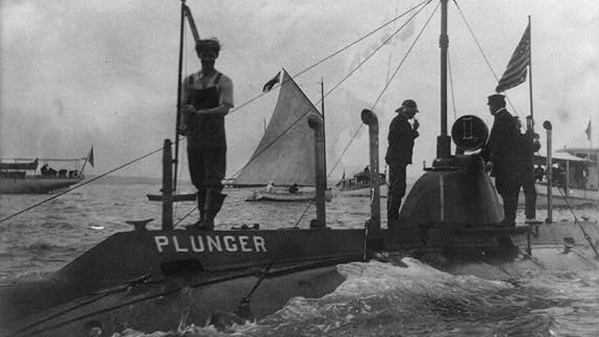
USS Plunger (SS-2): How America’s First Submarine Class Launched the Silent Service

In the fall of 1903, when most of the world still thought of submarines as either science fiction or sideshow curiosities, the United States Navy quietly brought one into active service. The boat was called USS Plunger, officially Submarine Torpedo Boat Number Two. She was a stubby little creature, barely sixty-four feet long, powered by a gasoline engine that filled her insides with the stench of fumes, and armed with a single torpedo tube that, on paper at least, made her a weapon of war. On September 19, 1903, she was commissioned at New Suffolk, New York. That date puts her right at the beginning of America’s real experiment with undersea craft, and though Plunger would never fire a shot in anger, she would change the trajectory of naval warfare.

Continue reading “USS Plunger (SS-2): How America’s First Submarine Class Launched the Silent Service”

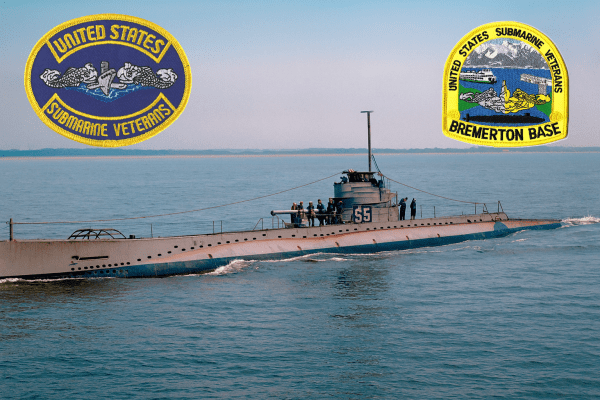
USS S-5: The Sunken Submarine That Cheated Death off Cape May


In the summer of 1920, the United States Navy had a new submarine to boast about. USS S-5, hull number SS-110, was one of the latest S-class boats, built not just for coastal defense but for true blue-water operations. She measured 231 feet in length, with a beam just shy of 22 feet, displacing 876 tons on the surface and 1,092 tons when submerged. She carried four 21-inch bow torpedo tubes, a 4-inch deck gun, and a crew of thirty-eight men. The S-class boats represented a new era of American submarine design, conceived during World War I and forming the backbone of the Navy’s undersea force through the 1920s. But with innovation came problems, and the S-5 carried a flaw that would prove decisive. Her main air induction valve, vital for sealing the submarine when diving, was notoriously hard to close.

Continue reading “USS S-5: The Sunken Submarine That Cheated Death off Cape May”

Blog at WordPress.com.

Up ↑