The Silent Prowler and the Submarine School Graduate: USS Cod’s War Patrols 2 and 3 through the Eyes of Calvin Baker

When the USS Cod (SS-224) first slipped into the Pacific war, she was one of dozens of Gato-class submarines sliding down the ways in 1943. The war was still young for the Silent Service, but it had already turned into a proving ground for men and machines. By the time Cod was commissioned on June 21, 1943, under Commander James C. Dempsey, the submarine force had become America’s sharpest spear against Japan’s supply lines. Cod herself was a sleek, steel predator, long, lean, and packed with 24 torpedoes, a 5-inch deck gun, and the engines and batteries to make her a silent prowler beneath the seas. She was part of the answer to Japan’s sprawling empire: cut the lifelines, sink the ships, starve the war machine. But ships are only steel and rivets until men step aboard to bring them to life.
Continue reading “The Silent Prowler and the Submarine School Graduate: USS Cod’s War Patrols 2 and 3 through the Eyes of Calvin Baker”

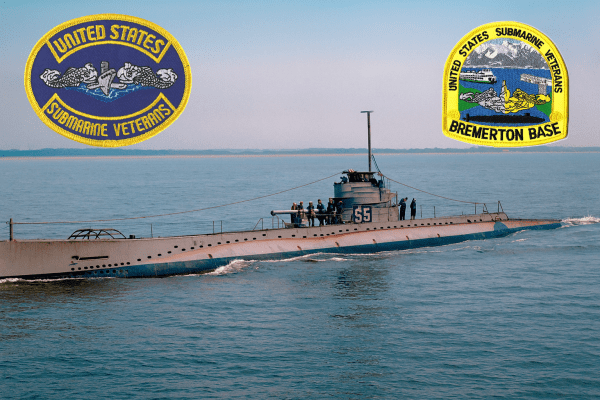
USS S-5: The Sunken Submarine That Cheated Death off Cape May


In the summer of 1920, the United States Navy had a new submarine to boast about. USS S-5, hull number SS-110, was one of the latest S-class boats, built not just for coastal defense but for true blue-water operations. She measured 231 feet in length, with a beam just shy of 22 feet, displacing 876 tons on the surface and 1,092 tons when submerged. She carried four 21-inch bow torpedo tubes, a 4-inch deck gun, and a crew of thirty-eight men. The S-class boats represented a new era of American submarine design, conceived during World War I and forming the backbone of the Navy’s undersea force through the 1920s. But with innovation came problems, and the S-5 carried a flaw that would prove decisive. Her main air induction valve, vital for sealing the submarine when diving, was notoriously hard to close.

Continue reading “USS S-5: The Sunken Submarine That Cheated Death off Cape May”

USS F-4 Rises: The Navy’s First Great Submarine Recovery

On March 25, 1915, the submarine USS F-4 slipped beneath the waters off Honolulu, Hawaii, for what was supposed to be a routine training dive. She never came back. When she failed to surface, anxiety quickly turned to dread. The Navy had lost its first submarine at sea with all hands aboard. The disaster was not only a human tragedy, it was also a crisis for a service that was still experimenting with the strange new world of undersea warfare. Submarines were only beginning to find their place in naval strategy, and to lose one so suddenly and completely raised difficult questions about their safety, their reliability, and their future.

Continue reading “USS F-4 Rises: The Navy’s First Great Submarine Recovery”

Blog at WordPress.com.

Up ↑