In honor of Navy’s Liberty Bowl Win…
The Springfield Daily Republican, January 4, 1944
Cutter, Chapple, Navy Stars Now Starring Underseas
By BOB CONSIDINE
New York, Jan. 3—(INS)—Some of the Naval Academy’s best athletes have gone into the navy’s silent service—submarine work. They couldn’t ask for or receive tougher duty. The submarine boys regard publicity in the same light as they regard enemy depth charges. They want neither.
On Cutter’s Kick
Naturally a deep secrecy enshrouds all of our ship movements, but the movements of our subs and personnel are doubly protected. The reasons are obvious. A sub working without the benefit of the surprise element on its side is a sub doomed to an early end. But it is permissible to state that two of the Navy’s best athletes—Comdr. Wreford (“Moon”) Chapple and Lieut.-Comdr. Slade Cutter—are on active duty.
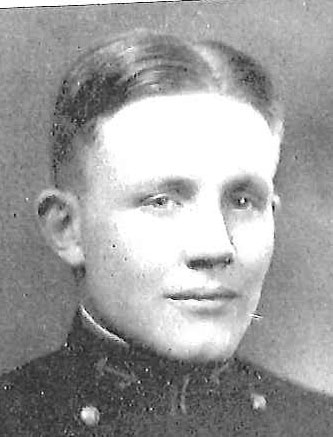
Chapple was one of the best all-around athletes the academy ever had. He starred in the ’20s in football, boxing and track. Cutter was an All-America tackle for Navy on the team that beat the Army in the mud of Franklin field, 3-0, back in the mid-’30s. The Tars’ win broke a long Army domination. Cutter booted the difficult field goal that was the day’s only score. Slade also was heavyweight boxing champ of the academy and had a fine intercollegiate career as a boxer.
You don’t read much about them, or any other submarine man, because they are in a service wherein the impossible is regarded as too commonplace to bring to the attention of the public relations officer. But they and the other men of the deep are doing an incomparable job. Without fanfare the navy’s submarines have destroyed a third of Japan’s merchant marine. They have helped make possible the recapture of many islands in the South Pacific, by cutting the enemy’s ability to supply and reinforce his island garrisons.
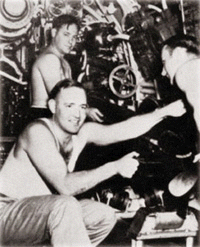
Munitions-carrying American subs helped the Americans and Filipinos hold out as long as they did on Bataan. The easy informality of the sports field abounds in United States submarines. The bench-warmer, so to speak, can say what he pleases to the star, or captain. Fewer “sirs” are heard per cubic foot in a sub than anywhere else in the armed world, but the discipline is first rate. The danger which surrounds a sub is impartial to captain and lowest class torpedoman alike. It makes brothers of them.
Submarine Stories
We’ve got subs so far out in the Pacific that they’ve taken pictures of Fujiyama and have sat in on a Japanese horse race in which, presumably, the thrusting form players were betrayed. But some of them get in trouble.
There was one we heard about not long ago which had a ship’s cook who was renowned for his bread-making. He was as proud of his bread as the boys in his pig boat were. He kneaded it with a flourish each day, during an infernally long mission westward, and the baking bread’s sweet perfume wafted through the big iron cigar each afternoon to bolster morale.
Well, this sub got in an awful jam. It had knocked off its share of Japanese shipping within sight of the Nips’ coastline, but it was spotted. Jap destroyers began to drop their ash-cans on it. The depth charges blew out the lights in the sub and rang its shell as if 10,000 hammers were beating on it.
There was a terrible pause after a while and the men stood there tensely, waiting for the next can to drop. But in the darkness there came an indignant clanging of pots and pans. The cook was sore. He scuffled out of his galley and roared, “———, captain, do something! My dough is sinking!”
Another United States submarine, caught in a tough spot, was trying to harvest its deck-bound crew in time to submerge. It was under heavy fire from several sides. The last two boys finally jumped inside and slammed the hatch. One wiped his brow and said, “Golly, I sure feel sorry for those guys in the army.”
“What the hell do you mean?” his sweating pal demanded.
“Well, in the army the other guy shoots at you,” he said. “Here, they only shoot at your ship.”

 Patrol Reports
Leave a comment