
The night air in the Formosa Strait felt like a lid pressed down on the sea. Clouds hung so low they nearly brushed the masthead light of anything tall enough to carry one. Rain drifted in and out as if the sky could not decide whether to spit or swallow. The water was rough, the wind stiff, and visibility sat so close to zero that even the best eyes in the Pacific Fleet would have been useless. It was the kind of place where battleships felt safe and submarines felt blind. The Japanese believed the strait offered shelter, with shallow water to limit diving, strong currents to confuse sonar, and the comfort of home waters after the chaos of Leyte Gulf. They had every reason to believe the night belonged to them.
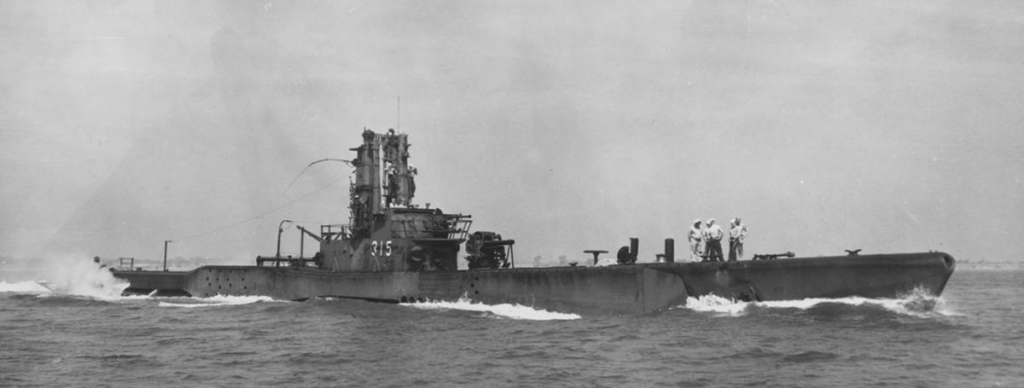
They were wrong. At 0020 on November 21, 1944 the Balao class submarine USS Sealion SS 315 caught a radar contact so distant that Lieutenant Commander Eli Thomas Reich almost dismissed it. The range registered forty four thousand yards, farther than anyone expected a valid return. Some aboard wondered whether the radar beam was echoing off the distant Xueshan Range in Formosa. But Reich trusted his instincts, and more importantly, he trusted his radar gang. He ordered flank speed on the surface. The chase began across one of the most dangerous stretches of ocean a submarine could choose.
Sealion pushed forward through waves that came over the bridge like buckets tossed from the sky. Reich and quartermaster Floyd Hagen stood on the bridge, drenched and nearly blind. Below them, the men in the conning tower bent over their instruments, steady hands guiding the Torpedo Data Computer and plotting radar tracks that moved in steady formation. What that radar showed was a prize few American submariners ever dreamed of. It was Kurita’s returning Strike Force. First came the destroyers, then the battleships Nagato, Yamato, and Kongō. The Kongō was a fast battlewagon with tall pagoda masts that made her unmistakable on radar. She had survived earlier battles. She would not survive this one.
There was weight behind Reich’s decision to attack, a kind of gravity that did not belong to tactics alone. Reich had been the chief engineer on the first Sealion, the one destroyed in Manila Bay in December 1941. Japanese bombs struck her during the opening days of the war. The engine room crew never made it out. Reich escaped, carried on with the war, and now commanded the second boat to bear the name. The memory of the first Sealion was always with him, and on this patrol it became something close to ritual. Each torpedo in his forward tubes bore the name of a man who died aboard the first Sealion. He did not discuss it openly. He never had to. Every man aboard understood the meaning of this patrol. They called it payback.
By 0200 Sealion was running fast, threading between destroyers she could not see. Radar plotted the escorts, but the men on the bridge could barely make out their own deck. The blackness swallowed everything. Bryant, the Executive Officer, grew increasingly nervous as Reich maneuvered closer and closer to the enemy line. Bryant later admitted that he had tried to dissuade Reich from closing to such a dangerous firing position on the surface. Reich brushed him off. He wanted to get within thirty five hundred yards. Stop any farther out and the torpedoes risked glancing blows or premature detonations in the heavy seas. Push any closer and a destroyer might spot them by accident. Reich chose the middle path, which felt not like a compromise but a razor’s edge.
At 0245 Sealion succeeded in sliding ahead of the Japanese formation. It was a feat of pure nerve. On one side waited battleships large enough to crush a submarine under the wake their screws created. On the other side, destroyers knifed through the dark with lookouts who had no idea an American boat was passing in front of their fleet. Reich ordered the bow doors opened. Men in the forward torpedo room steadied themselves, waiting for numbers from the TDC and the order that would set everything in motion.
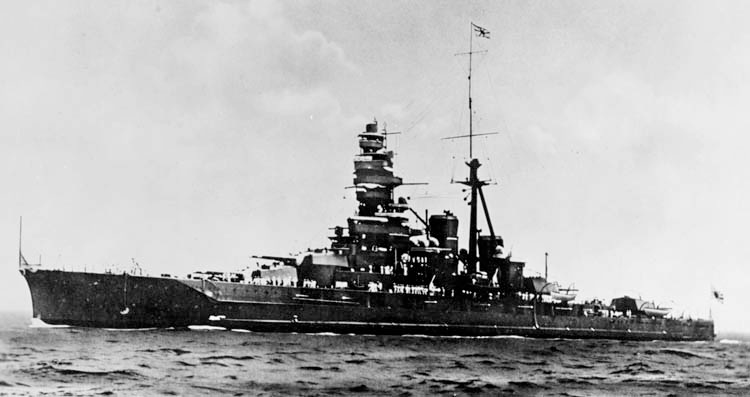
At 0256 Reich fired six bow torpedoes. The target was the second ship in column, identified by its towering structure as the Kongō. The torpedoes ran straight. They carried the names of the men of Sealion I. Three explosions rolled through the sea. Sealion vibrated under the shock. In the forward room, Torpedoman Moose Hornkohl felt the deep thump as a kind of answer from the past. The torpedo depth had been set at eight feet. Reich later regretted that choice, believing it too shallow for a battleship of that size. Even so, two of those torpedoes tore into Kongō’s port side, flooding boiler rooms six and eight, buckling internal structures, and compromising propulsion.
Reich swung the boat hard to starboard. The stern tubes came to bear on the third ship in line. At 0259 and thirty seconds he fired three more torpedoes, aimed at Nagato. The torpedoes ran on track, but the sea and fate had other plans. One of the stern torpedoes missed the battleship entirely and struck the destroyer Urakaze. The detonation was instant and absolute. Sealion’s bridge and conning tower lit up in a burst so bright that for a moment the submarine seemed suspended in daylight. Inside the boat the men shouted and clapped the nearest shoulder, not out of cruelty but out of the raw release that follows the knowledge that you have survived a moment designed to kill you. Urakaze was gone with all hands, including the commander of Destroyer Division Seventeen.
On Kongō the situation grew worse by the minute. The initial shock knocked men from their feet. The battleship lost steam pressure and water poured through the ruptured compartments. The port list increased steadily. Pumping water became nearly impossible as the storm swells forced even more into the damaged hull. Still, the great ship pushed forward at sixteen knots. Admiral Kurita ordered Kongō and her escort to turn toward Keelung in hopes of reaching safety. It was a fool’s hope, but Kurita was far from the scene. The men aboard Kongō knew the truth long before the list reached a critical angle.
Captain Shimazaki saw that his damage control parties did not stand a chance. He initially ordered them to attempt patching from outside but rescinded the order when he saw the height of the waves. Sending men overboard would have been a death sentence. He made one of the most humane decisions of the night by refusing to waste lives that could not possibly save the ship.
Meanwhile Sealion fought the seas as hard as she had fought the enemy. Reich realized he had crippled Kongō but had not delivered the final blow. The shallow settings had done their work but not enough. He ordered the reload. Hornkohl and the torpedo gang heaved three thousand pound Mark 18s into position while the submarine rolled heavily in the growing swell. Chains clinked. Straining men shouted over the sound of engines and water hammering the hull. It was a job that normally required steady footing. That night there was none.
Reich pushed the submarine to twenty five percent overload to keep pace with the retreating battleship. Water poured down the induction shaft. Men in the engine rooms monitored dials that whispered warnings. The boat shuddered under the strain, but Sealion held together. Radar showed that Kongō was slowing. At 0520 the pip began to shrink. There was only one explanation. The battleship was going down.
On Kongō the list reached sixty degrees. Captain Shimazaki gave the order to abandon ship at 0522. Some men were swept into the sea before they reached the rail. Others slid across the canted deck. The survivors plunged into dark water churned by debris and the slow death roll of a ship that had no more strength to offer. Two minutes later the forward magazine erupted. The explosion rose into the sky like a pillar of fire. Sealion took the shock front head on. Loose items flew across the control room. Men braced themselves against the sudden jolt. For several seconds no one spoke. The night went white, then fell black again. When the darkness returned, Kongō was gone.
Reich turned his thoughts to Nagato and Yamato, already stretching their legs at nineteen knots. Sealion could not keep up. The giants slipped into the distance. Reich did not chase them. He had already carved his mark into naval history.
The following day he returned to look for survivors or wreckage, but Nell bombers found him. During the crash dive that followed, Sealion broached, momentarily exposing herself to attack. Bombs fell close enough to rattle nerves, but fate once again kept the boat alive.
Confirmation came through intelligence. Admiral Charles Lockwood informed Reich that radio intercepts left no doubt. Kongō was finished, Urakaze destroyed, and the tally credited to Sealion. More than thirty two thousand tons of enemy shipping had fallen to a single submarine in a single night. No other American boat had ever sunk a battleship in combat. None would ever do so again.
Reich received his third Navy Cross. The crew received the Presidential Unit Citation for extraordinary heroism. Sealion finished the war with a record that stood apart from her peers. She survived into the postwar years and eventually met her end as a target off Newport in 1978. The ocean closed over her as it had over Kongō, though for very different reasons.
Kongō’s wreck has never been located. She lies somewhere on the floor of the Taiwan Strait, broken by the magazine blast that completed what Sealion began. Her grave remains unknown. Her story does not. It is tied forever to the November night when an American submarine rose through wind and rain and fog to challenge a formation of steel giants.
The sinking of Kongō was more than a successful attack. It was proof of what a determined crew can accomplish when instinct, courage, and machinery come together in the dark. Reich took a risk that bordered on insanity. He maneuvered a surfaced submarine through a Japanese formation in conditions that blinded everyone involved. He trusted his radar. He trusted his TDC. He trusted the men who carried out his orders with a steadiness that would have made any submarine skipper proud. The sinking of Urakaze happened in a flash of light and steel. The sinking of Kongō took hours, yet the end was never in doubt after those first torpedoes struck home.
In the long history of submarine warfare, only one American boat ever sent a battleship to the bottom. Only one paid back the loss of her own predecessor with such precision and fury. Only one carved a victory that combined tactical daring with personal vengeance. Sealion did all of that on a night when the sea tried to hide the enemy and hide the danger. She found both.
Reich’s crew brought the names of the dead from 1941 back into the fight. They wrote those names on torpedoes, sent them into the hull of a steel giant, and watched the sky ignite when the battle finally ended. The ocean remembers in its own way, but the story remains because men told it, wrote it down, and refused to let it fade.
That is the legacy of USS Sealion. It was earned in darkness, paid for in courage, and sealed forever in the brilliant fire that marked the end of Kongō.
Sources
- Blair, Clay. Silent Victory: The U.S. Submarine War Against Japan. Naval Institute Press, 1975.
- Roscoe, Theodore. United States Submarine Operations in World War II. Naval Institute Press, 1949.
- Polmar, Norman, and K.J. Moore. Cold War Submarines: The Design and Construction of U.S. and Soviet Submarines. Brassey’s, 2003.
(Contains background on Balao-class development and design lineage.) - Cressman, Robert J. The Official Chronology of the U.S. Navy in World War II. Naval Institute Press, 2000.
(Includes the November 21, 1944 Sealion action report.) - Joint Army-Navy Assessment Committee (JANAC). Japanese Naval and Merchant Shipping Losses During World War II by All Causes. U.S. Government Printing Office, 1947.
(Confirms tonnage and loss attribution for Kongō and Urakaze.) - Reich, Eli T., LTCDR, USN. USS Sealion (SS-315) Patrol Reports, Fifth War Patrol, November 1944.
(Primary source, includes firing solutions, tactical notes, and post-attack evaluations.) - Combined Fleet. “Tabular Records of Movement: IJN Battleship Kongō” and “Destroyer Urakaze.”
https://www.combinedfleet.com
 Patrol Reports
Leave a comment