By late August 1944, Japanese supply operations in the Philippines were reduced to a dangerous gamble. With deepwater shipping lanes under constant threat from American submarines, the enemy had turned to small intercoastal tankers to shuttle fuel and oil between island bases. These vessels could slip close to shore where larger warships hesitated to follow, but if they were caught in open water they had little chance of survival.
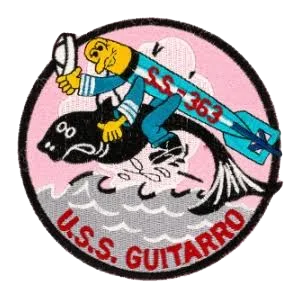
The USS Guitarro, under the command of Enrique D’Hamel Haskins, USN, was patrolling off Cape Calavite when she sighted a formation of three coastal tankers on August 27. They were unescorted, riding high in the water with light drafts that made them difficult targets for torpedoes. The lead vessel was later identified as the Nanshin Maru No. 27. At 1523, Haskins fired two torpedoes, the setup sound, the firing solution good. Yet the shallow draft of the target betrayed the attack. One torpedo passed clean under her bow, the other ran to the end of its course and detonated harmlessly.
The Japanese did not change course. Whether they had failed to notice the attack or believed their immunity held, they kept on toward the shoal waters off Cape Calavite. Haskins, unwilling to let them slip away, kept Guitarro in contact. Hours passed as the submarine trailed at a steady pace, the crew tense and ready for another chance.
By 1929, the light had begun to fade. Thin clouds drifted across the moon, and in the shifting glow the Nanshin Maru No. 27 stood out clearly. The range was 2,850 yards when Haskins ordered the 4-inch deck gun to open fire. The first round smashed into the tanker’s after superstructure and pilot house, starting a fire that quickly lit the scene. The other two tankers sheered away toward the coast, leaving her to face the submarine alone.
Guitarro’s gun crew worked quickly, firing thirty-one rounds and scoring ten solid hits. The tanker’s rudder jammed, sending her into wide circles. At 1,400 yards the 20-millimeter guns opened up, their tracers stitching into the hull. The Japanese crew returned fire with a small rapid-fire gun, striking Guitarro’s bridge, shears, and fairwater four times. Miraculously, no one was hurt.
Haskins pulled back to about 7,000 yards. From there, the tanker’s larger gun, likely a 4.7-inch weapon, lobbed several rounds that splashed close but did no damage. By the time daylight filtered into the periscope view, her end was inevitable. The stern settled deeper, flames running the length of her deck. When last seen, the Nanshin Maru No. 27 was burning fiercely, bow lifting as the stern slid under.
This was not just a single ship destroyed. The Nanshin Maru No. 27 was part of a fragile lifeline that kept Japanese garrisons in the Philippines supplied with the fuel they needed to run vehicles, generate power, and feed what remained of the Imperial Navy’s local operations. In the broader campaign, American submarines were systematically severing these lines, targeting both large merchantmen and small coastal craft alike. By August 1944, the United States Navy had complete dominance in the central and western Pacific. Japanese ships could move only at great risk, and every loss further crippled their ability to fight.
The Luzon–Mindoro corridor, where the Guitarro was operating, was a key choke point. Traffic from the southern resource areas passed through these waters before heading to Manila and other northern ports. Submarines on patrol there could inflict disproportionate damage by striking ships that the Japanese could neither replace nor protect. For Haskins and his crew, the sinking of Nanshin Maru No. 27 was a textbook example of persistence paying off. It began with a failed torpedo strike and ended with the thunder of the deck gun and the sight of another enemy ship gone. Small as she was, her loss tightened the noose on Japan’s already failing supply chain, hastening the day when the Philippines would fall back into Allied hands.
 Patrol Reports
Leave a comment