In the waning days of 1943, Warner Bros. released Destination Tokyo, a submarine adventure film headlined by Cary Grant and John Garfield. Packed with tension and torpedoes, the story followed the fictional USS Copperfin on a secret mission into the heart of enemy territory, gathering weather data to support the Doolittle Raid. The film thrilled audiences and stirred patriotism, delivering a clear message: America’s submariners were silent, bold, and brave.
What audiences did not know, and could not have known, was how eerily close to real life some of that fiction was. Not in exact detail. There was no actual submarine that crept into Tokyo Bay ahead of Jimmy Doolittle’s raid. But there was a real boat that prowled those waters, one that had already made a name for itself with daring patrols. Her name was USS Swordfish (SS-193). Among her crew was a young man from El Dorado Springs, Missouri, named Charles E. Hall.
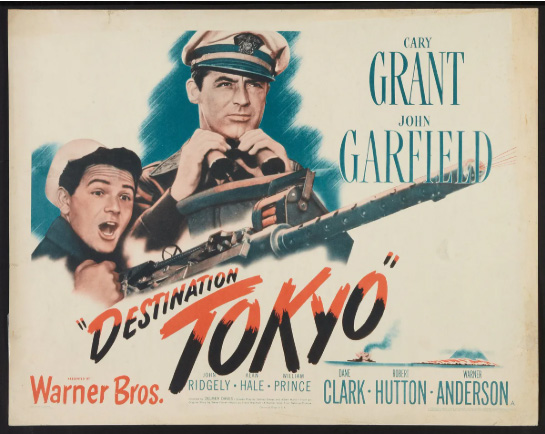
Destination Tokyo was the brainchild of screenwriter Steve Fisher, himself a former submariner. Directed by Delmer Daves and filmed in 1943 with the cooperation of the U.S. Navy, it was wartime cinema with a purpose. The submarine USS Copperfin, commanded by Grant’s cool-headed Captain Cassidy, leaves Mare Island and slips past Japanese defenses to deliver a covert landing party near Tokyo Bay. The crew survives air attacks, performs an emergency appendectomy, battles guilt and doubt, and returns to base with honor intact.
The Navy saw the value in it. Young men across America did, too. Seventeen-year-old Tony Curtis, inspired by the film, forged his mother’s signature and joined the Navy. He later served aboard USS Proteus.
What the film delivered in suspense and spirit, it matched with sincerity. Many scenes were based on actual submarine events, including a harrowing medical operation drawn from the USS Seadragon. The submarine model used in the film included technical details borrowed from multiple classes, intentionally scrambled to avoid revealing too much to enemy intelligence. The submarine in the movie was fiction. The men it represented were real.
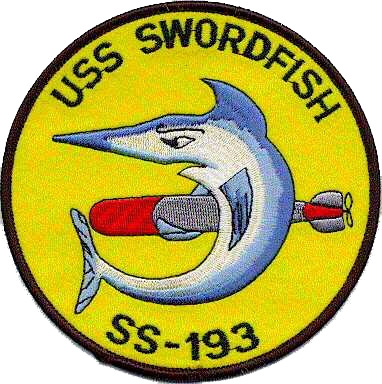
USS Swordfish was already making history before the cameras rolled on Destination Tokyo. Commissioned in July 1939, she was among the first American submarines to strike back after Pearl Harbor. In December 1941, she sank the Japanese cargo ship Atsutasan Maru. It was the first confirmed kill by a U.S. submarine in World War II.
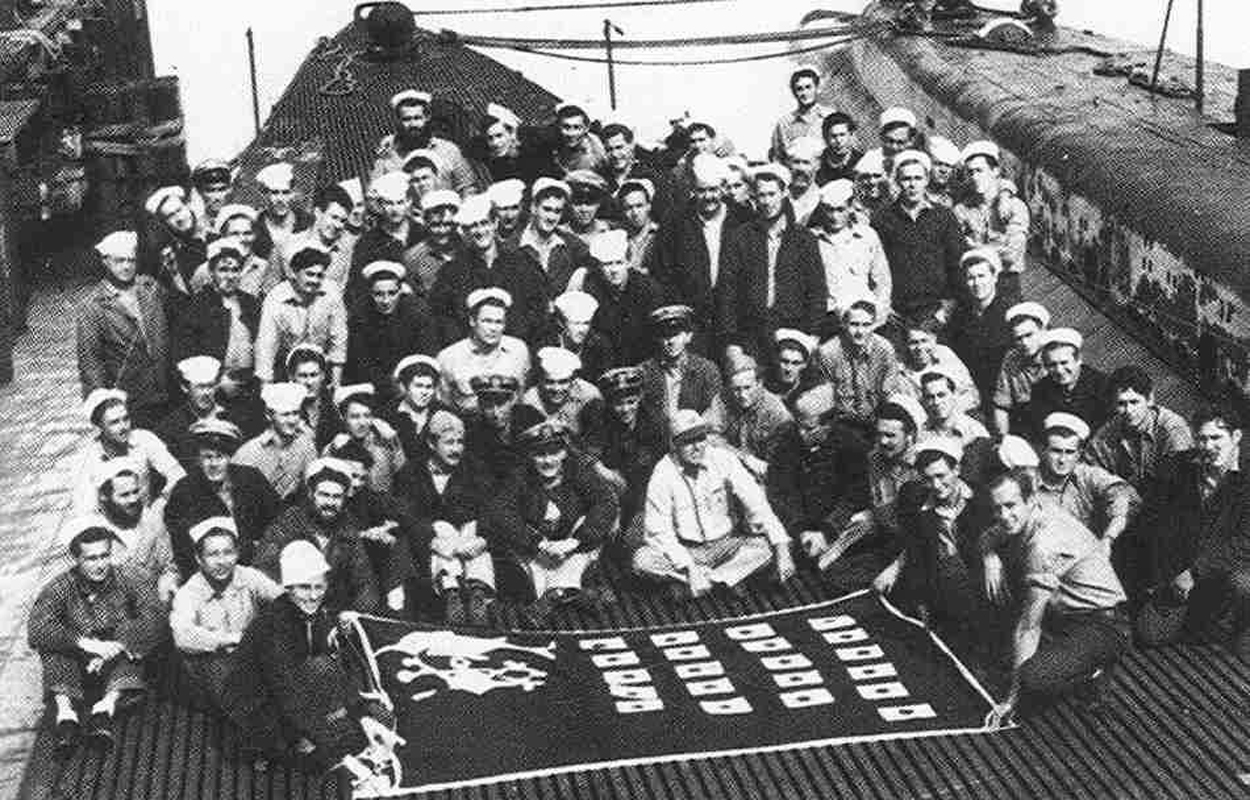
She kept going. Patrol after patrol, she slipped into dangerous waters, delivered supplies, evacuated Philippine officials including President Manuel Quezon, and hit enemy convoys from the Celebes Sea to the Solomon Islands. She landed punches that left the Japanese reeling, even as she took damage of her own.
Her tenth war patrol took her into Tokyo Bay itself in January 1944. She sank three enemy ships in less than two weeks and escaped heavy depth charge attacks. She endured fires and equipment failures, and still got back home. Her eleventh and twelfth patrols added more names to her kill list, including a Japanese destroyer and a 4800-ton cargo vessel.
By the end of 1944, Swordfish had earned a reputation as one of the most battle-hardened subs in the Pacific. She had twelve patrols behind her, twenty-one ships to her name, and eight battle stars on her record.
Among the sailors aboard Swordfish was Electrician’s Mate Second Class Charles E. Hall. He was, as his hometown newspaper put it, “an El Dorado boy.” The July 27, 1944 issue of the El Dorado Springs Sun carried the proud news: Hall was a proud member of the very crew on which the film had been based. The article mentioned Swordfish’s many exploits and listed her by name. It spoke of Hall’s calm and bravery under fire. It was not just a service member’s story. It was a neighbor’s.

El Dorado was a small town. When someone served, the whole town watched. When a local boy rode beneath the waves on a steel-hulled shadow in the Pacific, they followed every scrap of news. The newspaper coverage had a tone of admiration mixed with hometown awe. For the people of El Dorado, Charles Hall might as well have been on the screen beside Cary Grant.
They had no way of knowing that the applause would soon give way to silence.
On December 22, 1944, Swordfish departed Pearl Harbor for her thirteenth war patrol. Her orders were to conduct reconnaissance near Okinawa in preparation for the upcoming invasion. She topped off at Midway and acknowledged orders on January 3, 1945. Then, nothing.
Submarine USS Kete reported a radar contact on January 12 and later that day heard depth charges. Whether Swordfish was the target remains uncertain. Japanese records do not list an antisubmarine attack that matches. But there were mines. Thousands of them, laid to protect the waters around Okinawa.
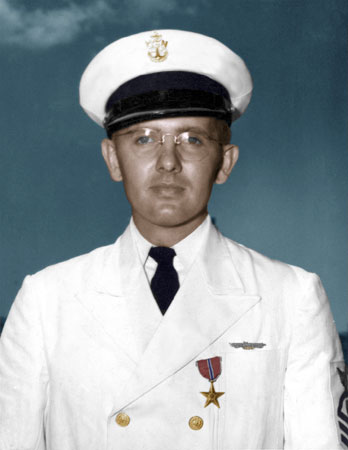
Swordfish never returned. She was declared lost with all hands. Among the dead: Charles E. Hall of El Dorado.
The submarine that had braved Tokyo Bay and escaped destruction so many times met her end without witness. No survivors. No wreckage. No last messages home.
By the time news reached Texas, Destination Tokyo had already played in theaters. Some residents may have watched it with pride, perhaps imagining Charles Hall beneath the waves, just like the men on screen. Others may have seen it after his loss and felt only sorrow. The movie ended with Copperfin returning home. Swordfish did not.
For a town like El Dorado, the grief was personal. The glamour of Hollywood collided with the finality of war. What had seemed like a stirring tribute to submarine crews now felt like a cruel echo of something precious and gone.
USS Swordfish received the Navy Unit Commendation and a place of honor in submarine history. She fought with distinction. She carried presidents, rescued allies, and struck enemy ships from the shadows. She served with honor, and she was lost with silence.
A memorial to Swordfish stands in St. Paul, Minnesota. It lists her name and the names of her crew. For those who know where to look, it is a place of reflection.
But in El Dorado Springs, the memory lives elsewhere. In yellowing newspaper pages. In family stories. In the space left behind when a sailor does not come home. Charles E. Hall served aboard a submarine that sailed into legend, and for one Missouri town, that legend is marked with both pride and pain.
Hollywood gave us Captain Cassidy and the Copperfin. Reality gave us Swordfish and Charles Hall. One story ended with cheers. The other with tears. But both spoke of courage. Both mattered. And both deserve to be remembered.
 Patrol Reports
Leave a comment