Out in the western Pacific on July 14, 1945, the crew of USS Gabilan SS-252, wasn’t dodging torpedoes or depth charges. They weren’t firing off salvos or hunting enemy shipping lanes. They were quietly holding their station as part of a mission every bit as important—plane guarding. Their job was to watch the skies for B-29s, those massive bombers roaring toward Japan, and be ready to rescue any airman forced to ditch at sea. It wasn’t as dramatic as sinking a convoy, but if you were the one floating in a life raft, you’d be glad someone like Gabilan was out there.
And then, out of nowhere, fire broke out inside the sub.
Not a fire from the enemy. Not a bomb. It came from deep inside Gabilan herself. At 2:21 in the morning, a crewman spotted trouble in the engine room. One of the main generators—Number Two—was sparking and smoking. Worse still, it was under load, pulling heavy electrical current. The team moved fast. They shut it down and opened it up. What they found was the kind of problem that keeps submariners awake at night.
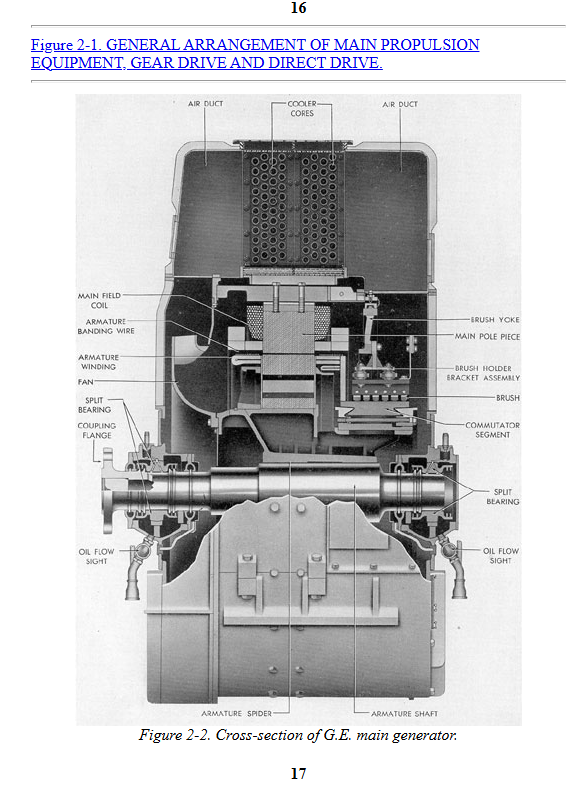
The negative brushes had burned up. Metal tips had melted clean off. The insulation around the commutator was starting to fail. This wasn’t some minor electrical hiccup. It was the kind of failure that, left unchecked, could shut down vital systems. And out here, hundreds of miles from a friendly port, a power failure wasn’t just an inconvenience. It could be deadly.
The crew didn’t panic. They got to work. The problem, they figured, came from bad contact between the brushes and the copper they were supposed to feed. Too much resistance had built up, which caused one or more brushes to overheat. That heat spread fast, pushing the rest into failure. Some brushes had loose rivets. Others were discolored, swollen, or stuck in their holders. They pulled the damaged parts, cleaned the commutator, and inspected everything they could reach.
Let’s be honest—working on a generator in a submarine isn’t like swapping out a car battery in your garage. You’re at sea, inside a machine packed tighter than a sardine can, with the pressure of the ocean all around you and the weight of your mission bearing down. There’s no shore leave or spare parts depot just down the street. If something breaks, you fix it with what you’ve got, and you fix it right now.
So they did. The crew ran the generator with no load to wear the new brushes in, then gradually tested it under higher and higher loads. Twelve hours at 1000 amps. Twenty-four more at 1500. It held steady. No sparks. No smoke. Just a working generator and a sigh of relief.
Submarine warfare has always been about more than enemy ships and planes. The ocean itself wants to kill you. Saltwater corrodes. Batteries fail. Compressors rupture. And sometimes, the very systems meant to keep you alive are the ones that try to do you in. There’s no room for error, no second chances. That’s the brutal truth under the waves.
But the mission didn’t stop. Gabilan stayed on station. They even made contact with another U.S. sub that night, trading recognition signals with what they believed was the Aspro. Business as usual. Or at least as close as it gets when your life depends on a thousand things working perfectly, and any one of them going wrong could spell disaster.
And yet, as bad as the fire in the generator was, it wasn’t the last threat Gabilan would face. Just a few days later, the submarine would find itself under attack again. But this time, it wouldn’t be the Japanese. It would be friendly forces. American weapons. A near miss that almost ended her war.
Because sometimes, the most dangerous thing in the ocean isn’t the enemy. It’s everything else.
National Archives and Records Administration, War Patrol Report of USS Gabilan (SS-252), July 1945, Record Group 38: Records of the Office of the Chief of Naval Operations, Entry P 118, Box 1516, Item 74816200, page 25. Available online: https://catalog.archives.gov/id/74816200?objectPage=25 (accessed July 14, 2025). Narrative by David Ray Bowman FTB1(SS) 07.14.2025
United States Bureau of Naval Personnel. Submarine Electrical Installations. NavPers 16162. Produced for ComSubLant by Standards and Curriculum Division, Training, Bureau of Naval Personnel. June 1946. Reprinted by Periscope Film LLC, 2008.
ISBN: 978-1-935327-20-2
URL: www.PeriscopeFilm.com
 Patrol Reports
Leave a comment