It started with a newspaper clipping. A yellowed scrap from the Hope Pioneer, dated July 8, 1920. One of those curious little stories buried deep inside the paper, just above the church picnic announcements and well below the latest grain prices. It claimed that the Irish revolutionaries, in a bold move that sounded half like a punchline and half like a legend, had once considered buying a submarine. Not just any submarine. One built right here in America. The tale went that the whole enterprise fizzled when the boat was struck by a coal barge in Long Island Sound and sank during its trial run. Just like that, the dream went under.
Or… did it?

Hope, North Dakota · Thursday, July 08, 1920
Now, when you read something like that, your first instinct is to dismiss it. A submarine for Irish rebels? In 1920, that sounds more like a barstool story than anything real. But the thing is, it’s not entirely fiction. There was a submarine. And there were Irish revolutionaries involved. And that dream of sticking it to the British Empire from below the waves? It was very, very real.
The man behind the submarine was John Philip Holland, born in 1842 on the windswept west coast of Ireland. Poor eyesight kept him off the ships and out of the shipyards, so he spent two decades in the classroom, teaching math to bored kids while quietly sketching out impossible machines in his free time. One of those machines was a submarine. When he finally made it to America in 1873, he brought the dream with him. It took a busted leg in a Boston snowstorm and a whole lot of downtime to finally push him back to those dusty plans he’d left in a trunk.
Holland wasn’t the first to dream of an undersea vessel, but he was the first to build one that worked. Still, the U.S. Navy had no interest in his ideas. They’d been burned by earlier failures and weren’t ready to trust a soft-spoken Irish schoolteacher with dreams of underwater warfare. But there were others who were listening.
The Fenian Brotherhood was a secretive group of Irish nationalists based in the U.S., the American wing of the Irish Republican Brotherhood. These weren’t weekend activists. They were veterans of the Union Army, political agitators, and underground operators who wanted to take the fight to the British crown. What they lacked in official recognition, they made up for with ambition. When they met Holland, they saw something they could use. Holland, in turn, saw a way to get his submarine out of the sketchbook and into the water.
With money from the Fenian Skirmishing Fund, Holland built his first successful one-man submarine in the late 1870s and proved it could dive and operate under the surface. He even stayed submerged for 24 hours in the Passaic River just to prove the thing worked. That test nearly broke him, but it impressed the Brotherhood enough to fund a bigger and more dangerous version. That boat would become known to history as the Fenian Ram.
Built with secrecy and no small amount of tension, the Ram was a sleek 30-foot underwater projectile powered by gasoline and designed to launch pneumatic torpedoes. Holland proved it worked, diving deep and firing underwater projectiles in tests off Long Island Sound. He spooked more than a few fishermen and boaters with surprise surface appearances, and you get the sense he enjoyed every second of it. For a man once confined to dusty classrooms, it must’ve felt like payback.
But while Holland tinkered and tested, his relationship with the Fenians deteriorated. They wanted faster results. He wanted control and more time. In 1882, the Brotherhood had had enough. A group of them forged his signature, marched into the Bayonne shipyard, and stole the Ram along with a prototype. One of the boats sank during the getaway, possibly the incident the Hope Pioneer was trying to recall decades later. The Ram survived and was towed to New Haven, Connecticut.
That’s where it all fell apart. The Fenians had no idea how to operate the thing. They bumbled around the harbor trying to make it work until the harbor master labeled it a menace to navigation and banned it outright. Not knowing what else to do, they hid the sub in a lumber shed by the Mill River, where it gathered dust and legend for more than 40 years.
Holland, meanwhile, walked away. He never saw the Ram again. He told reporters, “Let them rot with it,” and focused on building better subs for the U.S. Navy. He would go on to design the USS Holland, the first commissioned submarine in American naval history. But he died in 1914, disillusioned and sidelined from the company that bore his name.
The Fenian Ram sat forgotten until the 1920s, when it was hauled out, cleaned up, and shown off at Madison Square Garden. Eventually, it made its way to the Paterson Museum in New Jersey, where it remains today, a strange artifact of revolutionary dreams and experimental engineering.
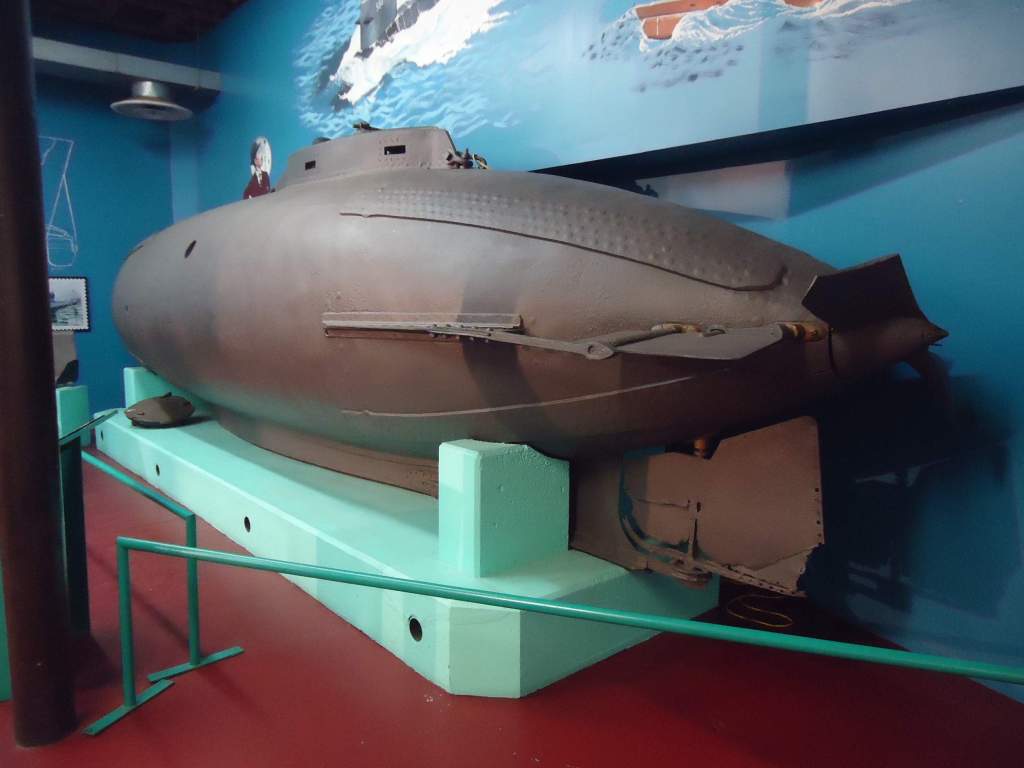
Which brings us back to the original question. Did a coal barge really sink an Irish-funded submarine? There’s no official record. No court inquiry, no deck log, no confirmed report. But something was sunk. The prototype they tried to tow to New Haven? That likely went down in the Sound. Whether it was rammed by a coal barge or simply mishandled and swamped doesn’t really matter. The myth survives because the moment itself was mythic. A handful of Irish rebels, a brilliant but stubborn inventor, and a handmade war machine built in a New Jersey workshop. It sounds like fiction, but it’s all true. Well, most of it.
In the end, it’s hard to say what sank faster—the submarine or the dream. But for a brief moment, they were both real. And even now, tucked away in that museum in Paterson, the Fenian Ram still looks like it’s ready to surface and try again.
 Patrol Reports
Leave a comment