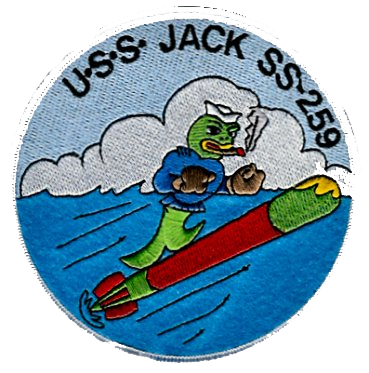
The men aboard USS Jack (SS-259) knew the sea was watching. The South China Sea, under a blanket of storm clouds and shrouded moonlight, offered the perfect cover for a night attack—and the perfect trap if they were spotted.
In was the early hours of June 30, 1944, the boat had been tracking a large enemy convoy spotted on the previous day. Radar and periscope observations had revealed three groups of ships steaming eastward, each guarded by alert Japanese escorts. The crew had worked out the speed and bearing. Now it was time to strike.
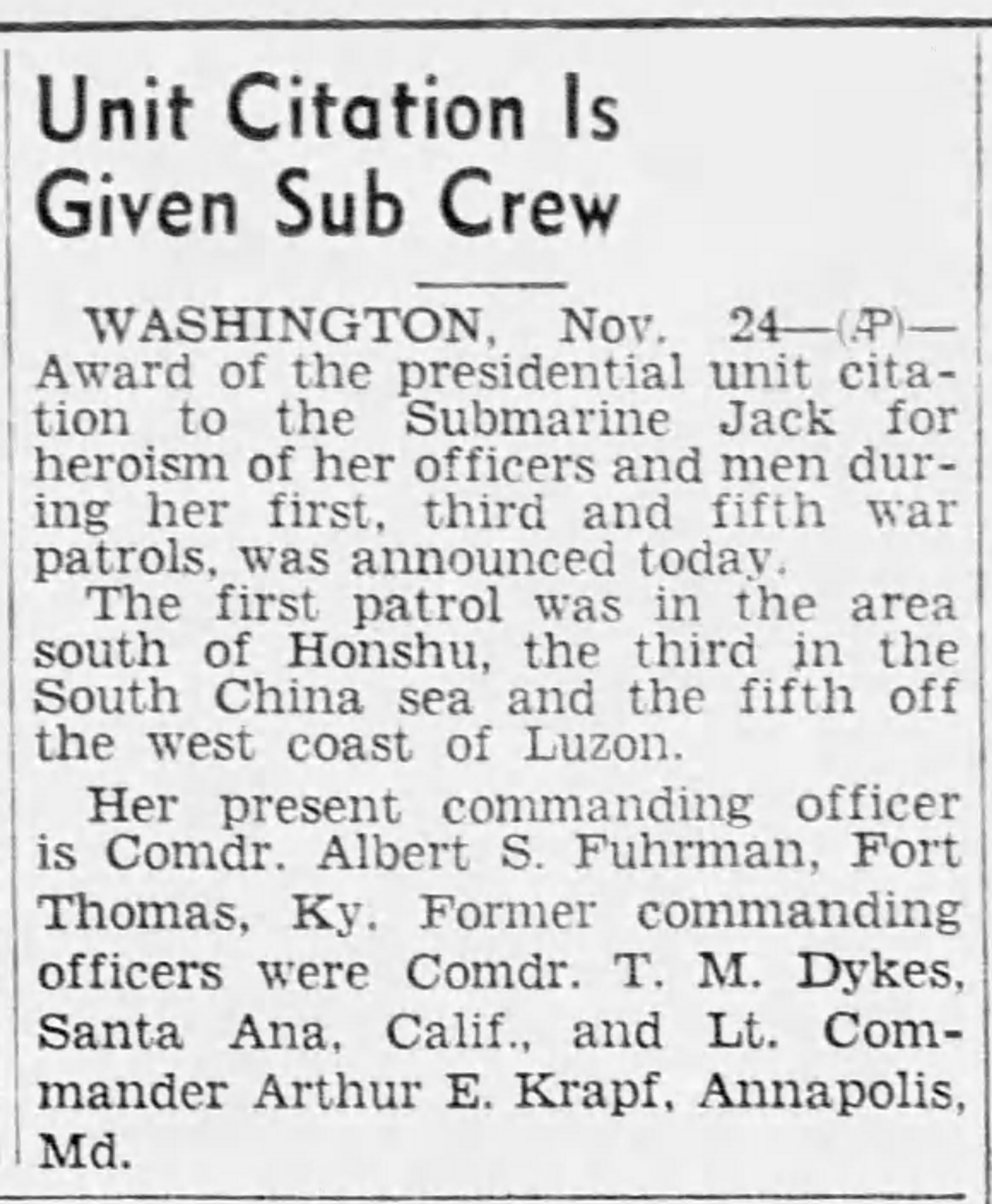
At 0130, under a sky smeared with tropical rainclouds, Jack began to close with the lead group. A lightning flash lit the horizon and revealed one of the targets—a medium cargo vessel. As the crew prepared to fire, a shadow cut across their path. An enemy escort had slipped into position on the starboard bow, only 1500 yards off. In the black water, Jack’s wake glowed like a flare. The bridge crew could see it clearly. The escort probably could too.
With nerves of steel, the skipper ordered a full stop. They let the escort pass. Then, quietly and with calculation, they turned their attention to the second group in the convoy. At 0207, they fired three torpedoes from the bow tubes. A minute later, another three toward a second ship. At 0211, four more from the stern tubes chased a third target as Jack swung around in a hard right turn.

The results were devastating.
Explosions shook the boat and lit the night in a series of concussive bursts. The first detonation was massive, possibly a magazine hit. Within minutes, the convoy fell into disarray. Japanese escorts scattered. One enemy ship began flashing a signal lamp. Another opened fire with its deck gun, though it was firing blind. The sea was chaos—smoke, confusion, and shadows running in every direction.
By 0230, Jack had reloaded and was moving back into the fray. Radar picked up a smoking vessel at 10,000 yards, but the contact faded. Either the ship sank or slipped away in the blackness. Undeterred, the crew found another target and, at 0322, fired four more torpedoes at 1900 yards. One was seen to run erratic. At 0323, another ship vanished in a cloud of blue flash and steam. The sound of the explosion was unlike anything the crew had heard before. Some described it as a shriek. Others likened it to an aircraft engine at full throttle. Then silence.

At 0331, four more fish were sent from the after tubes at the final contact. Three hit. Witnesses topside described the explosions as concentrated flashes at the waterline, clearly visible even from the bridge. Moments later, radar confirmed what the crew already knew. The echoes were gone. The targets had vanished.
At 0335, with every torpedo expended, USS Jack slipped westward on course 270. She submerged at 0501. Throughout the day, the crew could hear depth charges rumbling in the distance, but none came close. The enemy had no idea where the blow had come from. The sea had closed back over the trail.
USS Jack had dealt a hard blow that night—an exacting, disciplined attack carried out in silence, darkness, and uncertainty. No headlines, no cameras, just the cold math of steel, distance, and nerve.
Another patrol, another reckoning. The legacy of the Silent Service continues, one torpedo run at a time.


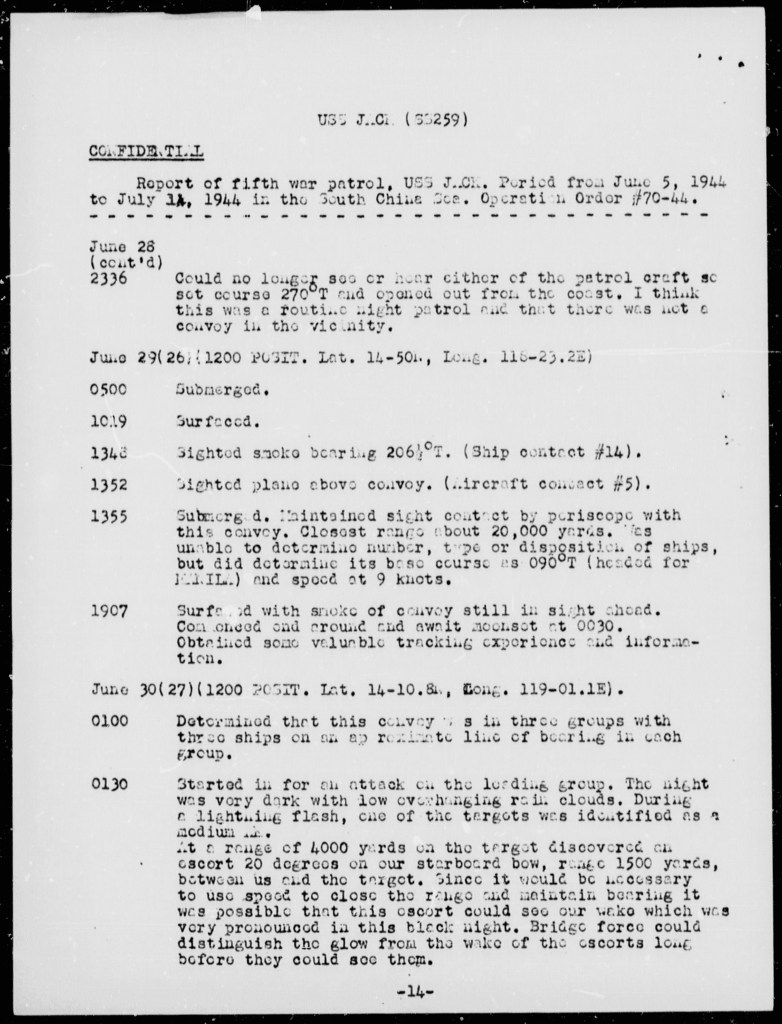
 Patrol Reports
Leave a comment