
On the morning of May 27, 1944, a rare and potentially deadly incident unfolded beneath the waves of the Pacific Ocean, involving two U.S. submarines, the USS Lapon (SS-260) and the USS Raton (SS-270). Both submarines were known for their successful patrols, hunting enemy vessels that threatened the war effort. What happened that day, however, is an example of the unpredictable nature of submarine warfare—an accidental incident of friendly fire that could have ended in disaster but instead ended in a miracle.

At the time, World War II was raging in the Pacific. The submarines of the United States Navy were crucial in disrupting Japanese supply lines and military movements. Lapon and Raton, both hard-working and battle-tested boats, were deployed on separate patrols in the same waters. Their missions were critical, and the crews aboard each vessel knew the risks involved. Submarine warfare was, after all, a game of shadows, with sailors often battling the enemy, the sea, and the isolation of being submerged for weeks at a time. Visibility was limited, sonar was imperfect, and making mistakes could be deadly.
On that morning, the USS Lapon, out on its own mission, fired two torpedoes at what it believed to be an enemy submarine. But in a twist of fate, the target was not an enemy but the USS Raton, which was also conducting a patrol in the same area. The torpedoes struck Raton, but in a stroke of luck, they failed to detonate. The crew aboard Raton initially believed that they had either struck something or been struck themselves. The confusion that followed the explosions was palpable, as the crew scrambled to assess what had just happened.
For a brief moment, the men aboard both submarines were caught in the fog of war, unsure of what had just transpired. The USS Lapon’s torpedoes had struck Raton, yet by some miracle, the weapons had not exploded. This momentary confusion was followed by a rapid response, as the officers aboard both submarines realized that the explosion was the result of friendly fire. The mistake was immediately recognized: Lapon had misidentified Raton as a Japanese vessel and fired without verifying the target.
The damage to Raton was minimal, a few dents from the impact of the torpedoes, but the psychological toll was significant. A brush with death, even one that ends without fatalities, can leave scars that are not as easily seen as those inflicted by actual wounds. The men aboard Raton had just been moments away from a devastating attack, only to be spared by the failure of the torpedoes to detonate. This incident underscored the complexity and dangers of submarine warfare, where even a tiny mistake could have catastrophic consequences.
After the incident, Raton’s crew immediately began damage assessments, and they were relieved to find that despite the torpedo hits, the boat was still operational. The failure of the torpedoes to explode was nothing short of a miracle, and the crew breathed a collective sigh of relief. Though shaken, the men of Raton quickly resumed their mission, carrying on with the work they had been trained to do. The psychological weight of the friendly fire incident remained with them, but the crew continued to fight on, as submariners always do.
On the other side, the crew of the USS Lapon quickly understood the gravity of their mistake. The commanding officer of Lapon immediately ceased fire, realizing that the torpedoes had struck a friendly vessel. Lapon’s crew, too, experienced their own moment of disbelief, but it was followed by a sense of resolve. The damage had been done, but the incident was an unfortunate reminder of how quickly things could go wrong in the heat of battle. Submarine missions in the Pacific were chaotic, and sometimes a moment of misidentification could lead to tragic consequences.
The failure of the torpedoes to detonate in this case was a stroke of luck, but it also served as a stark reminder of the dangerous nature of submarine warfare. As both submarines continued their operations, the incident was reviewed, and lessons were learned. Changes in training and operational procedures would follow, helping to prevent similar mistakes in the future. The need for constant vigilance and precise identification of targets would remain a priority in the submarine service.
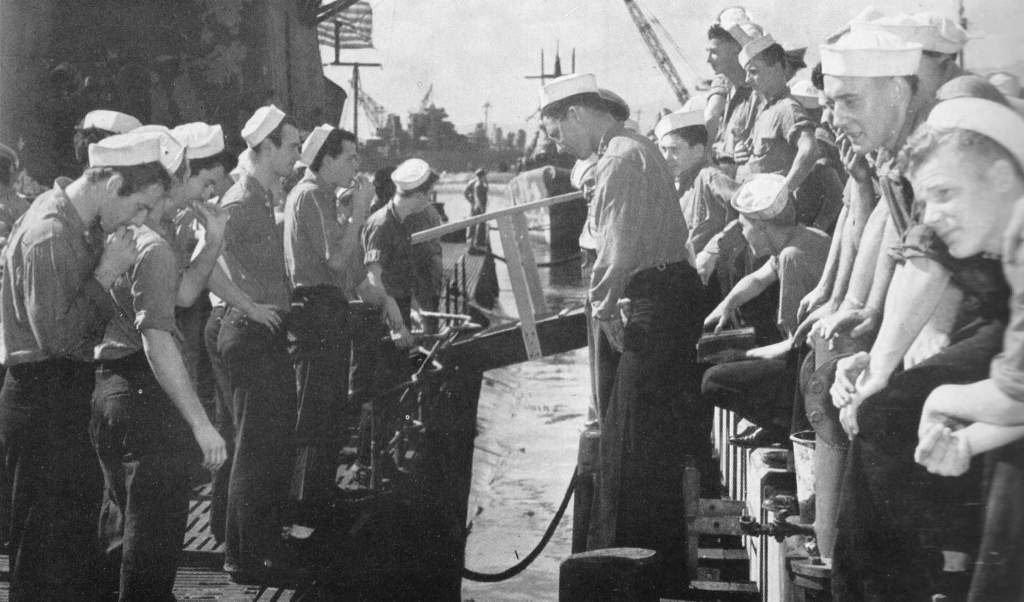
For the USS Raton, the incident did not end its service. The submarine would continue its operations, sinking enemy vessels and contributing to the war effort in the Pacific. Similarly, the USS Lapon went on to complete additional successful patrols. But for those who were aboard these vessels that day, the memory of May 27, 1944, would never fade. The men aboard these submarines experienced something that many in the general public would never truly understand—a near-death experience that was met with a collective sigh of relief, a realization that fate had spared them.
This story also has a personal connection for the USSVI Bremerton Base. One of our Members, Paul Algot Christofferson (Eternal Patrol 6/2/2021), was present on the USS Raton during the incident. For him, this story was not just a piece of distant history, it was a memory that he lived through. It is a reminder of the camaraderie, the danger, and the sacrifices that submariners made during World War II. The men who served aboard these submarines, including those who were there that day, understand better than anyone the risks that come with the job. They know the high stakes, the split-second decisions, and the shared experiences that define submarine service.

USS Raton SS-270 at the time of the incident.
This incident serves as a reminder of how close the submarine service came to tragedy, and how fortunate the crews of USS Lapon and USS Raton were that day. But it also serves as a tribute to the resilience of the men who served in those boats and to the Navy’s commitment to improving its procedures in the wake of such close calls. In the end, both submarines went on to complete successful missions, and both crews returned home to tell their stories. But the lesson of that day, the lesson of friendly fire, near misses, and the unpredictable nature of war, stayed with them forever.
For those who served, the legacy of this incident is not just in the records or the history books. It is a lived experience, one that remains personal and vivid, even decades later. For the Bremerton Base, it is a reminder of the courage, determination, and unity that defined the submarine force during World War II. And for all who served, it is a testament to the risks and sacrifices that came with defending the freedom we hold dear.
 Patrol Reports
Leave a comment