
In the dark, moonlit hours of May 10, 1944, the Pacific Ocean off the northwestern coast of Luzon was alive with danger. Beneath the gently rolling swells, the steel predator USS Cod (SS-224), a fleet submarine of the Gato-class, stalked its prey—a leviathan of a convoy moving southwesterly, heavily guarded by Japanese destroyers, torpedo boats, and patrol planes. What followed was a daring submerged engagement worthy of any tale from Theodore Roscoe’s annals of undersea valor: an audacious attack on a 30-ship convoy that left fire on the sea and silence below.
At 0159, Cod’s lookouts picked up the first signs—smoke on the eastern horizon. By 0212, radar confirmed it: a convoy, vast and laden, zigzagging on courses between 140 and 200 degrees true, making 10 to 11 knots. The convoy was arranged in four separate box-like formations, each with two or three columns of two to three ships. All in all, Cod’s skipper, Commander James C. Dempsey, counted 33 ships, plus more indicated only by smoke trails to the east. Escorts flanked them—minesweepers, destroyers, and the nimble, wasp-like Chidori-class torpedo boats. Two Mavis flying boats circled above like vultures.

At dawn, Cod submerged to close in. From periscope depth she studied her target: a mix of merchantmen, transport ships, and one of the convoy’s Kamikaze-class destroyer escorts, a relic of Japan’s World War I navy still deadly in her purpose. The target of opportunity was a near formation: five ships in two columns. The lead was a Sanko Maru type, followed by an Asosan Maru-like freighter and an AP reminiscent of Kasado Maru. Commander Dempsey formulated his plan—strike the heart of the formation and gut the spearhead.
As the formation zigzagged unpredictably, the range closed fast. By 0551, the destroyer was just 1400 yards off. At 0555, Cod fired three torpedoes from her stern tubes—range 650 yards. A 90-degree angle on the bow, the kind of perfect setup that submariners dream of. Twenty-six seconds later, the first fish struck under the destroyer’s bridge. It was surgical. The twin stacks collapsed. White-clad crewmen were flung into the air like confetti. The ship cracked amidships, her bow and stern rising grotesquely as the center collapsed.
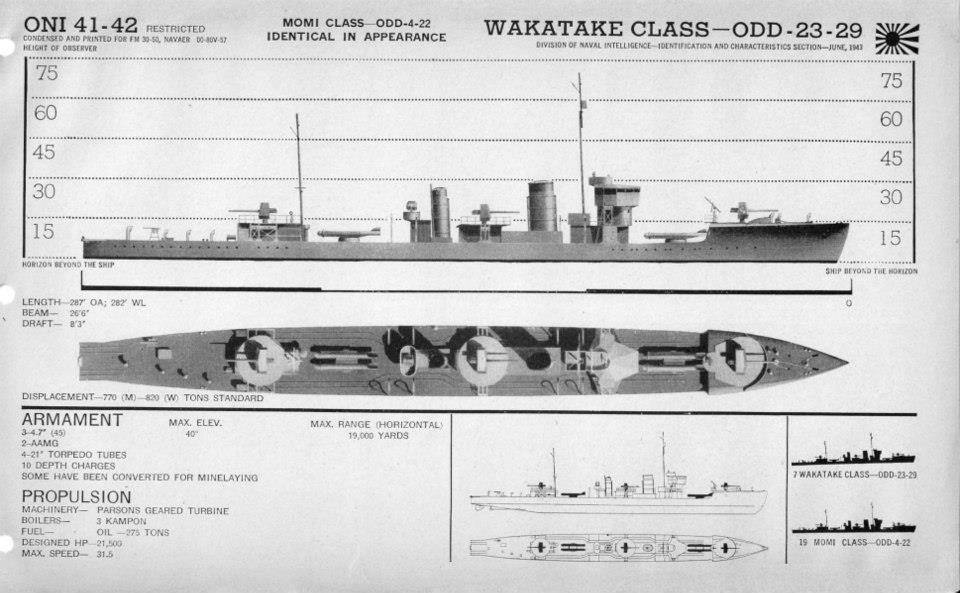
As the destroyer reeled, Cod swung her bow to line up on the merchant ships. At 0556, she fired two torpedoes at the trailing Kasado Maru-type and four more at the larger Asosan Maru-like freighter ahead of it. The torpedoes ran clean. Fifty-six seconds after firing, one struck the Kasado-type. Then, with rhythmic violence, three torpedoes smashed into the Asosan Maru-type. Sounds of rending steel and bulkheads collapsing filled the control room—a submarine crew’s symphony of destruction.

But the orchestra now had a brutal percussion section. Enemy escorts—Chidoris and destroyers—converged. Two aircraft dropped bombs. Depth charges began to fall in brutal rhythm. At 0600, Cod dove to 300 feet, trying to escape the hammering. A Chidori dropped a three-charge pattern. Four escorts from the next formation arrived, saturating the sea with over 70 depth charges in just 15 minutes. The sub’s hull groaned under the pressure. Explosions from the wrecked marus continued—many with the sharp, firecracker-like report of munitions cooking off. Ammunition ships, no doubt.
For nearly an hour, the attacks persisted. From 0626 to 0715, the escorts dropped charges in measured batches—two or three at a time, trying to guess Cod’s escape course. Several ran uncomfortably close. But Cod slipped away, the water column her shield and her silence her sword.
At 0940, three aerial depth charges rocked her again. Then, at 0957, another series from surface escorts. It was not until 1040 that the fury finally faded. By 1340, Cod reached periscope depth. The convoy was gone. The sea was empty. Wreckage floated on the surface, carried by wind and current like ghostly flotsam.
By evening, Cod was again hunted. At 1852, a Chidori-type torpedo boat spotted her. With fading visibility and an uncertain range, the game began anew—pinging, maneuvering, and stalking. But Cod did what submarines do best: she disappeared. No depth charges fell. The hunter lost its scent.
At 2050, in the midst of a Pacific thunderstorm, Cod surfaced. Lightning flashed. Rain fell in sheets. The sea washed clean of its violence. She turned northwest, heading back into the shipping lanes to strike again.
The results of that morning’s action were devastating for the Japanese convoy. The Karukaya, a seasoned destroyer veteran of many battles, was gone—snapped in half like a twig. The Shohei Maru, 7,256 tons of cargo and lives, lay on the ocean floor. Other vessels were likely damaged or destroyed, lost in the chaos and smoke.
For Cod, the day was another stone in the monument she would build over seven war patrols. She would go on to rescue Dutch and Australian commandos in a daring undersea evacuation, and later receive seven battle stars for her wartime service.
But May 10, 1944, stands as one of her finest hours—an attack executed with cool resolve, courage under pressure, and deadly precision. It was the kind of action that makes submarine history more than steel and numbers. It makes it legend.
SOURCE:
War Patrol of US Submarines, National Archives, USS Cod April 1944-July 1944, https://catalog.archives.gov/id/74811928?objectPage=15
 Patrol Reports
Leave a comment