 In the middle of February 1943, the world found itself engulfed in the darkness of World War II, with the conflict stretching across the Pacific. The United States Navy was locked in a desperate struggle for control of the seas against the Japanese Empire. Submarines were the silent sentinels prowling beneath the waves, disrupting enemy shipping, gathering intelligence, and striking at the heart of Japanese supply lines. The USS Amberjack (SS-219), a Gato-class submarine, was among these brave warriors, playing a crucial role in the Pacific theater. But by mid-February, Amberjack’s fate would intertwine with the perilous nature of submarine warfare, ultimately leading to her loss.
Commissioned on June 19, 1942, the USS Amberjack was captained by Lieutenant Commander John A. Bole Jr. After shakedown training off the East Coast, Amberjack set sail for the Pacific, arriving at Pearl Harbor in August 1942. She embarked on her first war patrol in September, operating off New Ireland and Bougainville in the Solomon Islands. During this patrol, Amberjack displayed her aggressive spirit, engaging Japanese shipping with mixed success. On September 19, she sank the Shirogane Maru, a passenger-cargo vessel, a clear indication of her lethal effectiveness. However, not all encounters ended in victory, as Amberjack faced depth charge attacks and narrowly escaped damage on several occasions.
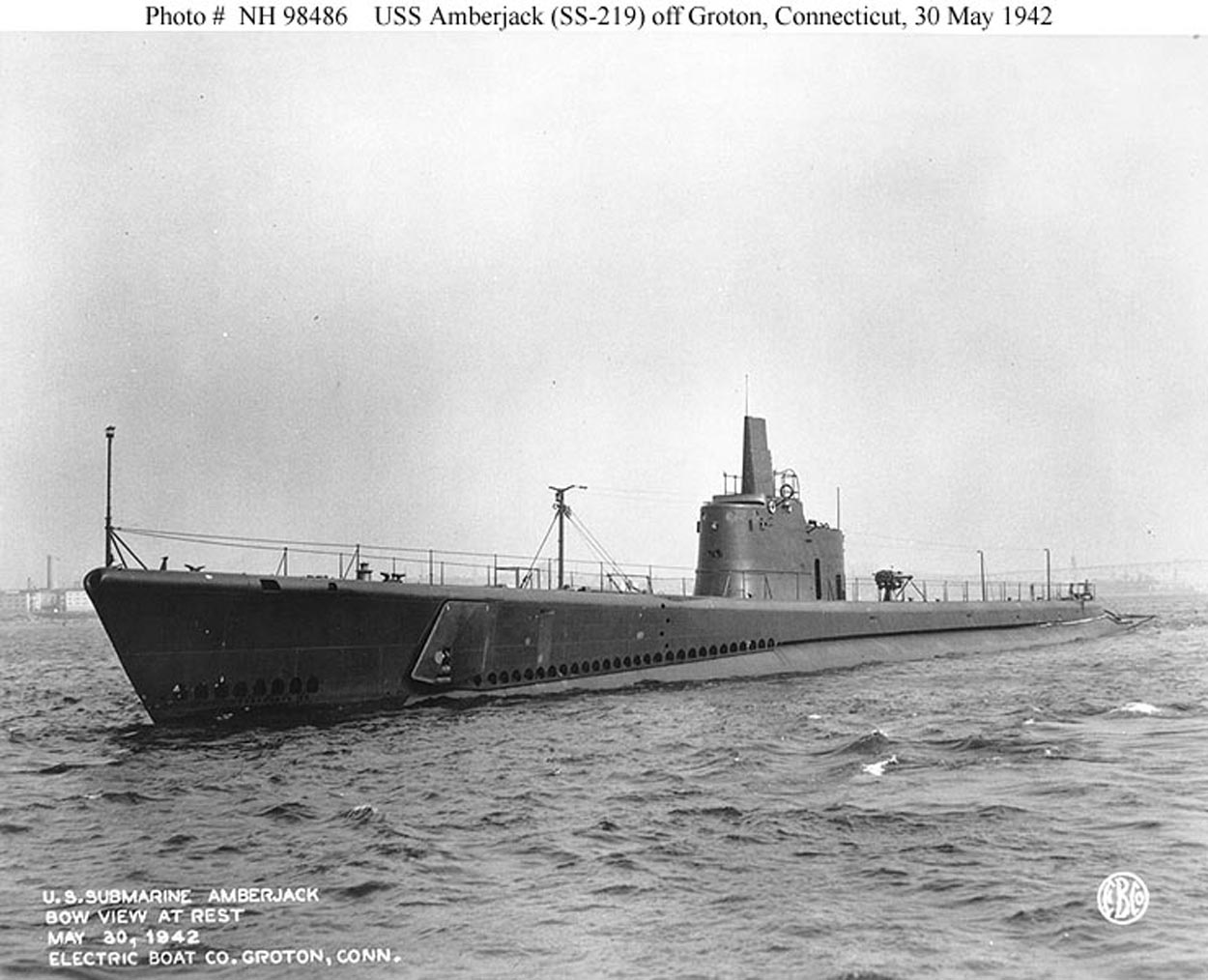
Following a brief refit, Amberjack embarked on her second patrol in November 1942, this time venturing to the area south of Shortland Island. The patrol was marked by relentless activity, including encounters with Japanese destroyers and a harrowing depth charge attack that left the submarine shaken but not critically damaged. By early January 1943, she returned to Brisbane, Australia, for refit and repairs, ready to enter the fray once more.

Amberjack’s third and final patrol began on January 26, 1943. This patrol would take her into the treacherous waters around the Solomon Islands, a critical battleground in the fight to control the Pacific. From the outset, Amberjack was engaged in aggressive action. On February 3, she reported sinking a two-masted schooner by gunfire off Buka Island. The following day, she claimed the sinking of a 5,000-ton freighter loaded with explosives in a two-hour night surface attack. It was during this battle that Chief Pharmacist’s Mate Arthur C. Beeman was killed by machine gun fire, while an officer suffered a wound to the hand.
The days that followed were filled with tension as Amberjack hunted Japanese shipping and patrolled vital traffic routes. On February 13, she made her last radio transmission, reporting that she had been forced down by two destroyers the previous night. She also reported the capture of an enemy aviator who had been rescued from the water. The submarine was ordered north of latitude 6° 30’S and instructed to continue hunting for enemy vessels. After this transmission, all communications from Amberjack ceased.
As days turned into weeks without further word, the Amberjack was declared presumed lost on March 22, 1943. It wasn’t until after the war that Japanese records provided a possible explanation for her disappearance. On February 16, 1943, a Japanese torpedo boat, Hiyodori, and subchaser number 18 reported attacking a U.S. submarine with nine depth charges in the vicinity of 5° 05’S, 152° 37’E. This attack was preceded by a strike from an escorting patrol plane. Following the assault, a large amount of heavy oil and “parts of the hull” were observed rising to the surface. The evidence strongly suggests that this attack resulted in the sinking of the USS Amberjack. However, the loss of another submarine, the USS Grampus, in the same area around the same time adds a shadow of uncertainty to the story. Still, it remains most likely that Amberjack met her fate in this ferocious attack on February 16.
The loss of USS Amberjack and her crew was a profound blow, not just for the families who lost loved ones but for the submarine community as a whole. Submarine duty was among the most dangerous assignments in the Navy, and these silent warriors faced the constant threat of enemy detection, depth charges, and mechanical failure beneath the unforgiving sea. The crew of the Amberjack knew these dangers all too well, yet they carried out their mission with valor and determination.
Amberjack’s legacy is one of courage, sacrifice, and unyielding resolve. She was credited with sinking three enemy ships totaling 28,600 tons and damaging two more for an additional 14,000 tons. Her contributions to the war effort were recognized with three battle stars for her service in the Pacific. The submarine’s spirit lives on, immortalized in the enlisted men’s recreation center at the Submarine Base in Pearl Harbor, named in honor of Chief Pharmacist’s Mate Arthur C. Beeman, who gave his life on February 4, 1943, while serving aboard the Amberjack.
The loss of the USS Amberjack serves as a poignant reminder of the price of freedom and the sacrifices made by those who stood at the vanguard of the fight against tyranny. The ocean claimed the lives of her brave crew, but their memory endures in the hearts of those who understand the true meaning of service, duty, and honor. To this day, the Amberjack remains on “eternal patrol,” a symbol of the silent courage that defines the United States Submarine Force. In the annals of submarine history, she will always be remembered as one of the silent warriors who answered the call when it mattered most, venturing into the depths of danger, never to return.
 Patrol Reports
Leave a comment