 The USS S-26 (SS-131) was part of the storied S-class of submarines, an early and crucial chapter in the history of the U.S. Navy’s submarine fleet. Laid down in November 1919 at the Bethlehem Shipbuilding Corporation in Quincy, Massachusetts, and commissioned in October 1923, S-26 was built for a world that was still grappling with the lessons of the Great War. With a length of just over 219 feet and a displacement of 1,062 tons submerged, she wasn’t a leviathan by modern standards, but she carried the hopes of an emerging naval strategy that relied on stealth, patience, and precision.
For nearly two decades, S-26 served with quiet diligence. Her operational history took her from the frigid waters of New England to the sun-drenched harbors of the Panama Canal Zone and the vast Pacific beyond. She was a well-traveled boat, visiting Hawaii, Trinidad, and the Virgin Islands, and contributing to the Navy’s ongoing refinement of underwater warfare tactics. By 1942, she was considered a seasoned veteran, though her pre-war life had been largely unremarkable in terms of combat.
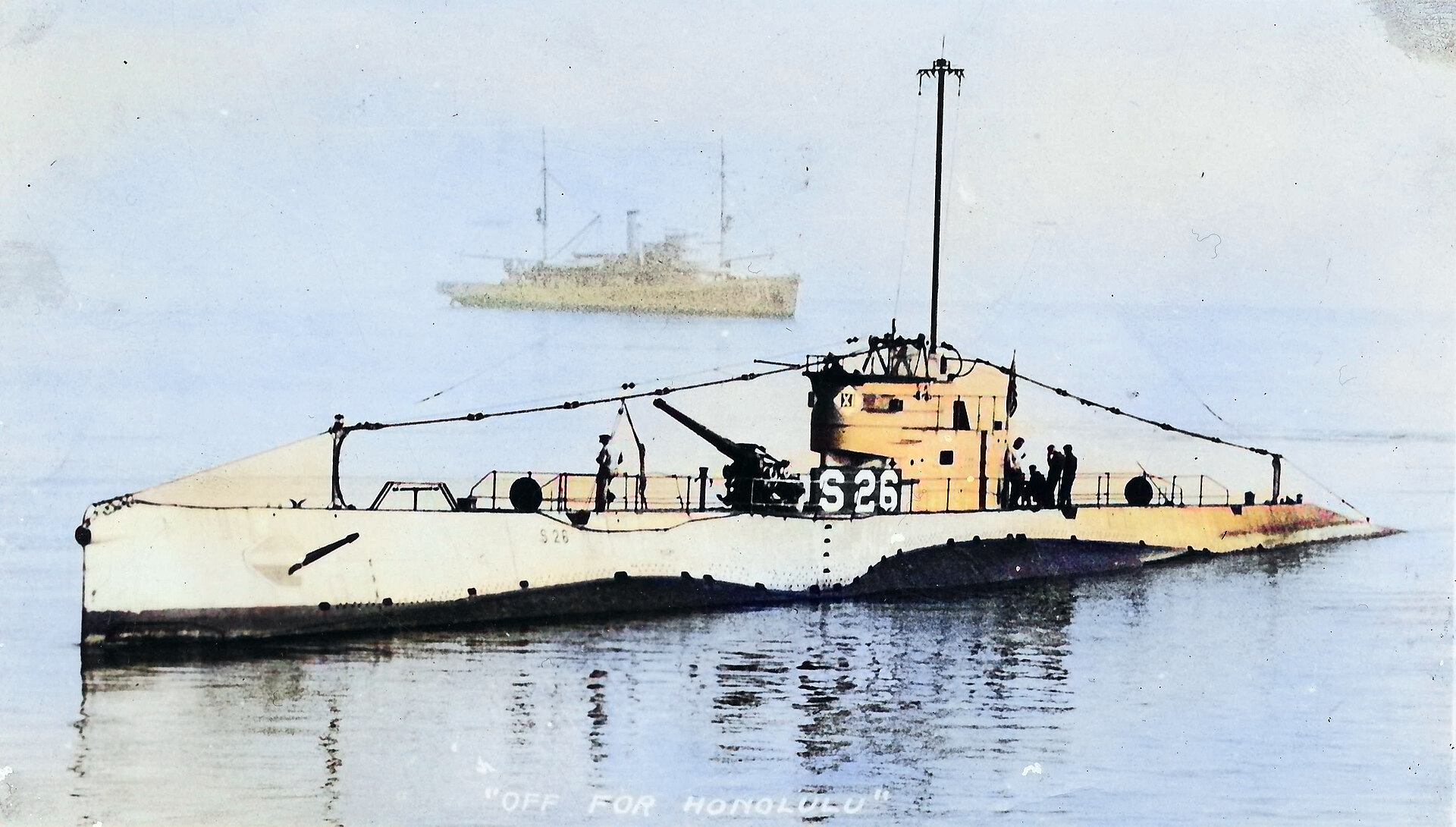
When the United States entered World War II following the attack on Pearl Harbor in December 1941, the strategic situation in the Pacific was dire. Japanese forces were advancing across the Pacific with shocking speed and ferocity, threatening critical Allied holdings and lines of communication. S-26, alongside her sister submarines, was ordered to patrol the waters of the Panama Canal Zone, a vital link between the Atlantic and Pacific Oceans. Based out of Balboa, Panama, her mission was defensive but critical: to deter any enemy incursions and protect this artery of global strategy.
The night of January 24, 1942, was moonless and quiet. S-26 was departing Balboa with her division—S-21, S-29, and S-44—escorted by the submarine chaser PC-460. The boats moved in a disciplined formation, darkened and silent to avoid detection by potential enemy forces. At 22:10, PC-460 signaled her intent to return to port, a message received only by S-21. The remaining submarines, unaware of the escort’s intentions, continued their course.
 Disaster struck at 22:23. PC-460, in the process of executing a wide, 180-degree turn to starboard, collided with S-26. The submarine chaser rammed S-26 amidships on her starboard side, tearing a gaping hole in the hull. The force of the impact rolled the submarine sharply, throwing three of the four men stationed on her bridge into the water. Below decks, the crew had no time to react. Within seconds, S-26 began to sink, bow-first, into the inky depths of the Gulf of Panama, 14 miles west of San Jose Light.
For the 46 souls aboard S-26, the situation was grim. In the chaos, the commanding officer, executive officer, and one lookout—three men who had been on the bridge—managed to survive, their plunge into the cold water likely saving their lives. The fourth man on the bridge, an enlisted sailor, was lost with the rest of the crew as the submarine disappeared beneath the surface, coming to rest upright on the seabed 300 feet below.
Rescue operations began the next morning under Captain T.J. Doyle, commander of Submarine Squadron Three. Divers descended into the treacherous depths, hoping against hope that some of S-26’s crew had survived in air pockets within the submarine. The effort was valiant but ultimately futile. Over the course of 25 dives, rescuers found no signs of life. The loss of S-26 was devastating—44 officers and men had perished, a sobering reminder of the perils faced by submariners in wartime.
The wreck of S-26, lying undisturbed on the seafloor, was declared a war grave, a solemn tribute to her crew’s sacrifice. In the grand tapestry of World War II, the loss of S-26 may seem a small thread, but to those who served aboard her and their families, it was a monumental tragedy.
The loss of USS S-26 (SS-131) serves as a poignant reminder of the risks inherent in submarine warfare, even during routine operations. The collision with PC-460 was a tragedy of miscommunication and unfortunate timing, a stark example of how even the most disciplined military units are not immune to human error and the unforgiving nature of the sea.
For the men who served aboard S-26, their story is one of duty and sacrifice. They were part of the Silent Service, a fraternity of submariners who operated in the shadowy depths, often unsung and unseen. The S-class submarines, though soon overshadowed by more modern designs, played a crucial role in the early years of the war, patrolling hostile waters and providing a deterrent against enemy aggression.
To the families of the lost, the war grave of S-26 is both a place of sorrow and solace. It is a resting place undisturbed by the chaos of the surface world, a fitting tribute to men who gave their lives in service to their country. For submarine veterans and naval historians, the story of S-26 is a chapter worth remembering—a reminder of the courage and resilience of those who choose to serve beneath the waves.
In the broader context of World War II, the loss of S-26 highlights the strategic importance of the Panama Canal Zone and the challenges faced by Allied forces in securing this vital region. It also underscores the sacrifices made by countless individuals in the pursuit of a greater cause, a theme that resonates deeply with those who honor the memory of the Greatest Generation.
As we reflect on the events of that fateful night in January 1942, we are reminded of the words often associated with the submarine service: “On Eternal Patrol.” The crew of S-26, like so many others, remains on watch beneath the sea, a silent testament to their bravery and dedication. Their story is not just a tale of loss, but a legacy of service that continues to inspire and resonate across generations.
 Patrol Reports
Leave a comment