It was December 1, 1934, and the gray skies over Philadelphia matched the solemnity of a nation still clawing its way out of the Great Depression. Franklin Field buzzed with anticipation, hosting 78,000 fans in what was more than a football game—it was an institution. The Army-Navy Game, a yearly clash of grit and pride, captured the imagination of America. But in 1934, it wasn’t just the game; it was the weather, the mud, and one man’s extraordinary kick that turned the spectacle into legend.

Slade Cutter, a 6’1”, 215-pound tackle with a strong leg and an even stronger will, etched his name into history that day. The only points scored in a 3-0 Navy victory came from his field goal—a play as improbable as the stormy beauty of that Saturday.
The Army-Navy Game was no ordinary collegiate rivalry. This was tradition writ large, a contest that transcended football to become a reflection of service and sacrifice. In 1934, Paul Gallico, a sportswriter-turned-novelist, summed it up perfectly: “Of all the thousands of football games played all over the country from October to December, this is the one game that really matters.” And so, Franklin Field in Philadelphia became the battleground, midway between West Point and Annapolis, for the 45th edition of this storied matchup.
Tickets sold out faster than the trains that ferried midshipmen and cadets to the stadium. Scalpers peddled their wares at exorbitant prices—up to $75 for a pair, a princely sum in those days. The weather, however, proved to be the great equalizer. Rain lashed the field, turning it into a quagmire and setting the stage for what would be remembered as the “Mud Bowl.”
Rain poured steadily, soaking the stands and turning the field into a muddy battleground. Franklin Field became a place of stark contrasts. The players’ uniforms, caked in mud, blurred into shades of gray, while the brightly colored raincoats of spectators lit up the stands like a springtime tulip bed. Army and Navy slogged through four quarters of defensive warfare. The ball, slick with rain and mud, became a treacherous projectile. Every play was a test of endurance more than strategy, with pileups dissolving into slow-motion slides as players struggled for footing. The elements rendered traditional tactics ineffective, but one man had prepared for just such a scenario.
In the first quarter, Slade Cutter lined up for a field goal. He was no stranger to pressure. Cutter’s reputation as a fierce competitor had been forged not only on the gridiron but also in the boxing ring, where he was a collegiate champion. The snap came, and as mud sprayed from beneath the linemen’s cleats, Cutter sent the ball sailing. It soared true, threading the uprights and securing the only points of the game. Navy led 3-0, and that slim margin would hold.
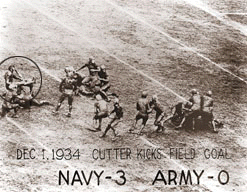
Cutter’s kick was a moment of precision amid chaos, a testament to his ability to adapt under adverse conditions. This was not merely athleticism; it was composure, a quality that would define his future. The win cemented Cutter’s place in Navy football lore, but his story was far from over.
Graduating from the Naval Academy in 1935, Cutter traded his cleats for a naval officer’s uniform. His career in the U.S. Navy would see him become one of the most decorated submariners of World War II. Cutter’s leadership, honed on the muddy fields of Franklin Field and polished by the rigorous discipline of Annapolis, would shine brightest in the war’s darkest moments.
By the time the U.S. entered World War II, Cutter was serving aboard the USS Pompano, gaining critical experience in submarine warfare. His rise to command came with the USS Seahorse, a fleet submarine operating in the Pacific. Under Cutter’s leadership, the Seahorse became a deadly adversary to Japanese shipping. Cutter’s daring tactics and unrelenting pursuit of enemy vessels earned him four Navy Crosses, making him one of the war’s most celebrated submarine commanders.
Cutter’s wartime service was marked by a unique blend of aggression and precision. On one patrol, he sank multiple enemy freighters, his torpedoes finding their marks with deadly efficiency. Yet it wasn’t just his kill tally that stood out; it was his ability to inspire confidence in his crew under extreme duress. Whether evading depth charges or navigating treacherous waters, Cutter’s calm demeanor echoed the poise he had shown on that muddy December day in 1934.
Slade Cutter’s life offers a compelling narrative of preparation meeting opportunity. The Army-Navy Game of 1934 was more than a football match; it was a crucible that tested Cutter’s resilience and adaptability. His field goal, scored under conditions that reduced most plays to futile struggles, was a microcosm of the qualities that would later define his military career.
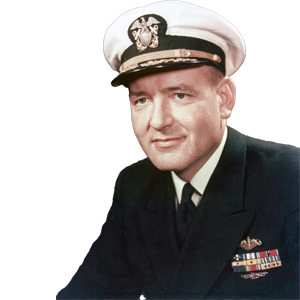 Reflecting on Cutter’s life, one cannot help but marvel at the interconnectedness of his experiences. The lessons of teamwork, perseverance, and composure learned on the football field became the bedrock of his leadership at sea. For Cutter, the transition from athlete to war hero was seamless, each phase of his life reinforcing the next.
As we look back on that rain-soaked afternoon at Franklin Field, we see more than a game; we see the making of a man whose contributions extended far beyond the gridiron. For Navy fans, Cutter’s kick remains a cherished memory. For the submarine veterans who followed in his wake, his legacy is a reminder of what it means to serve with courage and excellence.
The Mud Bowl may have ended with a single field goal, but its impact resonates across generations—a tribute to the enduring spirit of the Army-Navy rivalry and the extraordinary men it has produced.
 Patrol Reports