The calm of a Sunday morning in paradise was shattered as Japanese planes descended upon Pearl Harbor on December 7, 1941. Amid the cacophony of explosions, the blazing infernos consuming the battleships of Battleship Row, and the relentless hum of enemy aircraft, a less visible part of the U.S. Navy’s strength lay quietly along the southeastern edge of the harbor. There, the submarines USS Tautog (SS-199), USS Dolphin (SS-169), USS Cuttlefish (SS-171), USS Narwhal (SS-167), and USS Cachalot (SS-170) waited, unprepared for battle but braced for survival. Their actions that day and their escape from destruction would later underscore their importance to a Navy facing a long war in the Pacific.
The attack on Pearl Harbor targeted high-profile battleships and airfields, leaving the submarine base relatively unscathed. But that didn’t mean the men aboard the submarines were spared the chaos. As explosions echoed across the harbor and smoke billowed into the Hawaiian sky, crews of the five submarines scrambled to action. Some watched helplessly as Battleship Row became a vision of hell; others took up arms to mount a defense with whatever weapons they had. Each crew knew their role would be crucial in the weeks and months to come.
 The USS Tautog (SS-199), moored at a quiet berth near the submarine base, became a symbol of resilience and resourcefulness that day. When the first wave of Japanese planes screamed overhead, her crew quickly manned anti-aircraft guns, joining the harbor’s desperate defense. The Tautog is credited with shooting down one Japanese plane—a small but significant act of defiance in a sea of destruction. It was an extraordinary moment for a vessel not designed for surface combat, a testament to the courage of her crew. Their gunfire, though modest compared to the broader defense, demonstrated the resilience of the Silent Service.

 Nearby, the USS Dolphin (SS-169) and USS Cachalot (SS-170) found themselves in similar circumstances. Both were aging submarines, smaller and less modern than the Navy’s newer fleet boats. But their crews wasted no time in preparing for action. Sailors scrambled to arm deck-mounted machine guns and readied the submarines for potential evasive maneuvers. Commanding officers Lieutenant Commander John B. Griggs Jr. (Dolphin) and Lieutenant Commander Clarence E. Aldrich (Cachalot) focused on ensuring their vessels remained operational—a critical task given the likelihood of a prolonged Pacific conflict.
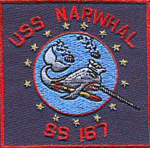 The USS Narwhal (SS-167), one of the largest submarines at Pearl Harbor that day, was more than a fighting vessel. Known for her cargo capacity and endurance, she would later become integral to Spyron missions delivering supplies to guerrilla forces in the Philippines. On December 7, 1941, however, her focus was immediate survival. The Narwhal’s crew witnessed the carnage unfolding across the harbor while making sure their submarine was ready to slip out to sea if needed. Her size and visibility made her a tempting target, but the Japanese attackers ignored the submarines in favor of larger, more symbolic ships.
 USS Cuttlefish (SS-171), another older vessel moored near the submarine base, joined her peers in standing by for action. Like the others, her crew focused on defense and readiness, knowing that the submarines might soon represent a significant portion of the Navy’s offensive power. Although the Cuttlefish would not achieve fame during the war, her presence at Pearl Harbor was a reminder of the Silent Service’s resilience in the face of uncertainty.
Throughout the attack, the submarine base itself remained largely untouched, a strategic oversight by the Japanese that would have lasting consequences. By sparing the submarine facilities and their supporting infrastructure, the attackers left the U.S. Navy with a critical asset intact. Submarines, unlike battleships, could slip unseen beneath the waves, hunting enemy vessels and gathering intelligence. With much of the surface fleet in flames, the Silent Service would take on an outsized role in the Pacific campaign.
The cultural and strategic context of the attack on Pearl Harbor cannot be overstated. The battleships that dominated the harbor were symbols of American naval power, but their destruction signaled the end of their era as the centerpiece of naval warfare. In their place, submarines and aircraft carriers would rise to prominence. For the submariners at Pearl Harbor, this shift meant a transformation of their role. No longer merely supporting the fleet, they became the vanguard of the U.S. Navy’s response to Japanese aggression.
In the days and weeks following the attack, the submarines at Pearl Harbor were among the first vessels to patrol the Pacific, gathering intelligence on Japanese movements and launching counteroffensives. The Tautog, for example, would go on to become one of the most successful submarines of the war, sinking 26 enemy ships. The Narwhal would earn distinction for her Spyron missions, sneaking into enemy waters to deliver supplies and evacuate civilians and Allied personnel. The Dolphin, Cachalot, and Cuttlefish, though less celebrated, contributed to early war efforts that helped stabilize the Pacific theater.
The legacy of the submarines at Pearl Harbor is one of survival and adaptability. While the devastation of December 7, 1941, underscored the vulnerability of even the most powerful fleets, the submarines’ ability to endure and fight back symbolized hope in a dark moment. They demonstrated the importance of versatility in warfare, proving that even vessels designed for stealth could rise to the occasion when called upon.
The attack on Pearl Harbor marked a turning point not just for the U.S. Navy but for naval warfare itself. With much of the surface fleet in ruins, submarines like the Tautog, Dolphin, Cachalot, Narwhal, and Cuttlefish became essential to America’s ability to fight back in the Pacific. Their survival on December 7 ensured the Navy retained a powerful offensive tool at a critical moment. In the years that followed, these submarines and their crews helped redefine the nature of naval warfare, carrying the fight to the enemy with a combination of stealth, innovation, and determination. Their legacy is one of resilience, a reminder that even in the darkest hours, the Silent Service was ready to rise.
 Patrol Reports
Leave a comment