 On a stormy December night in 1943, the Pacific Ocean was both battlefield and graveyard. The USS Sailfish (SS-192), a veteran submarine of the U.S. Navy’s Silent Service, hunted in the dark, braving typhoon-like conditions and enemy patrols south of Honshū, Japan. The stakes were high: a war-worn world watched as Allied forces slowly gained momentum in the Pacific Theater. The Sailfish’s prey that night was the Japanese escort carrier Chūyō, part of a convoy ferrying personnel, aircraft, and supplies critical to Japan’s war effort. But aboard the Chūyō were 21 American prisoners of war, survivors from the USS Sculpin (SS-191), lost just weeks earlier. The events of December 4, 1943, would mark one of the Silent Service’s most significant victories—and one of its deepest tragedies.
By late 1943, the war in the Pacific was a brutal chess game. The Allies had turned the tide, and every move they made forced Japan further back. Central to this strategy were U.S. submarines, prowling the vast ocean to sever Japan’s lifelines and sink its navy. These “wolves of the Pacific” carried the burden of disrupting enemy supply lines while eliminating valuable ships, often in high-risk, high-reward missions.
The USS Sailfish was no stranger to risk. She began her life as the USS Squalus, which sank during sea trials in 1939 due to a catastrophic valve failure. Miraculously, 33 of her crew were rescued in one of the Navy’s first successful submarine salvage missions. Refitted and recommissioned as the Sailfish, the submarine became a symbol of resilience, carrying the spirit of survival and determination into battle.
By December 1943, the Sailfish, under the command of Lieutenant Commander Robert E. McCann Ward, was on her tenth war patrol. Her orders were straightforward but dangerous: patrol the waters south of Honshū, harass Japanese shipping, and, if the opportunity arose, strike at high-value targets. It was a mission that tested every ounce of her crew’s training and resolve.
The Japanese escort carrier Chūyō, originally a passenger liner, had been converted into a vital wartime asset. Her role was to ferry aircraft and personnel while providing air cover for convoys. On December 4, 1943, Chūyō was returning to Yokosuka as part of a convoy protected by a light cruiser and two destroyers. The ship carried not just Japanese sailors and military supplies but also 21 American POWs from the Sculpin, who had been captured after their submarine was depth-charged and sunk.

For the Sailfish, this convoy represented a high-stakes opportunity. Taking down a carrier was no small feat—it required precision, timing, and a bit of luck. Adding to the tension were the typhoon-strength winds and turbulent seas, which threatened to expose the submarine’s periscope or push her off course.
As December 3 turned to December 4, the Sailfish picked up faint radar signals from the convoy. Despite the punishing weather, Ward and his crew tracked the group, maneuvering silently into position. Inside the submarine, the atmosphere was tense but focused, with every crewman manning his station like clockwork.
Shortly after 4:00 a.m., Ward gave the order to fire. The Sailfish launched a spread of torpedoes, their unmistakable trails cutting through the dark water. Moments later, explosions rumbled through the depths as the torpedoes struck Chūyō. The carrier shuddered but remained afloat, prompting a furious counterattack by the convoy’s escorts. Depth charges exploded around the Sailfish, shaking her hull and rattling her crew, but the submarine held steady.
After waiting out the attack, Ward maneuvered the Sailfish for a second strike. This time, her torpedoes found their mark, striking Chūyō with devastating precision. Water poured into her hull, and her decks tilted as she began to list. By mid-morning, the once-proud carrier slipped beneath the waves, taking nearly all aboard with her.
Among the casualties were 20 of the 21 Sculpin POWs. Only George Rocek survived, rescued by the Japanese destroyer Fujinami. For the crew of the Sailfish, the victory was bittersweet. They had accomplished a feat few submarines ever achieved—sinking an aircraft carrier—but the knowledge that their actions had inadvertently killed fellow Americans weighed heavily on their minds.
The sinking of the Chūyō was a tactical triumph for the U.S. Navy. Escort carriers were critical to Japan’s war effort, serving as both combat platforms and logistical lifelines. By eliminating one of these assets, the Sailfish struck a blow to Japan’s naval capabilities, disrupting its ability to project air power and sustain its forces.
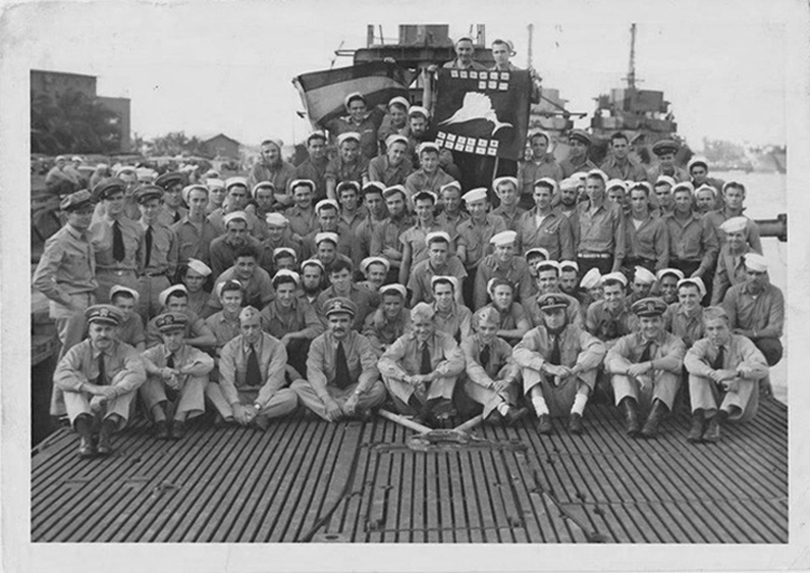
For the crew of the Sailfish, the mission cemented their reputation as one of the Silent Service’s most effective submarines. Ward and his men received the Presidential Unit Citation for their exceptional skill and bravery under fire, a recognition of their contribution to the Allied war effort. But the loss of the Sculpin POWs cast a shadow over their achievement, a reminder of the tragic complexities of war.
The Sailfish went on to complete additional patrols before being decommissioned in 1945. Her story, from her near-fatal accident as the Squalus to her wartime victories, became a testament to the resilience and determination of the U.S. Navy’s Silent Service.
 Patrol Reports
Leave a comment