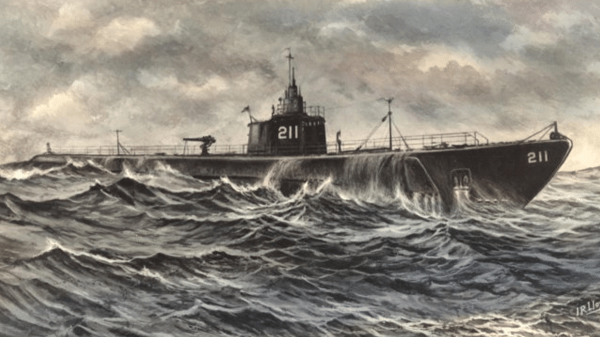
Gray Ghost, Red Dawn

Before dawn broke on August 3, 1942, the USS Gudgeon rode low in the Pacific, east of Truk, silent and alert. The day began in darkness, the kind submariners know too well. A world of sweat, tension, and stale air under pressure. At 0440 Kilo time, Gudgeon’s lookouts caught sight of a merchant-type vessel pushing smoke on the horizon, bearing 260 true. She wasn’t moving fast, maybe ten knots, slow enough to tempt a skipper hungry for a clean shot.

Continue reading “Gray Ghost, Red Dawn”

They Saved the World One Life at a Time

The photograph shows young men, weary but smiling, crowding the deck of the USS Tigrone as she lies quietly in Apra Harbor, Guam. Behind them, the harbor waters reflect the early morning light. Beyond that, the haze of a world still at war. The camera captures aviators in patched uniforms and borrowed gear, the crew of Tigrone standing near them with the same sea-worn posture common to submariners. It’s a moment frozen in time, but the story behind the picture runs deeper than the Pacific waters they traversed.

Continue reading “They Saved the World One Life at a Time”

June 3, 1944

Charles Andrews Lockwood was born on May 6, 1890, in Midland, Virginia, but came of age in rural Missouri. He did not rise through the U.S. Naval Academy with flair or distinction, graduating in 1912 near the lower third of his class. Yet, what he may have lacked in academic polish, he more than made up for in grit, instinct, and a deep-seated sense of duty to the Navy and to the men under his command.

Drawn to the submarines early, Lockwood began his undersea career aboard the tender USS Mohican in 1914. That same year, he took command of his first boat, the USS A-2, stationed in the Philippines. This marked the beginning of a lifelong bond between Lockwood and the silent service. He would later say he had submarines in his blood. In 1917, as commander of Submarine Division 1 during World War I, Lockwood tackled an early crisis head-on. A pair of deadly gasoline explosions on submarines A-7 and A-2 killed nine sailors. Lockwood led the investigation, ensuring that such disasters would not be repeated.

Continue reading “June 3, 1944”

Blog at WordPress.com.

Up ↑