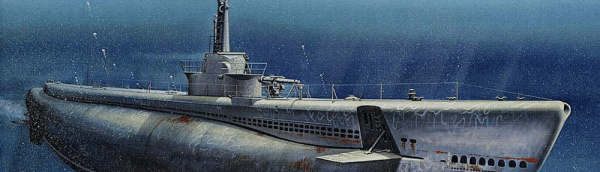
1942
In February 1942, just two months after the attack on Pearl Harbor, the U.S. Navy’s submarine fleet was still adapting to its new role in the Pacific War. The Silent Service had yet to prove itself as the deadly force it would become, but already, bold skippers and determined crews were striking at Japan’s vital shipping lanes. That month saw both triumph and tragedy—USS Sargo (SS-188) made an early mark by sinking a Japanese cargo vessel, while USS Shark (SS-174) became the first American submarine lost to enemy action. Continue reading “WWII – February: The Silent Service Steps Up in the Pacific”
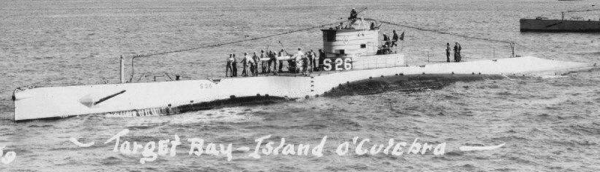
 The USS S-26 (SS-131) was part of the storied S-class of submarines, an early and crucial chapter in the history of the U.S. Navy’s submarine fleet. Laid down in November 1919 at the Bethlehem Shipbuilding Corporation in Quincy, Massachusetts, and commissioned in October 1923, S-26 was built for a world that was still grappling with the lessons of the Great War. With a length of just over 219 feet and a displacement of 1,062 tons submerged, she wasn’t a leviathan by modern standards, but she carried the hopes of an emerging naval strategy that relied on stealth, patience, and precision.
 The Bathyscaphe Trieste was no ordinary vessel; it was the culmination of years of ingenuity, ambition, and engineering brilliance. The brainchild of Swiss physicist Auguste Piccard, a man renowned for breaking altitude records in balloons, the bathyscaphe represented a leap from the skies to the depths of the oceans. Inspired by his ballooning expertise, Piccard envisioned a submersible capable of plunging untethered into the darkest recesses of the sea, applying the principles of buoyancy and pressure resistance he had perfected in the air. Working with his son, Jacques Piccard, he constructed three bathyscaphes between 1948 and 1955, one of which set a record by reaching 10,000 feet. The final product, the Trieste, was launched near Capri in 1953 and was later acquired by the U.S. Navy in 1958 to push the boundaries of ocean exploration further.
  Patrol Reports