Submarine!

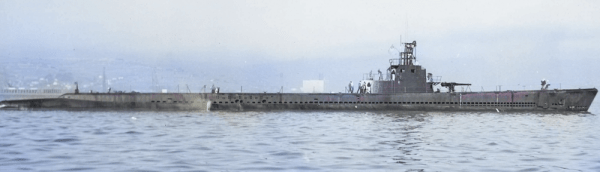
If Herman Melville had served aboard the USS Triton, he might’ve written Submarine! instead of Moby-Dick. But as fate would have it, that task fell to Edward L. Beach, a decorated U.S. Navy submarine officer and later the author of the bestselling novel Run Silent, Run Deep. In Submarine!, Beach doesn’t just tell sea stories. He opens the watertight doors of a secret world, inviting us into the steel bellies of America’s undersea fleet during World War II.

What makes Submarine! unique is its blend of firsthand memoir and composite storytelling. Rather than write strictly about his own missions, Beach gathers real-life experiences from several submarines—Trigger, Wahoo, Harder, Tang, and others—blending them into a chronological, unified narrative of the Pacific submarine campaign. The result is a thrilling, authentic, and highly readable account of a silent war fought beneath the waves.

Continue reading “Submarine!”
The Divine Devilfish

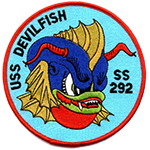
The Honolulu Star-Advertiser ran the story on June 10, 1955. There it was in black and white, plain as day: Commander Stephen S. Mann, U.S. Navy, was taking over Submarine Squadron 72. It might have just been another quiet military personnel notice to most folks reading their morning coffee over the paper, but for the men who served with Mann, it carried the weight of experience and the quiet authority of a man who had faced death and kept his boat afloat.

Continue reading “The Divine Devilfish”

Herring’s Last Strike

By mid-1944, American submarines were extending their patrols into the northern Pacific, including the Kurile Islands chain, to interdict Japanese shipping and isolate enemy garrisons. Following the Aleutian Islands campaign (1942–43), Japan’s remaining bases in the Kuriles (stretching from Hokkaido to Kamchatka) were targets for periodic U.S. air raids and naval harassment. Older S-class submarines had prowled these cold northern waters early in the war, and notably the USS S-44 was sunk off Paramushiro by a Japanese escort in October 1943. By 1944, fleet submarines from Pearl Harbor and Midway took up patrols in the area. The USS Barb (SS-220) and USS Herring (SS-233) were among the U.S. subs assigned to the Sea of Okhotsk and Kuriles, hunting convoys that supplied isolated outposts. Barb was now under the command of Commander Eugene B. “Lucky” Fluckey (who had taken command in May 1944), while Herring was on her eighth war patrol under Lieutenant Commander David Zabriskie, Jr.. These two submarines would rendezvous in late May 1944 to coordinate their efforts against Japanese shipping in the region.

Continue reading “Herring’s Last Strike”

Blog at WordPress.com.

Up ↑