The Last Dive of the Bullhead: Martin Sheridan and the Price of Silence

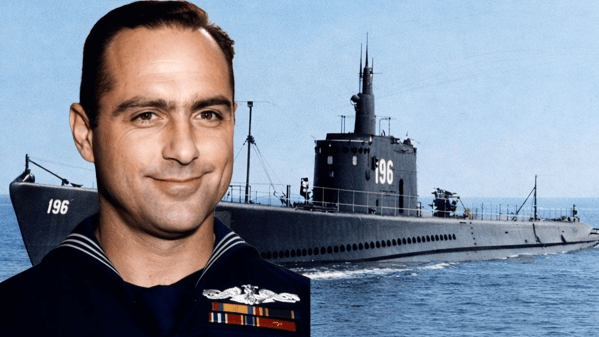
In the summer of 1945, Martin Sheridan was no stranger to the silent, steel corridors of a submarine. As a war correspondent, he’d seen more than most. But aboard the USS Bullhead, he’d seen it all: the crack of deck guns, the eerie shimmer of a drifting mine, the close-call scrape with a Japanese convoy, and the pale dawns when a depth charge’s echo still rang in the ears. His Boston Globe article, published June 29, 1945, reads like a love letter to that boat and her men; a mosaic of danger, camaraderie, and cool defiance beneath the Pacific sun.

Continue reading “The Last Dive of the Bullhead: Martin Sheridan and the Price of Silence”

USS Golet SS-361

She slipped away from Midway on May 28, 1944, her steel hull slicing through the Pacific with quiet determination. Her crew, 82 strong, knew their mission and accepted the risks. They had trained, bonded, and believed in the purpose that had brought them to this point. The boat was USS Golet, SS-361, a Gato-class submarine barely six months into her career. No one who waved her off that day could know they were saying goodbye forever.

Continue reading “USS Golet SS-361”

Herring’s Last Strike

By mid-1944, American submarines were extending their patrols into the northern Pacific, including the Kurile Islands chain, to interdict Japanese shipping and isolate enemy garrisons. Following the Aleutian Islands campaign (1942–43), Japan’s remaining bases in the Kuriles (stretching from Hokkaido to Kamchatka) were targets for periodic U.S. air raids and naval harassment. Older S-class submarines had prowled these cold northern waters early in the war, and notably the USS S-44 was sunk off Paramushiro by a Japanese escort in October 1943. By 1944, fleet submarines from Pearl Harbor and Midway took up patrols in the area. The USS Barb (SS-220) and USS Herring (SS-233) were among the U.S. subs assigned to the Sea of Okhotsk and Kuriles, hunting convoys that supplied isolated outposts. Barb was now under the command of Commander Eugene B. “Lucky” Fluckey (who had taken command in May 1944), while Herring was on her eighth war patrol under Lieutenant Commander David Zabriskie, Jr.. These two submarines would rendezvous in late May 1944 to coordinate their efforts against Japanese shipping in the region.

Continue reading “Herring’s Last Strike”

Blog at WordPress.com.

Up ↑