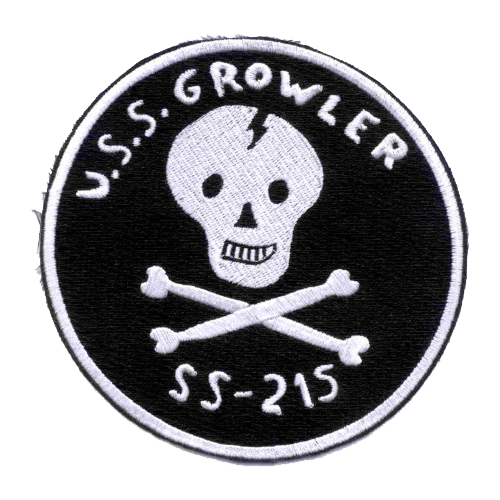
The night sea was calm, almost deceptively so. A thin scatter of clouds drifted across the stars, and the horizon was a dark, featureless smear. Below the surface lay silence, but on the bridge of Growler, men kept their eyes sweeping and their nerves sharp. This was wolf pack country now, waters between Luzon and Formosa, where Japanese convoys crept through the straits and where three American submarines waited to pounce.
In the conning tower, red lamps threw their dull glow over the dials and the men hunched around them. Commander Thomas B. “Ben” Oakley Jr. stood steady, his voice measured, his presence calm. He had a knack for that, keeping himself even while every other heart on the boat ran a little faster.
The radar gang bent over their scopes, their green-lit screens pulsing. Then came the call: a contact. Faint at first, but unmistakable. Pips on the screen, too many and too organized to be strays. A convoy. Seven, maybe eight ships. Oakley leaned over, asked for range, and the answer came back: just under thirty thousand yards, bearing steady. The plotters began their dance, drawing lines, marking the convoy’s course and speed. Nine knots. Course north-northeast. A solid, plodding target, protected but vulnerable.
“Battle stations,” Oakley said. The words were quiet, but they snapped through the boat. Klaxons sounded. Men scrambled into position, some barefoot, some half-dressed, all wide awake in an instant.

At 0153, Oakley gave the order to transmit. The radio operator tapped out the contact report in aircraft code: seven or eight ships, position 17-45 North, 114-50 East. Course zero-two-zero. Speed nine knots. September eleven, 2330Z. The message went out on 200 kilocycles, the standard. Almost at once Pampanito acknowledged receipt. Sealion stayed silent, whether out of range or wrapped up in her own problems no one could know.
Inside the control room, the target tracking table hummed, the new piece of gear installed at Pearl. The fire control party worked it with the ease of long practice, their pencils scratching, their voices flat with concentration. Tubes were readied, depth set at six feet. The crew of Growler knew what was coming. Another convoy, another night, but every man aboard had the feeling that tonight would not be like the others.
Above them, the sea rolled quietly under the stars, hiding the smoke and steel that waited ahead.
At 0146 the convoy zigged sixty degrees to starboard. On the plotting table it was just a new line, a turn of the pencil. In the control room it meant something else entirely. Growler now lay dead ahead of the starboard column. Oakley leaned over the chart, saw the chance forming, and decided to push straight in.
The submarine rode the surface at speed, her bridge crew staring into the blackness ahead. Somewhere in that darkness was steel and gunpowder, freighters loaded with supplies and the destroyers meant to guard them. At 0153, Oakley ordered the transmission of his contact report again, insurance that the pack knew what was developing. Pampanito sent her receipt. Oakley kept his boat cutting toward the center column.
Then the warning came. “Destroyer! Bearing starboard bow! Closing fast!”
The men on the bridge could see it now, a lean hull knifing straight toward them. A destroyer, big and angry, running full bore at the intruder. For a heartbeat there was silence. Every man knew what it meant: a ramming attack or gunfire at point-blank range. Diving would take them under but might hand the Japanese their shot. Running was impossible, the range was too close.
Oakley’s voice broke the tension. Calm, clipped: “Open bow tubes. Set depth six feet. Fire three.”
At 0154, three Mark 18 torpedoes left the bow tubes, their wakes invisible in the night water. The range was only 1,150 yards. It was a shot most skippers wouldn’t dare take. “Down the throat,” they called it, aiming straight at a destroyer charging in head-on. The odds favored the destroyer. But Oakley had made his choice.
Seconds stretched into eternity. Men held their breath. And then impact.
At 0156 a violent explosion tore the night. A ball of yellow flame burst from the destroyer’s midsection, black smoke curling upward like a fist. The flash lit the conning tower of Growler as though a spotlight had been thrown on her. The ship rolled, taking a fifty-degree list to port. She turned hard right, blazing, her superstructure alive with fire. Sailors could be seen clambering desperately over decks and up the bridge, climbing toward light as their ship collapsed beneath them.
The crew of Growler let out the breath they’d been holding. Someone swore. Someone else laughed, short and nervous. In the control room, the plotters marked the target as sinking. Oakley kept his eyes forward. There were more ships ahead, more work to be done.
At 0159 the destroyer still burned furiously, her list increasing past seventy degrees. She was finished. Growler had survived what the patrol report would later call a “unique” shot in the history of submarine warfare. On the bridge Oakley’s grin finally cracked, and he called down the hatch to the fire control party: “You’re the best I’ve ever seen!”
The night was far from over. Ahead were freighters still steaming, and the escorts that had yet to find their prey. The first clash was won, but the fight had only begun.
The sea around Growler was alive with tracers and searchlights, red and white lines scratching across the night. The UN-1 destroyer she had just gutted was still burning, a furnace on the water, but there was no time to linger. Out of the convoy loomed two freighters, their silhouettes crossing each other in the gloom, overlapping like a double target. Oakley saw the chance.
“Bring the stern to bear,” he ordered. Growler’s wake foamed as she swung hard, her stern tubes lining up. Four Mark 18s were fired in quick succession, aimed at the right-hand freighter but with a spread that promised to touch them both. Range just under 1,900 yards.
Seconds later, one of the freighters shuddered. A hit abaft the stack on the composite-superstructure ship. Another hit was heard in the split-superstructure freighter. Smoke boiled into the night, and even as Growler’s men strained to track the results, the Japanese were answering with fire. A patrol craft off her quarter had found the range, its guns hammering out shells that landed close enough to drench the bridge with spray.
At 0201 Oakley shoved the throttles. “Flank speed. Hard left.” Growler leapt ahead, her engines roaring, every shaft and bearing screaming under the load. She clawed through the sea at over seventeen knots, zigzagging violently, her wake tearing across the calm surface. Behind her the PC kept coming, firing what sounded like a 4-inch and a 40-millimeter, the shells whistling and bursting close.
As Growler streaked past the wreck of the destroyer she had killed minutes earlier, the heat of the burning hulk seared the very paint off her bridge. The flames lit the inside of the conning tower, washing over the men’s faces like a blast furnace. They could smell it, scorched paint, burning oil, cordite, smoke.
The escorts pressed. At 0215 another pip appeared, another escort joining from the starboard quarter at nearly 8,000 yards. Two ships now in chase. The Japanese were desperate to kill the submarine that had just gutted their convoy. But Growler kept running, her helmsman throwing her into wide zigzags, twenty degrees each side, Oakley holding her in the splashes of enemy fire to confuse their aim.
“Seventeen point nine knots,” the engineer called up, sweat streaming off his face in the hot belly of the boat. “She’ll give us nineteen if we hold her.”
“Hold her,” Oakley answered.
By 0227 the range had opened to nearly 10,000 yards, the enemy struggling to keep up. Still, the patrol craft fired on, using strings of tracer rounds to illuminate the night, then firing its heavy gun into the glow. Growler danced through it, tracers cutting the sea just long, just short. One shell detonated fifty yards abeam, a fountain of spray that rocked the boat and drenched the bridge crew.
Inside the control room the fire control party held on, sweating and listening, some muttering prayers, others laughing nervously as each salvo splashed wide. Men at their stations could feel the vibration of the engines, the hard zigzagging, the thin skin of steel that separated them from death.
Oakley finally called down the hatch, his voice carrying through the boat: “Best fire control party I ever saw! We’ll live to write this one up!”
The running fight lasted an hour. By 0300, Growler had pulled herself clear, still steaming hard, the enemy falling astern. She had put torpedoes into two freighters and lived through a surface battle against ships that should have torn her apart. The sea behind her glowed with fires and oil slicks, the sky smeared with smoke. Ahead was only darkness and the knowledge that dawn would bring more.
The blackness of night began to peel back into a gray dawn. The sea lay almost glassy, the smoke of burning ships drifting in lazy columns on the horizon. Growler had slipped under by now, running submerged, her batteries pushing her quietly beneath the surface. The men were weary, their ears still ringing from gunfire, their nerves still raw from the surface chase. But nobody dared relax. Convoys did not die quietly, and somewhere ahead, escorts were still searching.
At 0652 the sound operator stiffened. Bearings shifted in his headphones, the unmistakable ping of echo-ranging cutting through the water. Then came the screws, a rhythm steady and fast. A destroyer.
Oakley raised the periscope for a glimpse and found him: low and lean, slicing the surface in a zigzag. This was no ragged survivor, it was a professional hunter, a Fubuki-class destroyer of the Amagiri group. The very kind of ship designed to wipe submarines out of the sea. Oakley dropped the scope and began his approach. The tracking party worked furiously, calling angles on the bow, range closing, target speed eleven knots. The destroyer was searching, his zigs deliberate, sonar probing.
Oakley waited, holding the boat steady. When the range closed to 1,650 yards, he gave the order. Six bow tubes, all set to six feet. The fire control party whispered ranges and bearings, pencils scratching across the plotting table. Then came the captain’s calm order: “Fire six bow.”
At 0653 six Mark 18s leapt from the tubes in sequence, their impulses muffled but felt through the deck. The periscope dipped under almost immediately, Oakley unwilling to risk showing even a sliver. In the conning tower, men watched the stopwatch. Seconds ticked.
Then the first explosion. A hard, unmistakable detonation, felt through the hull as well as in the ears of the sound operator. Seconds later a second, timed almost perfectly with the third fish. Oakley’s gamble had paid again. The Fubuki was struck hard.
Almost immediately came the reply. Five depth charges in rapid sequence, within three seconds, shook the submarine. The crew braced for the end, hands gripping whatever was near, teeth rattling with each blast. But then silence. The destroyer’s echo-ranging ceased. The sound of her screws slowed. Stopped.
The boat held at three hundred feet. For the next fourteen minutes the crew listened as the destroyer died. Explosions rattled the sound gear, some sharp, others muffled. Hissing. Popping. Crackling. The eerie chorus of steel breaking under water. Compartments imploding, fires touching powder, bulkheads giving way. Sailors looked at one another in the dim red glow, no words needed. They were listening to a warship die.
At 0700 a single distant charge rolled through the water, but it was nothing compared to the symphony already heard. Oakley ordered the boat to begin a slow return to periscope depth. Growler crept upward, pumps easing her buoyancy, the hull groaning as the depth lessened. The sound gear caught faint screws for a moment, another escort perhaps, but they faded quickly.
By 0757 the periscope broke the surface. The sea was empty but for smoke on the horizon, drifting columns marking where the freighters still burned. Of the Fubuki there was nothing. She had joined the others on the bottom, a grave marked only by the silence left behind.
The men sagged back into their stations, exhausted, elated, half in disbelief. In the conning tower Oakley stood straight, his face hard, then cracked into a grin. He shouted down the hatch again, voice carrying through the pressure hull: “Best fire control party I ever saw!” The words echoed through the boat, a mix of pride, relief, and sheer survival.
For the crew of Growler, the morning had ended with the sound of victory, and the haunting memory of listening to a destroyer come apart under the sea.
The boat settled into a tense quiet. Men at the sound gear still reported the distant thrum of screws from ships pulling north, probably survivors of the battered convoy. Echo-ranging drifted in and out but carried no urgency. Growler had delivered her blows and slipped back into the shadows.
The bridge crew swapped out, weary eyes meeting weary eyes. Some men lit cigarettes below decks, the smoke mingling with the already heavy air. Others just lay back against bulkheads, staring at nothing, replaying the last hours in their heads. There had been moments when they were sure it was over, when the destroyer bore straight down on them, when shells exploded just yards away, when depth charges rolled across their hull. And yet here they were, alive, breathing, listening to the gentle hum of the motors.
Oakley stood in the control room, his cap pushed back, his shirt soaked with sweat. He leaned on the chart table, looking at the lines plotted across it, the angles and ranges that had translated into hits. He was quiet for a moment, then shook his head and smiled. “Best damn fire control party I ever saw,” he said again, softer this time, almost to himself.
The men knew what they had accomplished. In one night and morning they had torn the heart out of a convoy, destroyed two destroyers outright, mauled two heavy freighters, and lived through a surface running gun battle that would have shredded a lesser crew. The log would record it as tonnage, 2,300 tons for the UN-1 destroyer, 1,700 for the Fubuki, and 15,000 tons of freighters damaged. Cold figures on paper. But to the men of Growler it was the memory of fire on the water, tracer rounds slicing past their heads, the heat of a burning ship searing the paint off their bridge, and the haunting chorus of a destroyer breaking up under the sea.
By the end of September 12, 1944, Growler had carved her name into submarine history. The official report would call the down-the-throat shot unique, a testament to her commander’s aggressiveness and the crew’s precision. The tonnage figures would be added to the Navy’s tallies, and Fremantle would later receive her with cheers. But for the men who lived it, the day was not numbers, it was survival, lived one nerve-wracking minute at a time.
A few weeks later, Growler would sail again. She would not return. Lost on her eleventh patrol, she would vanish with all hands somewhere in the South China Sea, her wreck still undiscovered. Yet the story of September 12 endures, a reminder of what she and her men could do when pressed to the edge.
It was the day a Gato-class submarine stared down an entire convoy, fired torpedoes on the surface under direct gunfire, and came out the other side alive. A day when courage and steel met the dark Pacific, and the outcome was fire, smoke, and silence.
 Patrol Reports
Leave a comment