
July 9, 1944, started out like so many days in the northern Pacific. Cold, fog-draped, and heavy with tension. Aboard the USS Sunfish (SS-281), the crew was already braced for action. They’d spent the previous evening weaving through fog banks, probing northern sea lanes near the Kuriles, hoping to intercept something worthwhile. At 0936, radar picked up three contacts, pips dancing on the screen, about 15,650 yards out and closing. Twenty miles north of Araido To, the hunt had begun.
The fog thickened as they maneuvered to intercept. At 10,000 yards, the contacts became clearer. It wasn’t just merchants. One of the infamous Fubuki-class destroyers was shadowing the convoy, swinging through the mist like a bloodhound on a leash. These weren’t just tin cans with guns. The Fubukis were fast, heavily armed, and deadly. No American submariner underestimated them.
Visibility flickered like a faulty light switch. At 1000, the periscope caught the silhouette of a Fubuki weaving radically, screening the convoy. The crew quickly dove, beginning an attack approach. Through the lens, they spotted three freighters lined up behind their escort, a thousand yards apart and moving together like cattle in a drive. The Fubuki wasn’t just guarding them. She was shepherding them, cutting across their bows, daring anything to come near.
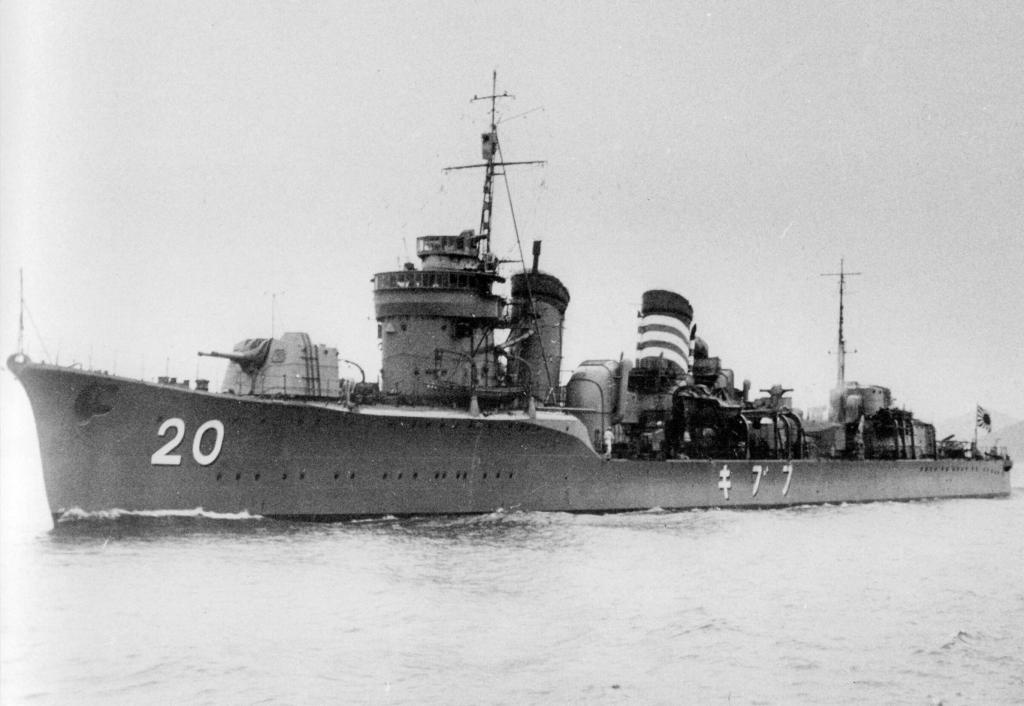
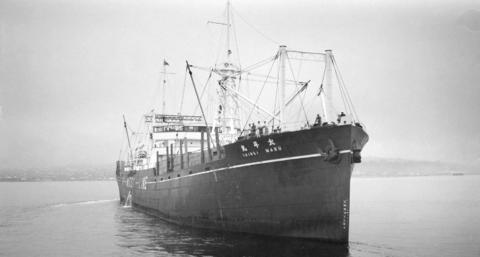
By 1039, the Fubuki made a hard turn to cross Sunfish’s bow, complicating the firing solution. The crew shifted their sights to the lead freighter. It was enormous and riding low, loaded to the gills. They corrected course and got ready. At 1050, they committed. Ninety-five degrees off starboard, a 3000-yard torpedo run, and three fish in the water.
Then came the second salvo. At 1053, three more torpedoes lashed out at the medium freighter. In the tense silence that followed, the men aboard Sunfish strained their ears. No alarms. No evasive zigs. Nothing. The targets were running blind.
The first detonation hit at 1055. Smoke or a splash shot high over the freighter’s mast, dead amidships. The second struck seconds later. Cries went up in the boat. They couldn’t see the damage directly, but they could feel it. Breaking-up noises echoed through the hull. Steel on steel. Wood cracking. Bulkheads giving way. The ocean swallowing metal.1
Sunfish dove hard. The escorts were coming. By 1059, the sub was 450 feet deep, climbing a steep 11-degree angle, holding steady despite a massive 10,000-pound negative ballast. They didn’t dare use the safety tank. Pressure was built and bled by hand. The crew held their breath as depth charges boomed above.
For the next hour, the underwater world became a hell of echoes and distant death. Patterns of charges rained down in series, some close enough to jolt bolts loose, others far enough to give hope. The boat creaked, the air grew thick, and men counted seconds between explosions. The depth gauge dipped. 425 feet. 370. 340. Through it all, Sunfish held together.
At 1120, a pair of charges came closer. The boat bucked. Two minutes later, sonar caught the unmistakable grind of screws passing overhead. The enemy destroyers were hunting like wolves. Listening. Sniffing for the trail. The crew aboard Sunfish heard the escort’s propellers pass just above, so close they could feel it in their teeth.
The sub edged back up. Charges still dropped intermittently. Between 1123 and 1152, eight more splashed into the deep, distant but present, like a drumbeat reminding them that death was still circling.
By 1220, the Japanese seemed to have lost the scent. Pinging faded to the stern. The crew blew ballast, cautiously rose, and began cleanup. Bilges were pumped. Air tanks balanced. Men unclenched muscles they hadn’t realized were locked tight. The bathythermograph, finally back within chart range, told them they’d driven into warmer water. They were safe for now.
Later that afternoon, they peeked through the periscope. Kamchatka loomed 30 miles to the east, the Russian peninsula a jagged guardian beyond the haze. Smoke on the horizon hinted at more action, but Sunfish wasn’t ready to press her luck. By 2022, she broke the surface. Fog was lifting. Visibility stretched to 8000 yards.
Then came another radar contact. 14,800 yards out, bearing 148 degrees. The signal was erratic, probably interference, but they tracked it. Speed estimates hovered between 17 and 18 knots. It vanished at 2058, likely another Fubuki or a patrol boat combing the area. Sunfish turned west and patrolled along 52 degrees North.
By the next morning, the seas were shrouded in fog once again. They patrolled to the southwest, blind to the horizon, alert for echoes on the radar and pings in the dark. At 1540 on July 10, they spotted something bobbing in the water, a life ring. The sky above had cleared. The fog thinned just enough to let the sun shine down on a field of wreckage from a convoy that never made it home.
Sunfish was the hunter who didn’t miss.
1 – Taihei Maru, 6284 tons
United States Navy. Deck Logs of USS Sunfish (SS-281), July 1944. National Archives Catalog, National Archives and Records Administration. Record Group 24: Records of the Bureau of Naval Personnel, 1798–2007. https://catalog.archives.gov/id/74852643
Narrative by David Ray Bowman FTB1(SS) 07/07/2025
 Patrol Reports
Leave a comment