Long before “meal prep” became the buzzword of fitness influencers, it was already a way of life beneath the waves. For the men stationed on America’s nuclear submarines, food was not just a necessity. It was logistics, morale, and mission readiness all served on a tray. And no tradition captures that strange and vital blend better than something called “Soupdown.”
A June 20, 1966, article in The Latrobe Bulletin revealed an unexpected truth about nuclear-powered submarines. These engineering marvels had nearly unlimited endurance thanks to their reactors, but their patrols were always limited by one thing. Not fuel. Food. The galley, not the engine room, was what dictated the mission clock.
That’s where Soupdown came in.
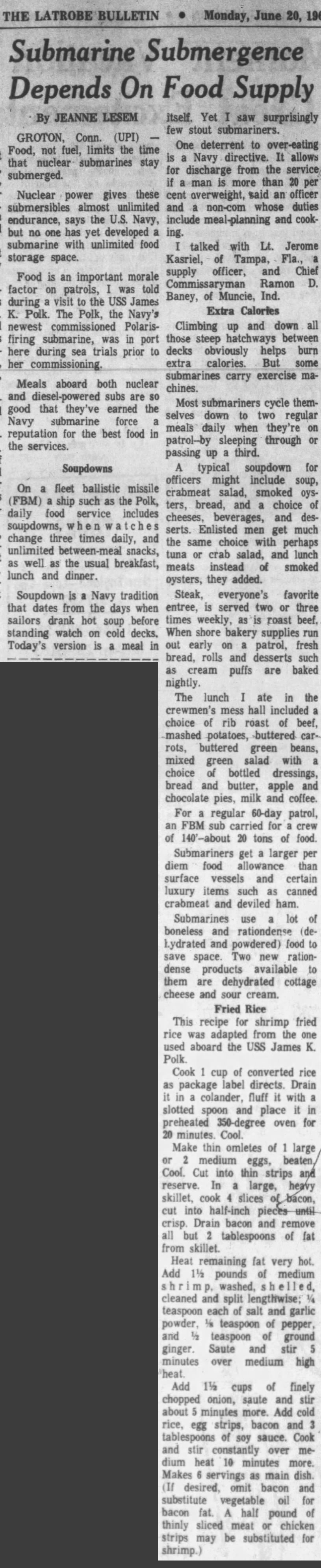
It began as a practical custom from the days of cold, open-deck watches, when sailors drank hot soup before standing duty. By the 1960s, it had evolved into a full-scale, three-times-a-day ritual on ballistic missile subs like the USS James K. Polk. Every time the watch changed, there was a full meal served. That meant six meals a day when combined with breakfast, lunch, and dinner. Add in unlimited snacks between meals, and you had a floating feast operating hundreds of feet beneath the ocean surface.
And this was not powdered eggs and limp carrots.
Chief Commissaryman Ramon D. Baney proudly told reporter Jeanne Lesem that officers and enlisted men alike dined on tuna salad, smoked oysters, crabmeat salad, steaks, roast beef, and fresh-baked pies. Even cream puffs came out of the oven regularly. The Navy’s culinary priorities were clear. Keep the crew fueled and keep their spirits up.
There was a practical side to all this indulgence. Life aboard a submarine was a physically demanding ordeal. Climbing up and down ladders, squeezing through watertight hatches, and working in tight, hot spaces all required constant energy. Most submariners averaged only two real meals per day on patrol, often sleeping through or skipping others. But when they ate, they ate big.
Then there was the mental factor.
Being submerged for sixty days without sunlight, fresh air, or communication with the outside world could take a toll on morale. Meals became one of the few events that broke up the monotony. They offered structure and comfort, a few moments of calm amid the humming machinery. As Lieutenant Jerome Kasriel of Tampa, Florida, explained, food was an essential morale factor for the men below the waves.
The Navy knew it. That’s why submarines received a higher per diem food allowance than surface vessels. They were even stocked with luxury items like deviled ham and canned crabmeat. Some of the food was dehydrated or powdered to save space, such as cottage cheese and sour cream. Still, the culinary creativity on board was impressive. The article even included a shrimp fried rice recipe adapted from one served aboard the James K. Polk.
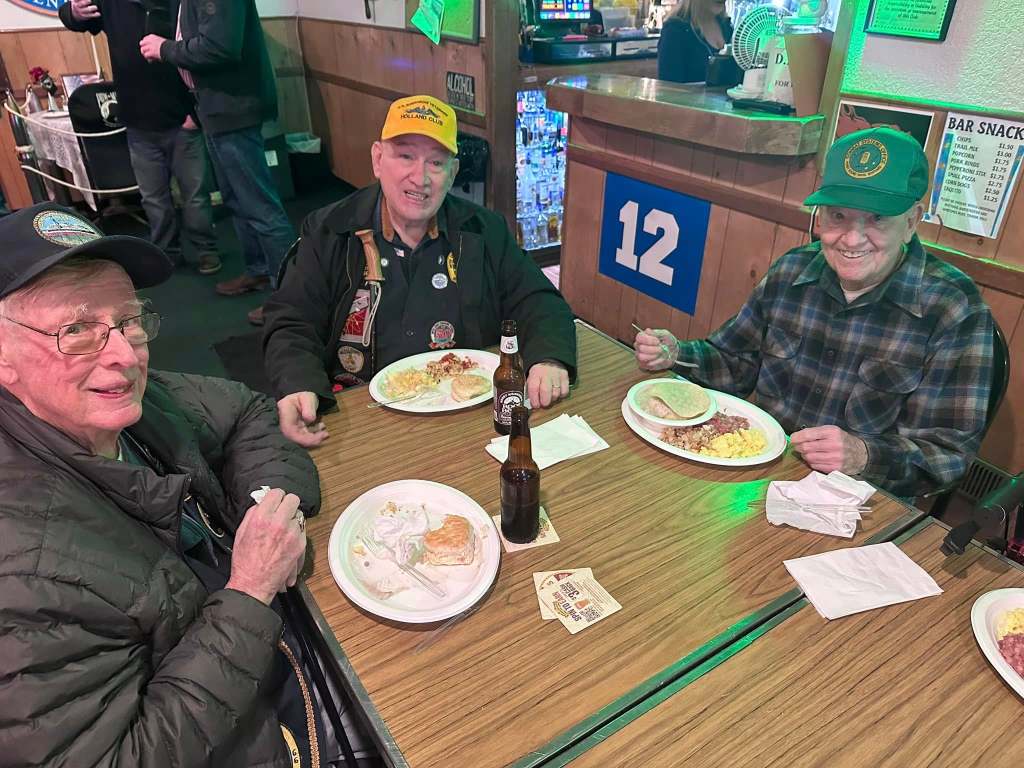
THE BREMERTON BASE SOUPDOWN SCHEDULE IS –>HERE<–
Soupdown wasn’t just a quirky Navy custom. It was the embodiment of a deeper truth about submarine life. Technology could provide power and stealth, but it couldn’t replace humanity. The men needed warmth, flavor, and familiarity. They needed Soupdown.
Today, even as submarines grow more advanced and patrols stretch longer, veterans still talk about the food. It was more than fuel. It was ritual. It was the heartbeat of a crew sealed away from the world.
So the next time you reheat last night’s dinner, spare a thought for the men underwater. Somewhere, in the silent steel corridors of memory, Soupdown is still being served.

 Patrol Reports
Leave a comment