The sea was calm as the stars blinked over Kyushu, Japan, on the night of April 14, 1945. Beneath the waves lurked an American submarine with orders that bordered on madness: slip into a mined enemy harbor, attack anchored vessels, and get out alive.
At the helm was a man who would not hesitate—Commander George L. Street III.
By sunrise, three enemy ships were sunk, Japanese shore batteries had erupted in fury, and the USS Tirante had vanished like a phantom into the Pacific night.
“It was a mission that could have ended in the loss of the boat and all hands. That it didn’t is testament to leadership, planning—and raw courage.”
The War in Its Final Act
April 1945. The endgame of the Pacific War had begun. While the Battle of Okinawa raged, U.S. submarines prowled the waters off Japan’s coast, cutting supply lines and hammering shipping lanes.
Submarines were the stranglers of the Japanese war machine. With the Imperial Navy in tatters, American boats pressed closer to the home islands—engaging in special missions and taking unprecedented risks.
The Tirante, under Street’s command, was sent to do the unthinkable: infiltrate a well-defended harbor off Ha Shima, an island fortress guarding a shipping route critical to the Japanese homeland.
Meet the Commander
George Levick Street III was a Virginian by birth, a U.S. Naval Academy graduate (Class of 1937), and a man whose calm demeanor belied the steel in his spine. His leadership style was clear-eyed, calm, and mission-focused.
“Street didn’t flinch. He planned. And then he struck.”
Street had already earned respect among submariners for his instincts and strategic mind. The Tirante was his command—and its crew trusted him with their lives.
The Boat Built for Boldness
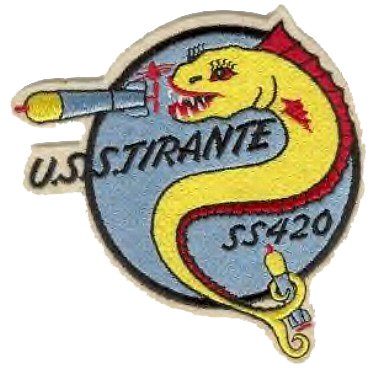
Commissioned in November 1944, the USS Tirante (SS-420) was a Tench-class submarine, designed for deep-water endurance and high-speed strikes. With advanced radar, a powerful torpedo arsenal, and a crew drilled to precision, she was born for risk.
They called themselves “Street’s Raiders,” and on her second patrol, they were about to earn it.
April 14, 1945: Into the Lion’s Mouth
Acting on decrypted intelligence, Street took Tirante toward Ha Shima. Inside the harbor sat the Japanese ammunition ship Juzan Maru and her escorts, Nomi and CD-31.
The waters were mined. Shore batteries guarded the approach. Patrol boats crisscrossed the inlet.
Street went in anyway.
Running silent, Tirante slipped into the harbor under cover of night. Radar was of no use. This was periscope navigation—done by touch, sound, and memory.
At 1,200 yards, Street fired. Three targets. Three hits. All sank in minutes.
As explosions lit the harbor, Japanese gunners opened up. Searchlights swept. Patrol boats surged. Street did the impossible again—surfacing in the middle of chaos, opening fire with the deck gun, and racing out of the harbor at flank speed.
“The raid on Ha Shima was one of the most daring actions in submarine warfare—right into the enemy’s teeth.”
Triumph and Return
Tirante escaped with minimal damage. No casualties. Three enemy ships destroyed. One audacious victory.
When the boat returned to base, the Navy was stunned. Commanders reviewed the patrol log. Verified the kills. And then came the recommendation: Medal of Honor.
The Medal of Honor
Awarded by President Harry S. Truman, Street’s Medal of Honor citation praised his:
“Conspicuous gallantry and intrepidity… skillfully penetrating the dangerous, mined and patrolled waters of an enemy harbor… conducting a daring surface engagement in the face of heavy gunfire.”
Only seven submarine commanders received the Medal of Honor during World War II. Street was one of them—and one of the very few honored for a harbor raid.
Legacy of Valor
Street continued to serve in the Navy, eventually retiring as a Captain. He lived until 2000, long enough to see his story etched in the annals of the Silent Service.
Tirante completed additional successful patrols before war’s end. Her name became legend.
STREET’S RAID BY THE NUMBERS • Ships Sunk: 3 • Enemy Escorts Engaged: 2 • Shore Batteries Fired Upon: Multiple • U.S. Casualties: 0 • Time in Harbor: Under 30 minutes • Distance to Shore: Less than 1,500 yards
Why It Mattered
Beyond the destruction, the psychological impact was enormous. Japan’s belief in the sanctity of its home waters was shattered.
Tirante proved what bold leadership could achieve. Where others might hesitate, Street charged forward—not recklessly, but decisively. That distinction made all the difference.
Final Reflections
This was not a grand fleet action or a decisive campaign. It was a moment—a brilliant, calculated gamble—that struck fear into the heart of an enemy and became a beacon for submarine valor.
On April 14, 1945, beneath the guns of Ha Shima, George L. Street III wrote his name into history not with words—but with torpedoes, steel, and fire.
About the Author
Dave Bowman is the Past Commander and the current Base Historian of the USSVI Bremerton Base. He qualified submarines on November 18, 1984 aboard USS Michigan SSBN-727(G) on Patrol 5. He made six patrols aboard USS Michigan and later was a Navy Instructor at the Naval Guided Missiles School in Damn Neck, VA. He left the Navy in 1991 to pursue a career in Talk Radio and podcasting. He is a naval historian, podcast host, talk radio personality and a researcher specializing in U.S. Navy submarine history. He is the creator of “Dave Does History” on WMMB Radio.

 Patrol Reports
Leave a comment