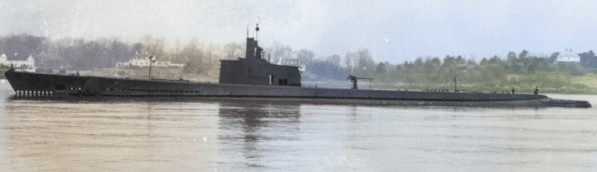
The USS Grenadier (SS-210) was not just another submarine. She was part of the United States Navy’s silent force—a fleet of underwater hunters that prowled the vast Pacific during World War II. Built at Portsmouth Navy Yard and launched in November 1940, Grenadier was a Tambor-class submarine, a major leap forward in undersea warfare. These boats were longer, sleeker, and more heavily armed than their predecessors. At over 300 feet in length, with ten torpedo tubes and improved surface speed, Tambor-class subs like Grenadier marked the transition from coastal patrol vessels to long-range oceanic predators. They could travel over 11,000 miles without refueling and could strike deep behind enemy lines, changing the tempo of war at sea.
She was a trailblazer beneath the waves, a steel sentinel prowling the depths at the dawn of a new kind of warfare. USS Gudgeon (SS-211) was one of the twelve Tambor-class submarines, a fleet that marked the United States Navy’s first fully successful attempt at creating true long-range submarines fit for offensive action in enemy waters. The Tambors were leaner, faster, and more lethal than their predecessors, built with lessons hard-won from experimental classes and interwar missteps. They combined the range and speed of the earlier Sargo class with important upgrades—including six forward torpedo tubes, a more reliable full diesel-electric propulsion system, and a combat-optimized conning tower. These design refinements came from a forward-looking team led by future Admiral Charles A. Lockwood, who understood that America would need subs capable of sustained pressure in the vast Pacific.
The sea was calm as the stars blinked over Kyushu, Japan, on the night of April 14, 1945. Beneath the waves lurked an American submarine with orders that bordered on madness: slip into a mined enemy harbor, attack anchored vessels, and get out alive.
At the helm was a man who would not hesitate—Commander George L. Street III.
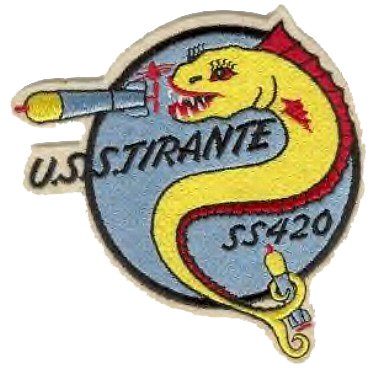
By sunrise, three enemy ships were sunk, Japanese shore batteries had erupted in fury, and the USS Tirante had vanished like a phantom into the Pacific night.
“It was a mission that could have ended in the loss of the boat and all hands. That it didn’t is testament to leadership, planning—and raw courage.”