
The H-class submarines of the United States Navy were a product of their time, built to patrol coastal waters and operate in a world where undersea warfare was still in its infancy. The USS H-1 (SS-28), originally commissioned as Seawolf, was one such boat—a compact and capable vessel designed by Electric Boat and constructed by Union Iron Works in San Francisco. She was a pioneer in a class that would pave the way for more advanced designs. First launched in 1913 and entering service in December of that year, the H-1 served along the Pacific Coast, operating out of San Pedro, California. She ran patrols, participated in training exercises, and played her part in the early development of American submarine tactics.
When the United States entered World War I in 1917, the H-1 was sent to the East Coast, patrolling Long Island Sound and providing real-world experience for students at the Navy’s submarine school in New London, Connecticut. Though she never saw combat, the submarine served as a valuable asset in training the next generation of undersea warriors. After the war, the H-1 and her sister ship, H-2, were ordered back to the Pacific, setting out from New London in January of 1920. They passed through the Panama Canal in February, beginning the long journey back to their home waters.

The loss of the USS H-1 on March 12, 1920, was a tragedy that unfolded in the dead of night. Hugging the rugged coastline of Mexico’s Baja California Peninsula, the submarine and her crew encountered disaster off Santa Margarita Island. Whether due to navigational error, mechanical failure, or simply bad luck, the vessel fetched up on a shoal some 400 yards from shore. Trapped in the grip of the rocks and unable to free herself, H-1 was left exposed to the merciless waves that crashed against her hull.
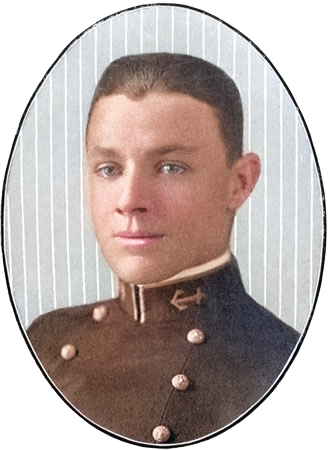
Lieutenant Commander James Webb, the submarine’s commanding officer, made the fateful decision that the crew should abandon ship. With no hope of towing the boat off the shoal, the men faced the perilous task of swimming to shore in the darkness. The cold waters and strong currents proved too much for some. Three sailors were lost in the attempt. Then, in a cruel twist of fate, Webb himself was swept from the bridge by a powerful wave, vanishing into the black sea. The remaining men, battered but alive, made it to shore, where they huddled together, awaiting rescue.
Help did not come immediately. The crew spent an arduous night exposed to the elements before they were eventually picked up by a passing steamship and taken to Los Angeles. Meanwhile, the Navy scrambled to save the doomed submarine. Salvage operations were set in motion, and by March 26, the repair ship USS Vestal succeeded in pulling H-1 free from the shoal. It seemed, for a moment, that the battered sub might yet be saved. But the sea had other plans. Less than an hour after being refloated, the wounded vessel succumbed to the damage she had sustained. She slipped beneath the surface, coming to rest in 50 feet of water, beyond the reach of further rescue efforts.
Her loss was a somber moment for the Navy, a reminder of the dangers that came with undersea service in those early days. Though the wreck was officially sold for scrap, it was never salvaged. The H-1 remained where she had fallen, resting in her final grave off the coast of Baja California. Over time, her remains were largely forgotten by all but the most dedicated naval historians and divers. That changed in 1992 when her wreck was rediscovered. Today, the battered hulk of the H-1 serves as a site for recreational divers who travel to Mexico to explore her remains.
The loss of the USS H-1 was a tragedy, but it was also a testament to the resilience of those who served aboard her. Four men lost their lives that night in 1920, and their sacrifice is not forgotten. For submarine veterans, the story of the H-1 is a reminder of the perils faced by those who took to the deep, especially in the early days of undersea warfare. To this day, the wreck of H-1 sits silently beneath the waves, a ghost of a bygone era, a relic of the pioneering submariners who helped shape the future of the Silent Service.
 Patrol Reports
Leave a comment